
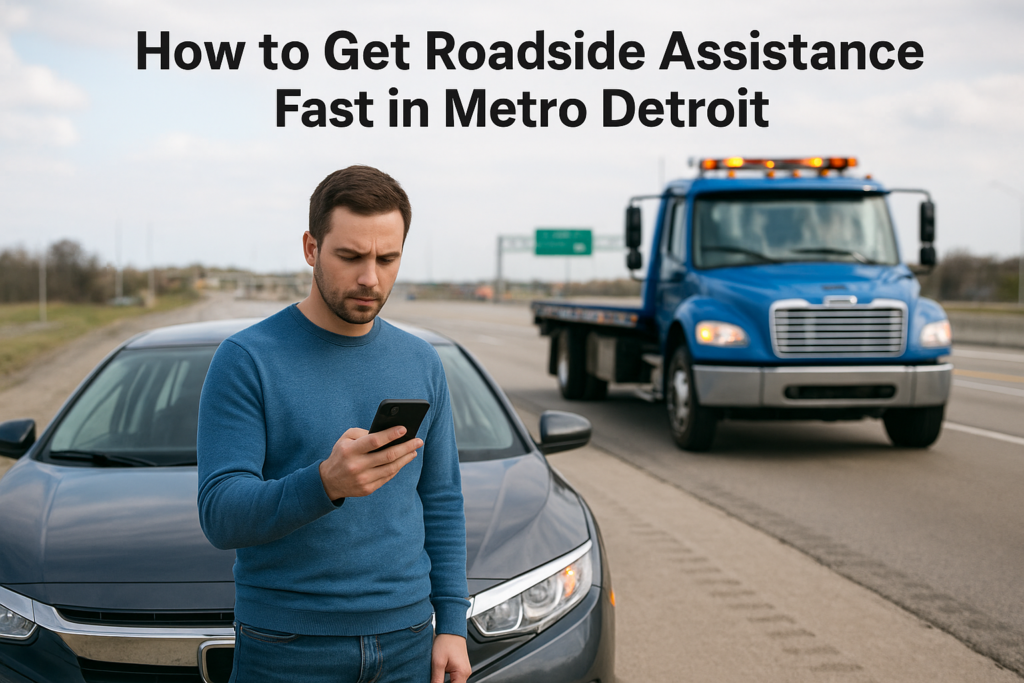
Your car dies on I-94 near the Ambassador Bridge during rush hour, or you lock your keys in the trunk outside a store on Michigan Avenue in Dearborn. In that moment, you need to know how to get roadside assistance fast, not scroll through ten options wondering which one actually shows up. Metro Detroit traffic, weather, and road conditions make waiting around a real risk, not just an inconvenience.
Getting help quickly comes down to knowing your options before you’re stranded: your insurance policy, a membership club, your car’s manufacturer program, or a local towing company that answers the phone at 2 a.m. Each route has different wait times, coverage limits, and costs, and knowing which one fits your situation saves you from sitting on the shoulder longer than you should.
This guide walks through every practical way to request roadside help around Detroit, Dearborn, Southfield, Taylor, and Livonia, from calling your insurer to using an app to reaching a dispatcher directly. We’ll also cover what info to have ready and when calling a local operator beats waiting on a national hotline. Skyline Towing, based at 6450 E Hancock St in Detroit, handles these calls every day, so this comes straight from experience on these exact roads.
What to know before you call for help
Before you dial anyone, figure out what coverage you already have. Most drivers pay for roadside assistance two or three times over without realizing it, through their auto insurance, a credit card benefit, or a manufacturer warranty that came with the car. Check your policy documents or insurance app right now, before you’re stuck on the Lodge Freeway wondering who to call. Knowing this ahead of time cuts your wait from twenty minutes of confused searching down to a single phone call.
Know which coverage actually applies
Insurance-based roadside plans, like those bundled into policies through Michigan providers, usually cover towing to the nearest repair shop, a jump start, or a lockout, but they cap the tow distance and the number of calls per year. Manufacturer programs tied to a new car warranty often expire after three to five years, so that "free towing" your Ford or Chevy came with might not exist anymore. Membership clubs work well if you already pay the annual fee, but they dispatch through call centers that aren’t always local, which matters when you’re stranded on I-75 near the Fisher Freeway interchange during a snow event.
The fastest help almost always comes from whoever can reach your exact spot on the road, not whoever has the biggest national name.
Have this information ready
Whoever you call, insurer, club, or a local shop like ours here at 6450 E Hancock St, they’ll ask the same questions. Save time by having these ready before you pick up the phone:
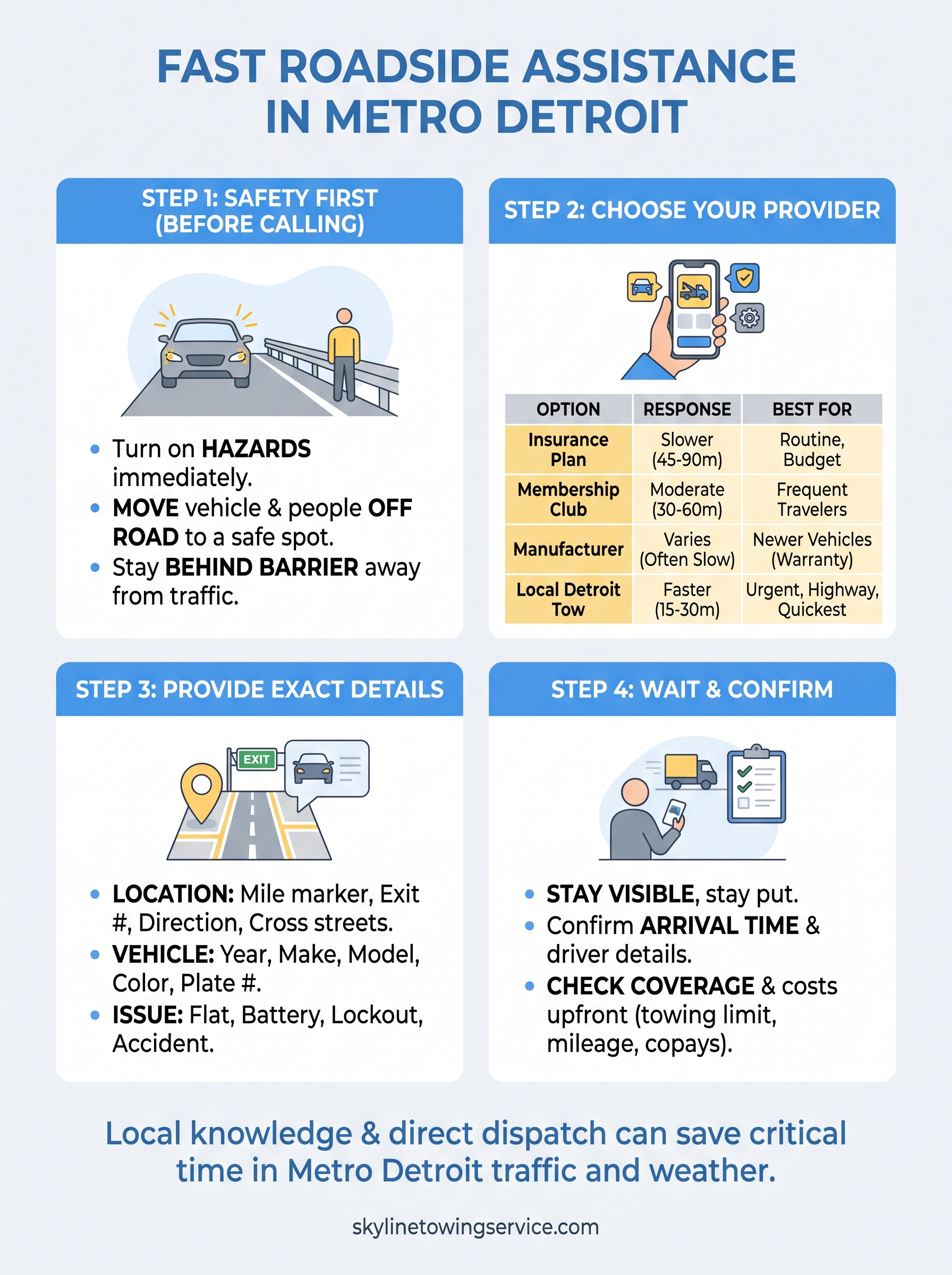
- Your exact location (cross streets, mile marker, or highway exit number)
- Vehicle year, make, model, and color
- License plate number
- What’s wrong (dead battery, flat tire, locked out, accident, won’t start)
- Whether you’re in a safe spot or still in a traffic lane
Understand realistic wait times
Rush hour on the Southfield Freeway or a snowstorm rolling through Livonia changes everything. National dispatch services route your call through a call center first, then find a local contractor, which can add 30 to 60 minutes before a truck even leaves the yard. Calling a Detroit-based towing company directly skips that middle step entirely, which matters most when you’re on a shoulder with traffic passing at 70 miles an hour.
Step 1. Move to safety and check for danger
Before you dial anyone, get your car and yourself out of danger. A dead engine on the shoulder of I-96 near the Southfield Freeway interchange is still inside the danger zone if you’re sitting in the driving lane, and drivers doing 70 mph don’t always see a stalled car until they’re right on top of it. Turn your wheel toward the shoulder if the car will still roll, even a few feet clears you from active traffic.
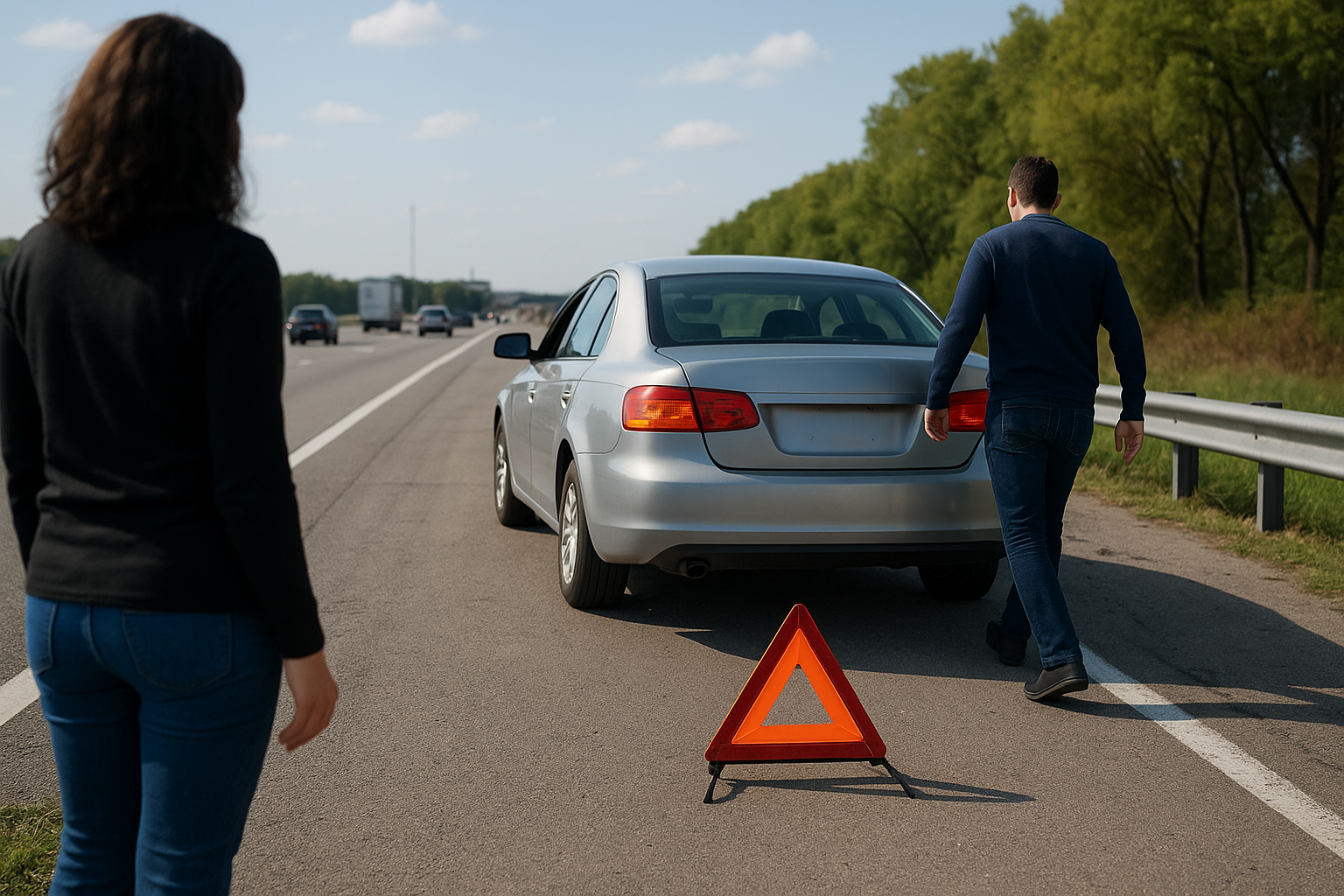
Getting off the road matters more than making the call, because a phone call doesn’t stop a semi truck.
Turn on your hazards immediately
Flip your hazard lights on the second you realize you’re stuck, even before you shift into park. This tells drivers behind you that something’s wrong well before they’re close enough to react late. On foggy mornings along the Rouge River near Dearborn, or during a whiteout on I-75 through Taylor, hazards are often the only warning other drivers get.
Get everyone out safely
Once you’re stopped, check your surroundings before opening a door into a live lane. Exit from the passenger side if you’re pinned close to traffic, and move everyone, including pets, well past the guardrail. Here’s a quick safety checklist:
- Hazards on immediately
- Steer to the shoulder or breakdown lane if possible
- Exit away from traffic, not into it
- Stand behind a barrier, not next to the car
- Set out flares or triangles if you carry them
Only after everyone’s clear should you start thinking about your next call.
Step 2. Choose who to call for roadside help
Once you’re safely off the road, the next decision shapes how long you wait. Your insurance company works fine for a routine flat tire on a Tuesday afternoon, but during a Friday rush hour backup on I-696, that same call gets routed through a national call center before it ever reaches a truck in Metro Detroit. A local towing company answering its own phone can often beat that by 20 to 40 minutes, especially on the Lodge Freeway or through Southfield during peak traffic.
Compare your options quickly
Run through this before you dial, since each option trades speed for cost differently:
| Option | Typical Response Time | Best For |
|---|---|---|
| Insurance roadside plan | 45-90 min | Routine issues, budget-conscious |
| Membership club | 30-60 min | Frequent travelers, prepaid plans |
| Manufacturer program | Varies, often slow | Newer vehicles under warranty |
| Local Detroit tow company | 15-30 min | Highway breakdowns, urgent situations |
Know when local beats national
If you’re stalled near the Ambassador Bridge, on I-75 through Taylor, or anywhere traffic moves fast and shoulders run narrow, minutes matter more than saving a few dollars. Calling a dispatcher directly, like reaching Skyline Towing’s line straight from Detroit, means a driver already familiar with these roads heads your way immediately instead of waiting for a call center to find a contractor.
When every minute on the shoulder is a risk, the fastest phone number beats the cheapest one.
Accident scenes or a car blocking a lane call for local help every time, since national dispatch simply can’t move at that speed.
Step 3. Give your exact location and vehicle details
Once you’ve made the call, the dispatcher’s first question decides how fast a truck finds you. Precise location details matter more than you’d think, because "I’m on I-94 near Dearborn" could mean three different spots depending on which exit you passed last. Pull up your maps app and read off the mile marker, exit number, or nearest cross street before the dispatcher even asks, since that single detail can shave ten minutes off your wait.

Pinpoint where you actually are
Highway shoulders all look the same at night, so use landmarks the dispatcher will recognize. Mention the direction you’re traveling, the last exit you passed, and any visible signage, like a billboard or overpass. If you’re on a side street in Southfield or Taylor, cross streets work better than a house number you’re guessing at.
A wrong exit number sends help to the wrong stretch of highway, and that mistake costs you real time.
Describe your vehicle clearly
Tow drivers scan for a specific car among dozens of similar ones, especially during a multi-car pileup on I-75 or a snowstorm backup on the Lodge. Give them a fast, accurate description:
- Year, make, and model
- Color and any visible damage
- License plate number
- Which side of the vehicle is closest to traffic
Accuracy here beats speed. A dispatcher who has your exact location and a clear vehicle description sends the right driver straight to you, instead of circling an exit ramp looking for a car that matches a vague description.
Step 4. Wait safely and confirm your service plan
Once the truck’s on its way, staying put and staying alert matters as much as the call itself. Confirm the estimated arrival time before you hang up, and ask for the driver’s name or truck number if the dispatcher offers it, since that helps you flag down the right vehicle among highway traffic near the Southfield Freeway or a busy stretch of Telegraph Road.
The wait isn’t over until the truck arrives, so treat every minute on the shoulder like the first one.
Stay visible and stay put
Keep your hazards running the entire time you wait, and stay behind the guardrail or well off the roadway if you stepped out earlier. Don’t wave down other drivers or wander toward the road to check for the truck, especially after dark on I-75 through Taylor where headlights make it hard to judge how fast traffic is actually moving.
Confirm coverage before the truck leaves the yard
While you wait, double-check what your plan actually pays for. Ask directly:
- Does this call count against my annual tow limit?
- Is there a mileage cap on the tow distance?
- Will I owe a copay or deductible on arrival?
- Does my plan cover a flatbed tow if my car doesn’t roll?
Getting these answers now, rather than after the truck shows up, avoids an awkward surprise bill outside a shop on Michigan Avenue. If you called a local operator instead, ask for a straight quote upfront, since most Detroit towing companies will give you a number before dispatching a driver rather than making you guess.
Back on the road in Metro Detroit
Getting stranded on I-94, the Lodge Freeway, or a side street in Dearborn Heights isn’t a matter of if, it’s when. Knowing who to call before it happens, checking your coverage, getting safely off the road, and giving a clear location turns a stressful breakdown into a quick fix. The steps in this guide work whether you’re dealing with a dead battery in Southfield or a lockout on Michigan Avenue.
Speed and clear communication beat panic every time. Local knowledge of these highways and neighborhoods means a driver gets to you faster than a national call center ever could, especially when weather or rush hour traffic makes every minute count.
When you need a truck now, not after a call center transfer, call Skyline Towing at 6450 E Hancock St in Detroit. We answer our own phones, day or night, anywhere across Metro Detroit.