
Your car just died on the Southfield Freeway during rush hour, or maybe you’ve got a flat on Michigan Avenue with no spare in the trunk. Either way, you need to know how to call a tow truck, and in Detroit, that process comes with a few specifics worth knowing before you’re stuck on the shoulder of I-94 in January.
Knowing who to call is only part of it. What information you provide, how you describe your location, and what type of service you actually need all affect how fast help arrives and how much you’ll pay. There’s a difference between needing a flatbed for an AWD vehicle and just needing a jump start in a parking lot off Gratiot.
At Skyline Towing, we handle these calls every day from our headquarters at 6450 E Hancock St, Detroit, MI 48207, providing 24/7 towing and roadside assistance across Detroit, Dearborn, Southfield, Taylor, Livonia, and the surrounding metro area. This guide walks you through the exact steps to take when you need a tow, from assessing your situation to what happens when the truck shows up.
Before you call: stay safe and gather details
Before you think about how to call a tow truck, your first job is to make sure you’re not in more danger than the breakdown itself. Detroit roads don’t stop for disabled vehicles. Whether you’re on the Lodge, I-75 near the Ambassador Bridge, or a side street in Dearborn Heights, getting yourself out of traffic is the priority, and it needs to happen before you reach for your phone.
Get yourself and your vehicle to safety
If your car loses power or gets a flat, steer it as far right off the road as possible before it fully stops. A right shoulder, a side street, or a parking lot off Woodward is always better than sitting in a travel lane. Once you’re stopped, turn on your hazard lights immediately and keep them on for the entire time you wait.
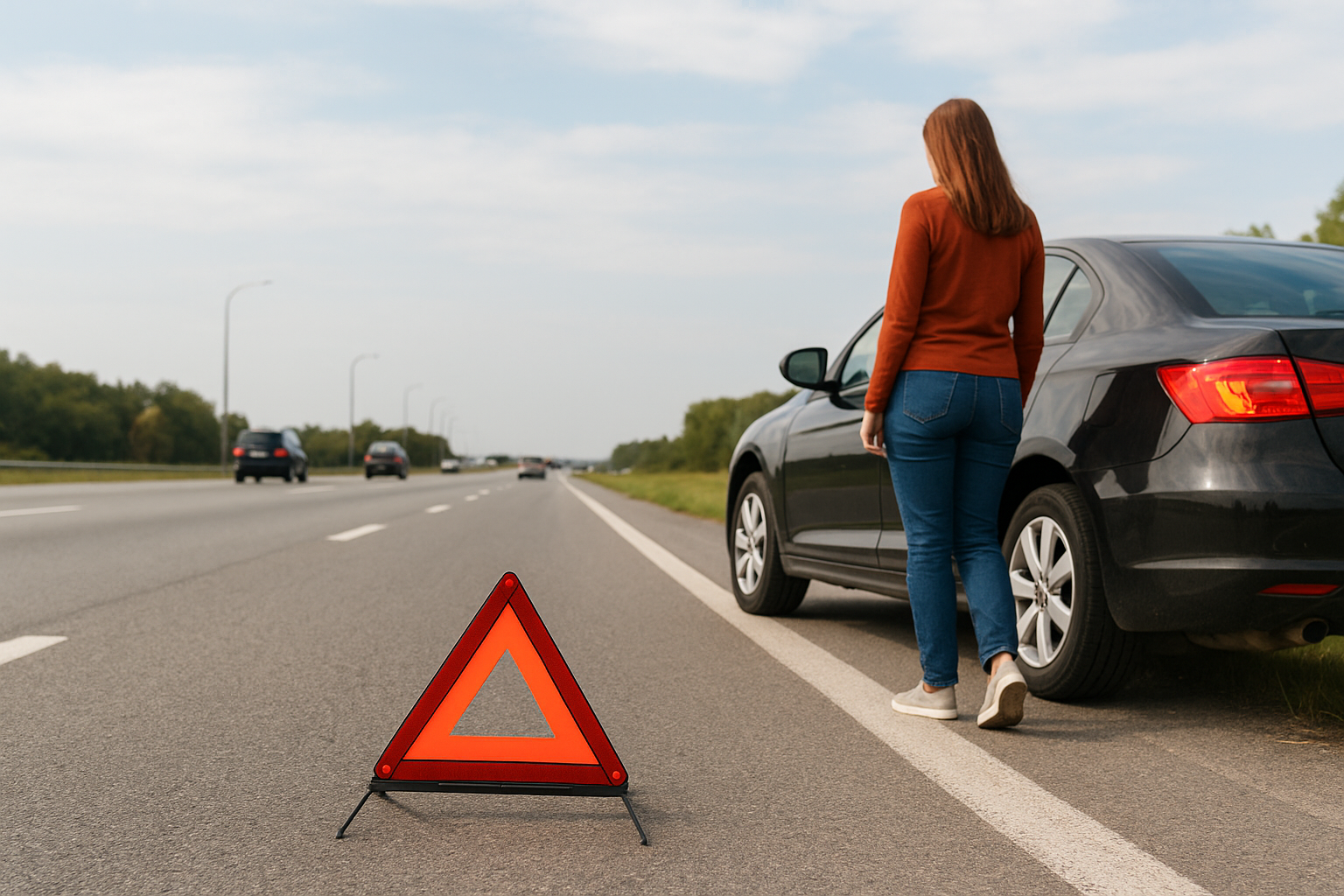
If you’re on a high-speed road like I-94 or the Southfield Freeway, exit the vehicle on the passenger side and stand behind a guardrail. A parked car on a freeway shoulder is a serious hazard, especially at night or in Michigan winter weather.
If you have road flares or reflective triangles in your trunk, place them at least 100 feet behind your vehicle to give other drivers enough reaction time. Stay off the road and keep communication with the tow company going rather than standing near moving traffic.
What information to have ready before you dial
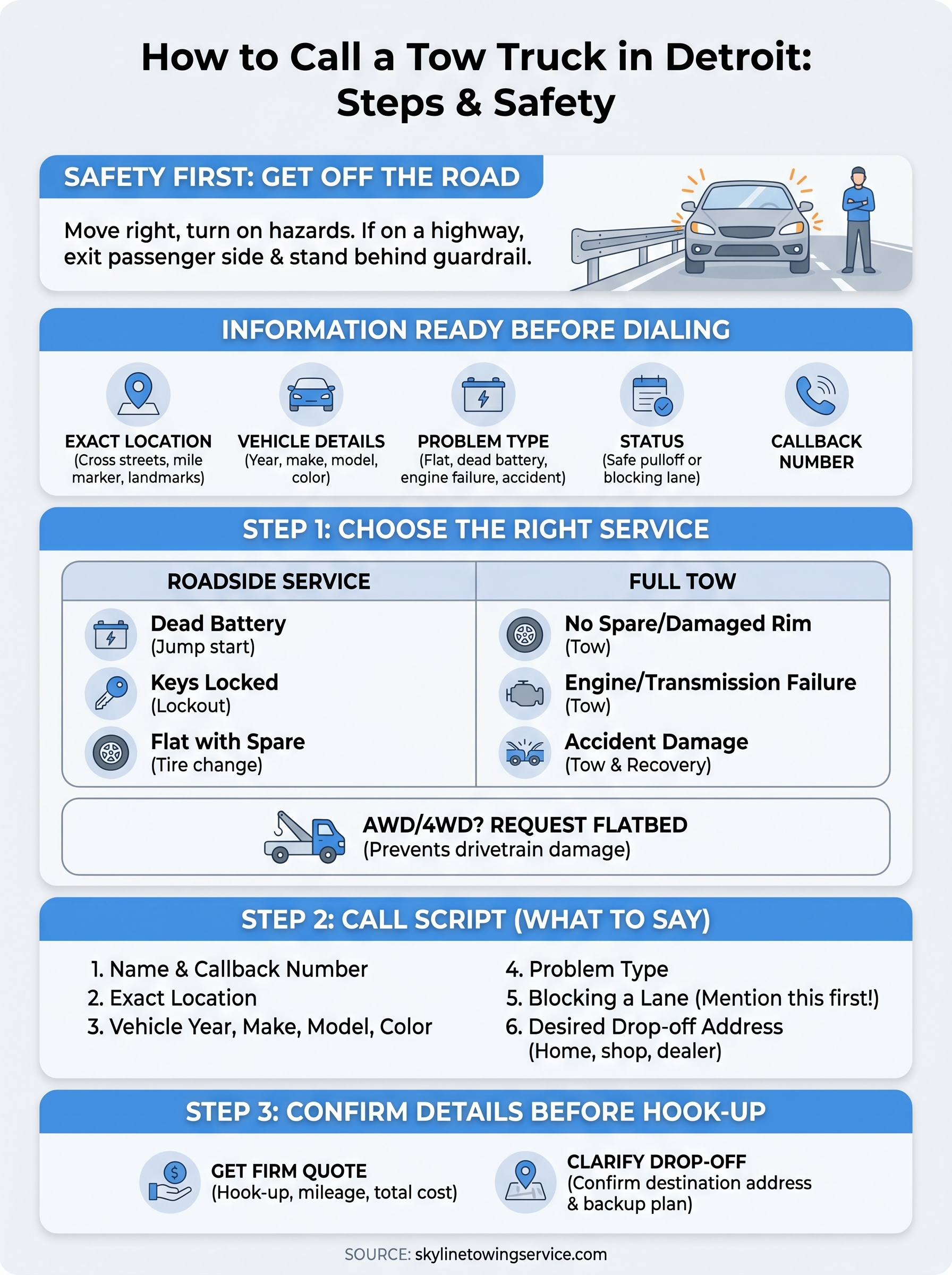
Gathering the right details before you call saves time and gets a truck to you faster. Have the following ready:
- Your exact location: cross streets, highway name, mile marker, or a nearby landmark (for example, “just past the Michigan Avenue exit on I-94 heading east”)
- Your vehicle’s year, make, model, and color
- The type of problem: flat tire, dead battery, engine failure, accident damage, or stuck in a ditch
- Whether your vehicle is in a safe pulloff or still blocking a travel lane
- Your callback number, so the driver can reach you when they’re close
Having this list ready before you dial cuts the call time down and helps dispatch send the right type of truck for your specific situation.
Step 1. Choose the right help for your situation
Before you figure out how to call a tow truck, you need to know whether a tow is actually what you need. Not every breakdown requires a flatbed or wheel-lift. Calling the wrong service type can delay help and add unnecessary cost to an already stressful situation.
Roadside service vs. full tow
Some situations don’t need a tow at all. Skyline Towing provides jump starts, lockouts, and tire changes on-site, which means your car stays put and you’re back on the road faster. A full tow is the right call when your vehicle can’t be repaired roadside or isn’t safe to drive.
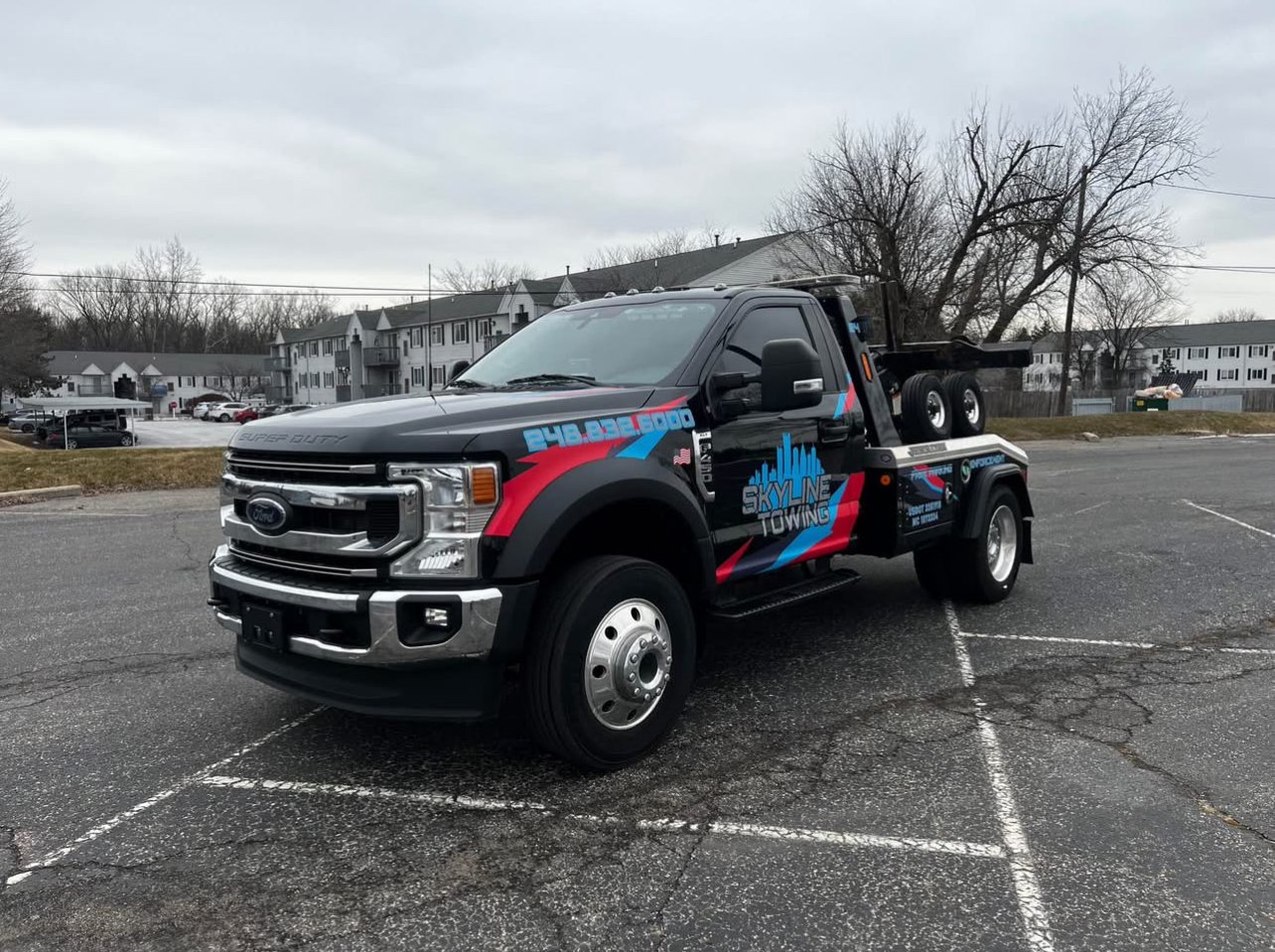
Here’s a quick breakdown to help you decide:
| Situation | Service needed |
|---|---|
| Dead battery | Jump start |
| Keys locked inside | Lockout service |
| Flat tire (spare available) | Tire change |
| No spare or damaged rim | Tow |
| Engine or transmission failure | Tow |
| Accident damage | Tow + recovery |
Match the truck type to your vehicle
Once you know a tow is necessary, the truck type matters for protecting your vehicle. AWD and 4WD vehicles like a Jeep Grand Cherokee or Ford F-150 require a flatbed to prevent drivetrain damage during transport. If you’re not sure what applies to your car, tell the dispatcher your vehicle’s drivetrain type and let them assign the right equipment.
Always mention your drivetrain type when you call. Using the wrong truck on an AWD vehicle can cause expensive mechanical damage that your tow bill won’t cover.
Step 2. What to say when you call a tow truck
Once you know what type of help you need, the actual call goes faster than most people expect. The dispatcher needs specific information to send the right truck and give you an accurate arrival estimate. Knowing how to call a tow truck the right way means you’re not wasting time repeating yourself on the shoulder of a busy road.
Use this call script
When the dispatcher picks up, cover these points in order:
- Your name and callback number
- Your exact location (street intersection, highway, mile marker, or nearby landmark like “just past the Michigan Avenue overpass on I-94 eastbound”)
- Your vehicle’s year, make, model, and color
- The type of problem (flat, dead battery, engine failure, or accident damage)
- Whether your vehicle is in a safe pulloff or blocking a travel lane
- Where you want the vehicle towed to (your home address, a specific shop, or a dealership name)
Telling the dispatcher upfront that your vehicle is blocking a lane puts your call higher in the queue, so always mention it if that’s your situation.
What to expect after you hang up
After the call, a confirmation text or callback from the assigned driver is standard at Skyline Towing. Your driver will call when they are close, so keep your phone on and nearby rather than stepping away from the vehicle. If your location changes for any reason, call dispatch back immediately to update them.
Step 3. Confirm price, paperwork, and drop-off
Before the driver hooks up your car, take a few minutes to confirm the details. This is the step most people skip when they’re stressed, but it’s also where unexpected charges and miscommunication about destination tend to show up on your invoice later.
Get the price in writing before the hook-up
Ask the dispatcher or driver for a firm quote that includes the hook-up fee, mileage rate, and any after-hours charges before any equipment touches your vehicle. Michigan doesn’t cap towing rates by state law, so rates vary by company. At Skyline Towing, we give you a clear price before we start. If you’re learning how to call a tow truck for the first time, this is the one step that protects your wallet the most.
Once a tow truck hooks up your vehicle in Michigan, you may be legally required to pay the service fee even if you change your mind, so confirm the rate before the driver starts work.
Clarify your drop-off address
Tell the driver your exact drop-off address before the truck moves. Whether that’s your driveway in Livonia, a repair shop on Michigan Avenue, or a dealership in Dearborn, confirm the destination out loud and make sure it matches what dispatch has on record. If your first-choice shop is closed, have a backup address ready so the driver isn’t waiting while you figure it out.
Step 4. Towing an illegally parked car in Detroit
If you own or manage private property in Detroit and a vehicle is parked there without authorization, you have the legal right to have it removed. This situation is different from calling a tow for your own broken-down car, but the process of how to call a tow truck for a private property removal follows a similar set of steps.
You must be the property owner or an authorized agent of the property to legally authorize a tow in Michigan. Calling without that authority can expose you to liability.
What you need before calling
Before you call Skyline Towing at 6450 E Hancock St, Detroit, MI 48207, have the following details ready so the dispatcher can process the removal correctly:
- Your name and your relationship to the property (owner, property manager, or authorized agent)
- The full address of the property where the vehicle is parked
- The vehicle’s make, model, color, and license plate if visible
- How long the vehicle has been there and whether it is blocking access or a fire lane
What happens after the truck arrives
Your driver will document the vehicle with photos and a condition report before the tow begins. This protects both you and the vehicle owner from disputes later. Michigan law requires notification to local police when a private property tow is completed, so Skyline Towing handles that reporting as part of the process. You do not need to contact the police yourself.
Get moving again safely
Knowing how to call a tow truck the right way makes a real difference when you’re stuck on the shoulder of I-94 or dealing with an unauthorized vehicle on your property. You now have the steps: stay safe first, gather your details, pick the right service, confirm pricing before the hook-up, and communicate your destination clearly. None of this is complicated, but skipping any one of these steps is where things go wrong for most people.
Detroit roads are not forgiving, especially in winter or during rush hour on the Southfield Freeway. Having a trusted local company on speed dial before you need one is the smartest thing you can do. Skyline Towing operates 24/7 from our headquarters at 6450 E Hancock St, Detroit, MI 48207, covering Detroit, Dearborn, Southfield, Livonia, Taylor, and the surrounding metro area. When you’re ready, call Skyline Towing for fast, local roadside help.