
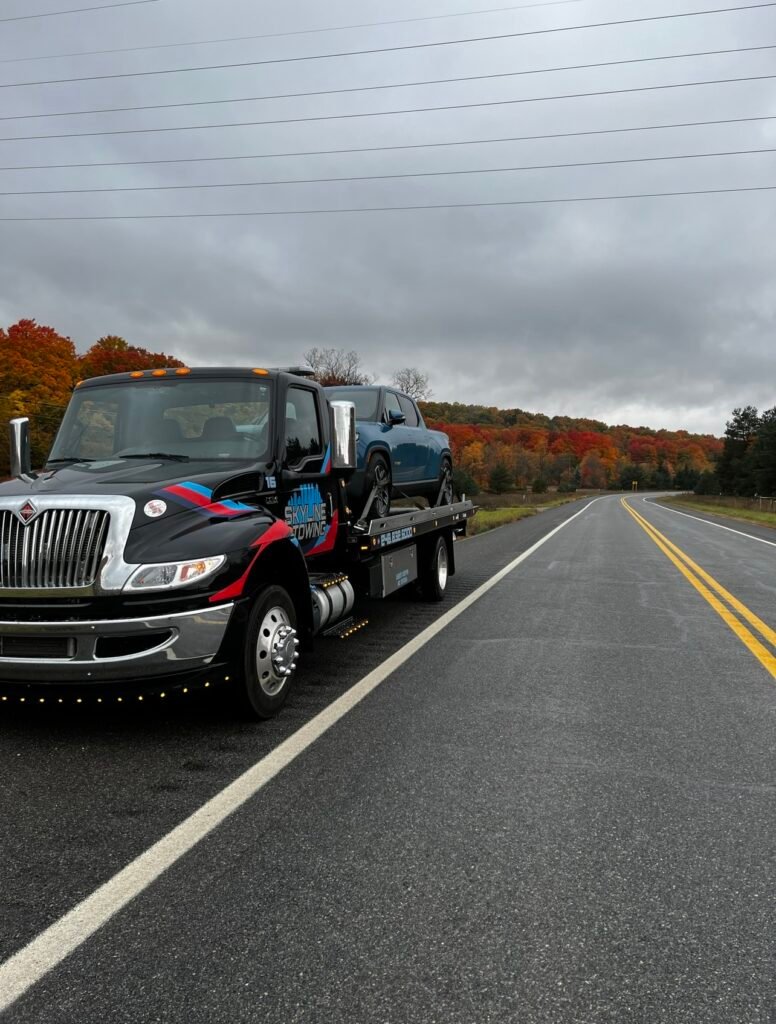
Not everyone wants to pay a monthly fee just to have someone show up when their car dies on the Lodge Freeway at midnight. If you’ve ever been stranded on I-94 or stuck with a flat on Michigan Avenue in Dearborn, you already know that roadside emergencies don’t follow a schedule, and paying for a subscription you barely use doesn’t always make sense. That’s exactly why pay per use roadside assistance has become a go-to option for drivers across Metro Detroit.
The concept is simple: you call when you need help, you pay for that single service, and you move on. No annual contracts, no recurring charges, no waiting for a membership card in the mail. For people who drive newer vehicles, have decent mechanical knowledge, or just don’t break down often enough to justify a yearly plan, paying per incident can save real money. But the cost per call varies widely depending on who you contact and what kind of help you need.
We put this list together because we see it every day. At Skyline Towing Service, headquartered at 6450 E Hancock St, Detroit MI 48207, we handle thousands of roadside calls across Detroit, Dearborn Heights, Southfield, Taylor, Livonia, and surrounding areas, many from drivers who specifically want one-time service without the membership hassle. Here are seven pay per use roadside assistance options available to Detroit drivers right now, with honest details on what each one actually costs and how they work.
1. Skyline Towing in Detroit
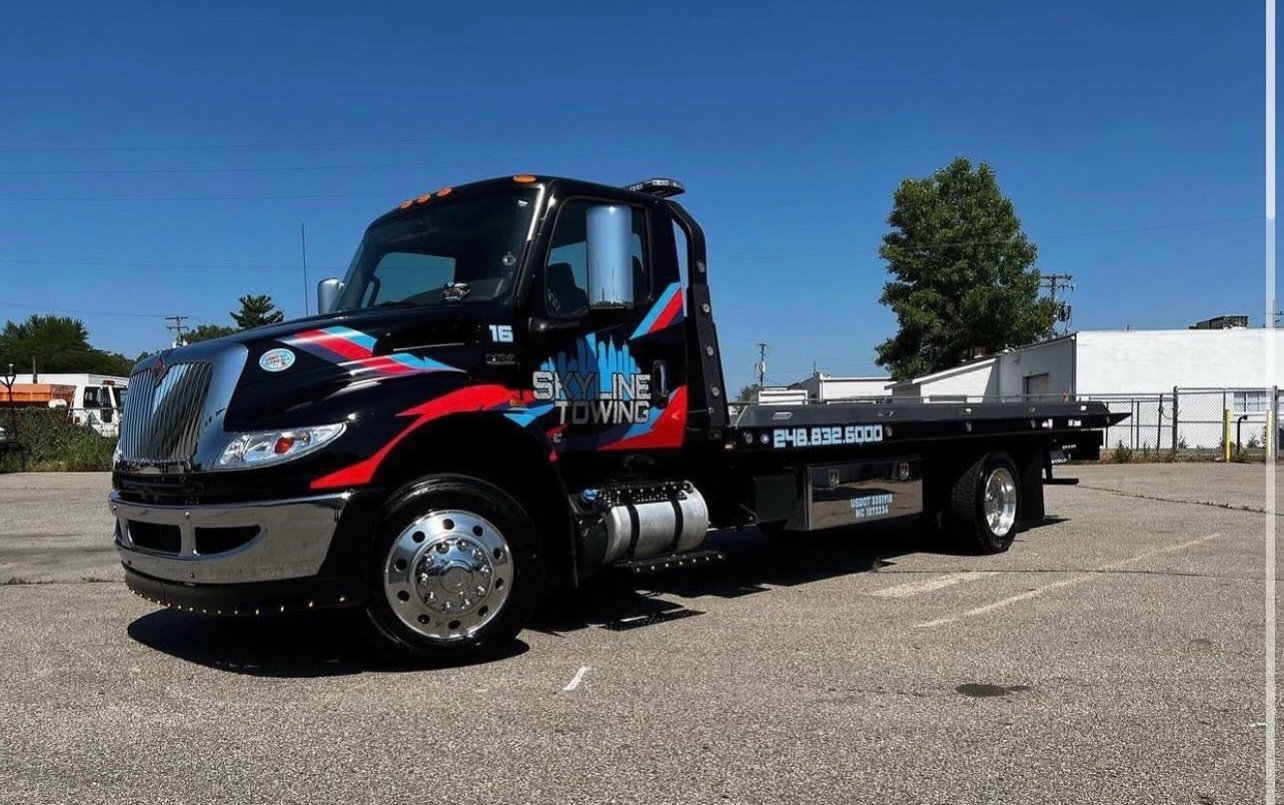
Skyline Towing Service operates out of 6450 E Hancock St, Detroit MI 48207 and covers the full Metro Detroit footprint, including Dearborn, Southfield, Taylor, Livonia, and Dearborn Heights. When you call, you pay for the specific service you need and nothing else. No membership paperwork, no annual fee, no waiting for a card in the mail before someone dispatches a truck.
What it covers for pay-per-use calls
Skyline handles a wide range of roadside situations on a single-call, single-payment basis. Services include standard and long-distance towing, jump starts, lockouts, tire changes, fuel delivery, winch outs, accident recovery, and mobile tire sales and installation directly at your location. Heavy-duty equipment is also available for commercial vehicles and oversized loads stuck anywhere from the Lodge to I-75 southbound.
Skyline is one of the few local providers in Detroit that can handle both a locked-out sedan and a full heavy-duty recovery through the same dispatch line.
Private property towing and parking enforcement services round out the offering, which puts Skyline in a different category than most pay per use roadside assistance providers. For drivers who need more than a jump start, having winch service and accident recovery available through one local number is a practical advantage worth knowing about.
How to request help from 6450 E Hancock St, Detroit MI 48207
Requesting service is straightforward. Call Skyline directly, give your location, describe the issue, and a dispatcher routes the nearest available truck to you. The team operates 24 hours a day, seven days a week, so whether you’re stuck on Michigan Avenue at 2 a.m. or sitting on a cold I-94 shoulder after a blowout, someone picks up immediately.
- Share your exact cross street or mile marker for faster dispatch
- Describe your vehicle type upfront if you have an SUV, truck, or commercial vehicle
Pricing and fees to expect in Metro Detroit
Pricing at Skyline is based on the service type and your location within Metro Detroit. Towing fees factor in distance, vehicle size, and whether specialized equipment is required. Flat-rate pricing typically applies to jump starts, lockouts, and tire changes, while longer tows or heavy-duty recoveries are quoted before the truck rolls. You know the cost before anyone arrives.
Watch-outs and best-fit situations
Skyline is the right call when you want fast local response from a team that knows Detroit roads, neighborhoods, and winter conditions. It works especially well when national dispatch programs fall short, such as a winch out on a flooded side street or a heavy-duty recovery from a tight commercial lot. If you need documentation for insurance purposes, request it at the time of dispatch.
2. Allstate pay-per-use roadside assistance
Allstate offers roadside assistance as an optional add-on to its auto insurance policies, but it also dispatches service through its network on a pay-per-incident basis for drivers who do not carry an Allstate policy. You can call their roadside line or use the Allstate mobile app to request help without signing up for a subscription plan first.
What it covers for pay-per-use calls
Allstate’s roadside network covers the basics: towing, jump starts, flat tire changes, lockouts, and fuel delivery. Coverage scope depends on what the dispatched contractor can handle in your area. For most standard roadside calls in Metro Detroit, the coverage is adequate, but it is worth confirming what is included before a truck rolls.
Heavy-duty towing and winch-out recovery are not standard through Allstate’s pay-per-use dispatch, so if your situation involves a serious recovery, call a local provider directly.
How to request help in Detroit and nearby suburbs
You can reach Allstate roadside dispatch through the Allstate mobile app or by phone at their national roadside line. Give your location, vehicle type, and a description of the problem. Service is routed through a contractor network, meaning the response time and equipment quality in Detroit can vary depending on who is available.
Pricing and fees to expect per incident
Without a policy add-on, per-incident fees through Allstate typically range from $50 to $100 or more depending on service type and distance. Allstate policyholders with the roadside add-on pay a much lower rate or nothing per call. Confirm pricing before dispatch to avoid surprises.
Watch-outs and best-fit situations
Allstate pay per use roadside assistance works best for existing Allstate customers who forgot to add the roadside option to their policy and need a one-time fix. If you are not already an Allstate customer, the pricing and contractor variability make a direct local call more predictable.
3. State Farm Emergency Roadside Service
State Farm offers emergency roadside service as an optional add-on to its auto insurance policies, but drivers without a State Farm policy can still request a dispatch and pay per incident at the time of service. This makes it a viable pay per use roadside assistance option if you are already familiar with the State Farm brand and prefer working through an established insurance network.
What it covers for pay-per-use calls
State Farm’s roadside program covers towing, battery jump starts, flat tire changes, lockouts, and fuel delivery for most standard passenger vehicles. The network dispatches local contractors, so the equipment and response times in Detroit and surrounding suburbs like Southfield or Taylor depend on which contractors are active in your zone at the time you call.
How to request help if you do not have coverage
You can request service through State Farm’s roadside assistance line or through the Pocket Agent mobile app. Share your location, vehicle description, and the type of problem you are dealing with. If you do not carry a State Farm policy, a dispatcher will still route a contractor to you, but you will pay the full out-of-pocket rate directly.
Non-policyholders calling State Farm roadside dispatch in Detroit should confirm pricing upfront, because rates vary by contractor and service type.
Pricing and fees to expect on a dispatch
Without the roadside add-on attached to a policy, per-incident costs typically land between $50 and $100, with towing fees increasing based on distance. Confirm the quoted amount before the truck leaves, because fuel prices and contractor rates can push the final bill higher than the initial estimate.
Watch-outs and best-fit situations
State Farm roadside dispatch works best for existing State Farm policyholders who do not currently carry the roadside add-on but need help once and want to stay within a familiar system. If you need a winch out, accident recovery, or heavy-duty service, contact a local Detroit provider directly rather than relying on a standard insurance contractor network.
4. Credit card roadside dispatch programs
Several major credit card networks, including Visa and Mastercard, include roadside dispatch as a built-in benefit on qualifying cards. This is one of the most overlooked forms of pay per use roadside assistance available to drivers right now, because the dispatch service itself is free to call, though the cost of service still comes out of your pocket.
What it covers for pay-per-use calls
Credit card roadside programs typically cover towing up to a set mileage, battery jump starts, flat tire changes, lockouts, and fuel delivery for standard passenger vehicles. The benefit connects you to a dispatch network that locates a nearby service provider, but it does not absorb the labor and service fees on your behalf. You pay the contracted rate directly to the provider who arrives.
How to request help through Visa or Mastercard dispatch
Flip your card over and call the number on the back, then ask specifically for roadside dispatch. You can also find the roadside benefit number through your card issuer’s app or website. Have your card number, vehicle location, and a description of the problem ready before the call connects to speed up dispatch.
Visa and Mastercard roadside dispatch lines are available around the clock, but hold times during peak hours or bad weather can stretch longer than calling a local Detroit provider directly.
Pricing and fees to expect per service call
Service fees run $50 to $150 or more depending on what you need and how far the tow runs. The dispatch is free, but every minute of labor and every mile of towing hits your tab directly.
Watch-outs and best-fit situations
This option works well if you already carry a qualifying card and your situation is straightforward. For anything beyond a basic lockout or jump start on a Metro Detroit side street, calling a local provider gives you more control over pricing and response time.
5. Verizon roadside assistance dispatch
Verizon offers roadside assistance as an optional add-on through its wireless service plans, and it functions as a genuine pay per use roadside assistance alternative for drivers who already pay a Verizon phone bill. The benefit is billed directly to your wireless account, which keeps the process simple if you are already a Verizon customer stranded somewhere on I-75 or a side street in Southfield.
What it covers for pay-per-use calls
Verizon’s roadside program covers towing, battery jump starts, flat tire changes, lockouts, and fuel delivery for standard passenger vehicles. Service is dispatched through a third-party contractor network, so the provider who shows up in Detroit or Livonia depends entirely on who is available in your zone at the time you call. Heavy-duty recovery and winch service are not standard through this program.
If your situation goes beyond a basic lockout or jump start, a local Detroit provider will get you more reliable equipment and faster response than a national contractor network.
How to request help when you are stranded in Detroit
Call #ROAD (#7623) from your Verizon phone to reach the roadside dispatch line. Give your location, your vehicle information, and a clear description of the problem. The dispatcher locates a nearby contractor and sends them to you. Knowing your exact cross street or highway mile marker before you call shortens the dispatch time significantly.
Pricing and fees to expect per incident
Verizon charges roughly $3 to $5 per month if you add roadside assistance to your plan, which covers multiple incidents per year. Without the add-on, per-incident pricing runs $50 to $100 or more depending on service type and distance. Confirm the total before anyone dispatches.
Watch-outs and best-fit situations
This option fits existing Verizon customers who already carry the roadside add-on. For non-subscribers or anyone needing more than basic roadside help, calling a local Detroit provider directly saves both time and money.
6. Roadside help through your automaker app
Most newer vehicles sold in Metro Detroit come with connected services built into the vehicle itself, and many of those programs include roadside assistance. Ford, GM, Chrysler, Toyota, and others bundle these features into apps like FordPass, myChevrolet, and Toyota Connected Services, giving you a direct line to roadside help tied specifically to your car.
What it covers for pay-per-use calls
Automaker roadside programs typically cover towing, jump starts, flat tire changes, lockouts, and fuel delivery for the specific vehicle linked to your account. The service is designed for standard roadside situations and works best when your car is a current model year still under the manufacturer’s connected services plan.
How to request help through connected services
Open your automaker’s app on your phone, navigate to the roadside assistance section, and submit a request directly from the app. Most systems pull your GPS location automatically, which speeds up dispatch and removes the guesswork of explaining your cross street on a dark I-94 shoulder. You can also call the number listed in your owner’s manual if the app is not responding.
Automaker apps often connect fastest when your vehicle still has an active telematics subscription, so confirm your plan status before you actually need it.
Pricing and fees to expect after free coverage ends
New vehicles usually come with three to five years of complimentary roadside coverage included. Once that window closes, you either pay an annual renewal fee to keep the service active or pay per incident at rates the automaker sets, which can run $75 or higher depending on the service type and distance.
Watch-outs and best-fit situations
This option works well for drivers in newer vehicles still within their covered period. Outside that window, a single incident fee through an automaker program often costs more than calling a local Detroit provider directly for the same pay per use roadside assistance call.
7. On-demand roadside apps and marketplaces
On-demand roadside apps like Urgently and HONK have grown into full-service marketplaces that connect stranded drivers directly to local service providers. These platforms operate on a pure pay per use roadside assistance model, meaning you open the app, request help, pay for that single call, and you are done. No annual plans, no membership tiers, just direct dispatch through your phone.
What it covers for pay-per-use calls
Most on-demand apps handle towing, jump starts, lockouts, flat tire changes, and fuel delivery for standard passenger vehicles. Coverage depends on which local providers are active in your area at the time you request help. In Metro Detroit, availability is generally solid along major corridors like I-94 and I-75, but response times on side streets in Dearborn Heights or outer Livonia can run longer during peak hours.
How to request help and what details to share
Open the app, enter your exact location and vehicle type, then select the service you need. Most platforms show estimated arrival times and upfront pricing before you confirm, which removes the guessing. Share your cross street or a nearby landmark if GPS does not pin your position precisely, especially at night or on unfamiliar roads.
Confirming the provider’s arrival estimate before you commit to a dispatch saves you from waiting unnecessarily on a cold shoulder of the Lodge Freeway.
Pricing and fees to expect with app-based dispatch
Fees through these platforms typically range from $50 to $150 or more depending on service type and tow distance. Pricing is usually shown upfront, but surge pricing during bad weather or late-night hours can push totals higher than the initial quote.
Watch-outs and best-fit situations
App-based dispatch works well for straightforward situations where pricing transparency matters most. If your vehicle needs a winch out, heavy-duty recovery, or specialized equipment, calling a local Detroit provider directly gives you faster access to the right truck and a more predictable outcome.
A simple way to choose and move on
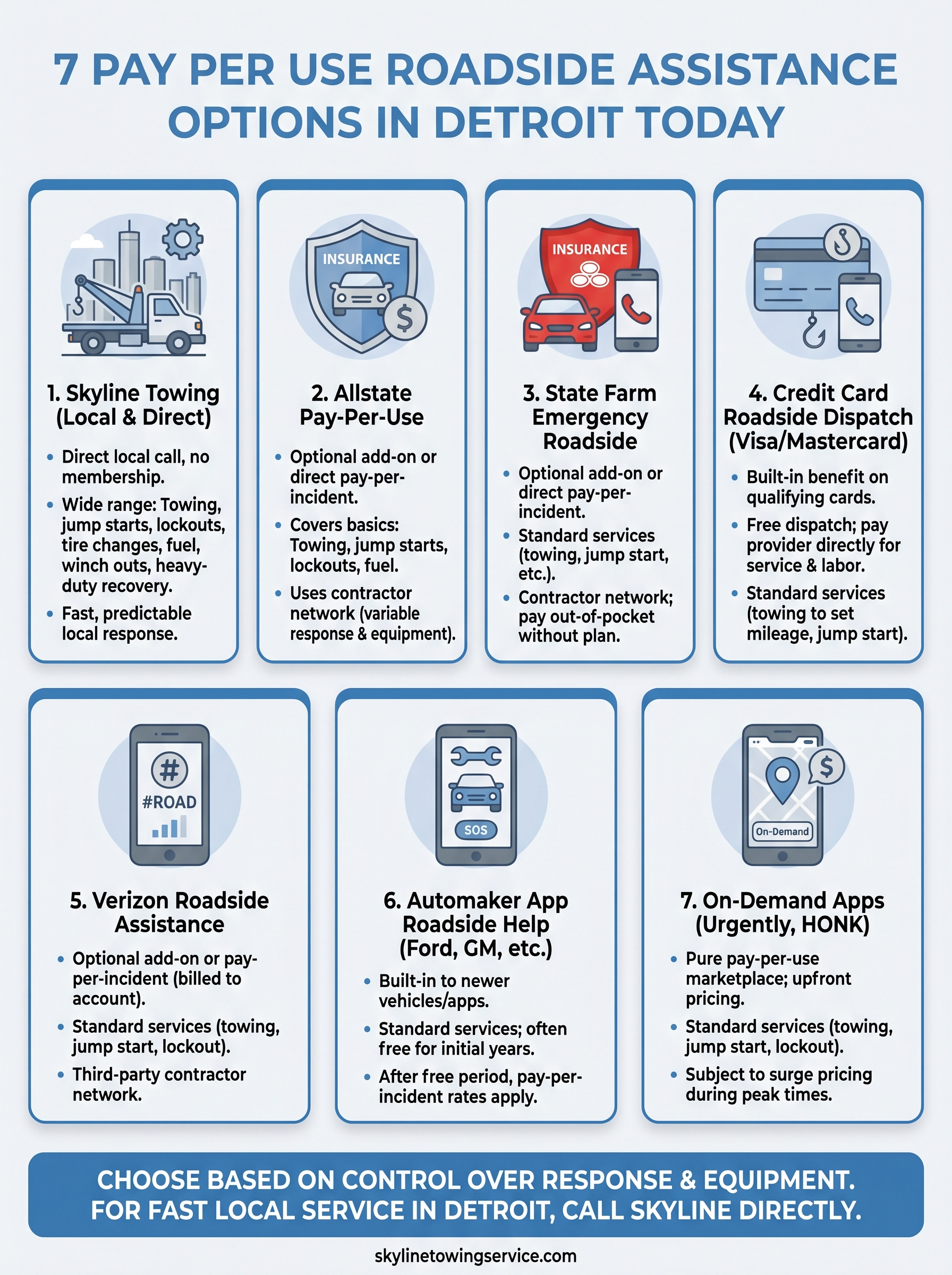
The fastest way to decide is to ask one direct question: how much control do you want over response time and equipment? If you are stranded on a Detroit highway and need the situation resolved quickly, calling a local provider directly cuts out the contractor routing that slows down most national programs and apps. If your car is newer and still under a manufacturer plan, check the app first and confirm your coverage is active before you pay anything out of pocket.
For everything else, pay per use roadside assistance from a local Detroit company gives you the clearest pricing, the shortest wait, and someone who actually knows the roads you are stuck on. Call Skyline Towing at 6450 E Hancock St, Detroit MI 48207 and get help dispatched to your exact location without a membership, a contract, or a hold queue. One call, one payment, and you are back on the road.