
Someone parks in your lot without permission. Maybe it’s a random car taking up space at your apartment complex, or an abandoned vehicle sitting in your commercial lot for weeks. You want it gone, but you’re not sure what you can legally do about it. That’s exactly where a private property towing service comes in, and getting the process wrong can expose you to fines, liability, or even lawsuits.
Michigan has specific rules about when and how you can tow unauthorized vehicles from private property, and those rules matter. Property managers, business owners, and landlords across Metro Detroit deal with this constantly, from blocked loading zones on Michigan Avenue in Dearborn to unauthorized overnight parking at apartment complexes off 8 Mile. The consequences of skipping a step or ignoring signage requirements can land squarely on the property owner.
At Skyline Towing, headquartered at 6450 E Hancock St, Detroit, MI 48207, we handle private property towing and parking enforcement across Detroit, Dearborn Heights, Southfield, Taylor, Livonia, and surrounding areas. We work directly with property owners and managers every day, so we know exactly how this process plays out locally, not just what the law says on paper.
This article breaks down the rules, costs, and steps involved in private property towing in the Detroit metro area so you can protect your property the right way.
Why private property towing exists
Private property towing exists because property owners have a legal right to control who uses their parking spaces. When someone parks on your lot without authorization, they’re occupying a resource that belongs to you, and that directly affects the people who are supposed to be there. Whether you manage a strip mall on Gratiot Avenue, a residential complex near the Lodge Freeway, or a warehouse in the industrial corridor between Detroit and Dearborn, unauthorized vehicles become your problem the moment they sit on your pavement.
The real damage unauthorized parking causes
A single unauthorized vehicle can block customer access, loading zones, or handicap spaces, which creates liability for you as the property owner. Beyond the inconvenience, blocked fire lanes at commercial properties can violate local fire codes, and that leads to citations from the city of Detroit or neighboring municipalities. If a tenant loses their designated spot night after night to someone who doesn’t even live in the building, you start losing trust as a landlord, and eventually you lose the tenant entirely.
Ignoring unauthorized parking consistently signals to others that your lot has no enforcement, which only draws more violators over time.
Property owners also deal with abandoned vehicles, which carry a different but equally serious set of problems. A car sitting in your lot for days or weeks can become a target for vandalism or stripping, and the liability from that activity often traces back to the property itself. In Michigan, an abandoned vehicle on private property can also attract code enforcement attention if neighbors or city inspectors flag it, turning one problem vehicle into a formal complaint on your record.
Why this problem is especially common across Metro Detroit
Metro Detroit’s parking landscape is dense and competitive, and that creates constant pressure on private lots. In neighborhoods like Midtown, Corktown, and Downtown Detroit, parking is limited, and people routinely leave vehicles in private lots when they head somewhere nearby on foot. Off major corridors like Michigan Avenue, Van Dyke, and 8 Mile, business lots see unauthorized parking around the clock, including overnight and on weekends when enforcement feels less likely.
A professional private property towing service addresses this by giving you an authorized, legal, and consistent way to clear those vehicles without confrontation, without guesswork, and without putting yourself at legal risk. Commercial property managers in Taylor, Southfield, and Livonia report similar patterns, particularly around high-traffic retail centers and apartment communities where parking demand regularly outpaces available space.
How private property towing works in Metro Detroit
When you call a private property towing service in Metro Detroit, the process starts with authorization. You, as the property owner or authorized manager, make the call and confirm the vehicle needs to be removed. The towing company does not operate independently on your lot without your direction, and that distinction matters legally.
The call and authorization process
Skyline Towing dispatches from 6450 E Hancock St, Detroit, MI 48207, which means we reach properties across Detroit, Dearborn, Southfield, Taylor, and Livonia quickly, often within 30 minutes depending on traffic on I-94 or the Lodge Freeway. When you call, you provide the vehicle’s location, description, and license plate if visible. We log that information and document the tow before we move the vehicle, which protects you if the owner disputes the removal later.
Proper documentation on every tow is what separates a clean, defensible process from one that lands property owners in small claims court.
What happens on-site
Once our driver arrives, they photograph the vehicle and confirm the violation before hooking up. This includes checking that valid signage is posted and visible at the point of entry, which Michigan law requires. If your signs are not in compliance, a responsible towing company will tell you before the tow happens rather than create a situation that could expose you to liability.
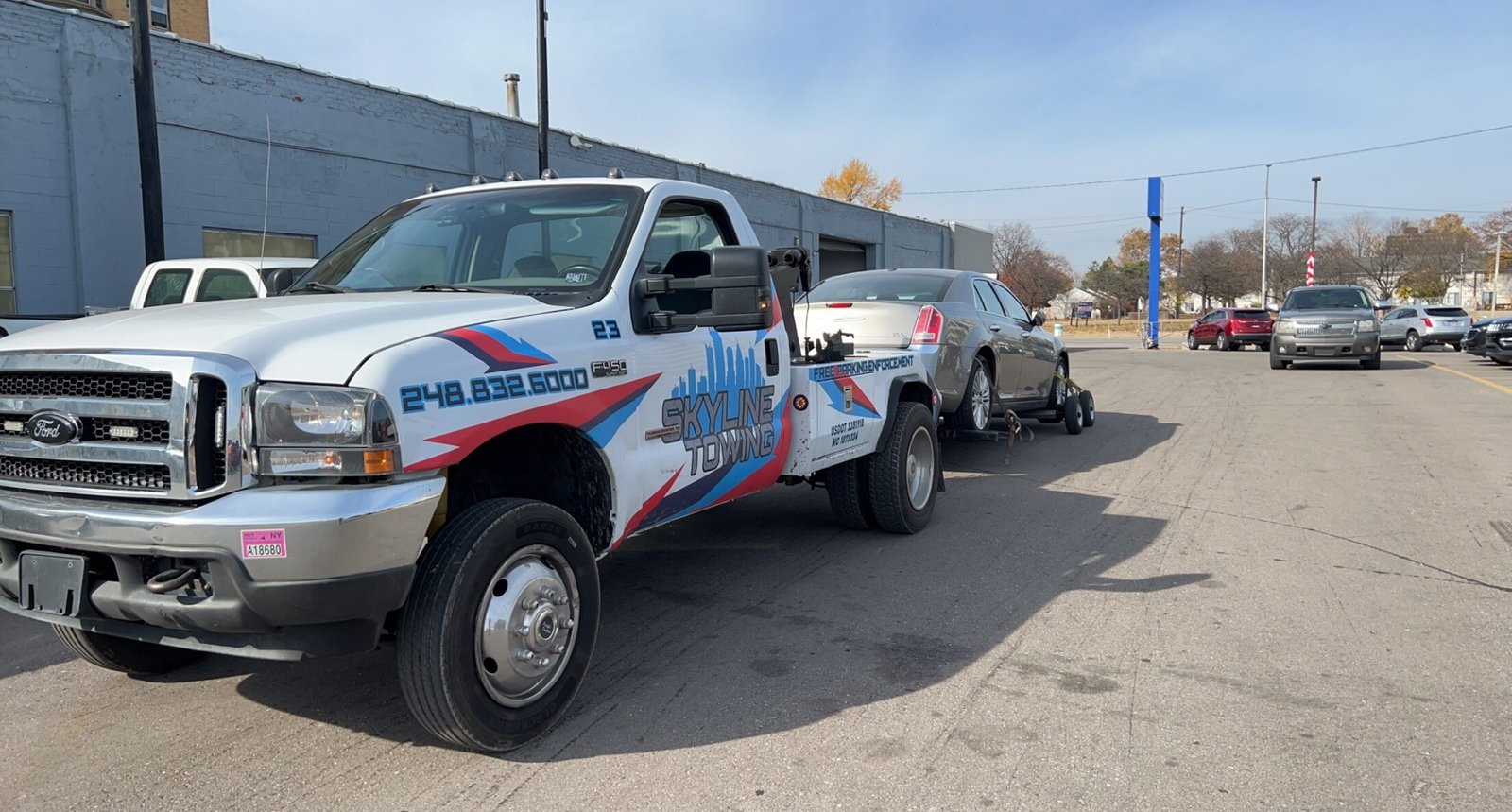
After the vehicle is removed, it goes to a licensed storage facility, and the registered owner receives notification through the Michigan Secretary of State system. From that point forward, the vehicle owner is responsible for contacting the storage facility directly to retrieve their car and pay applicable fees. Your responsibility as the property owner ends once the tow is completed and documented properly.
Follow Michigan rules and protect yourself
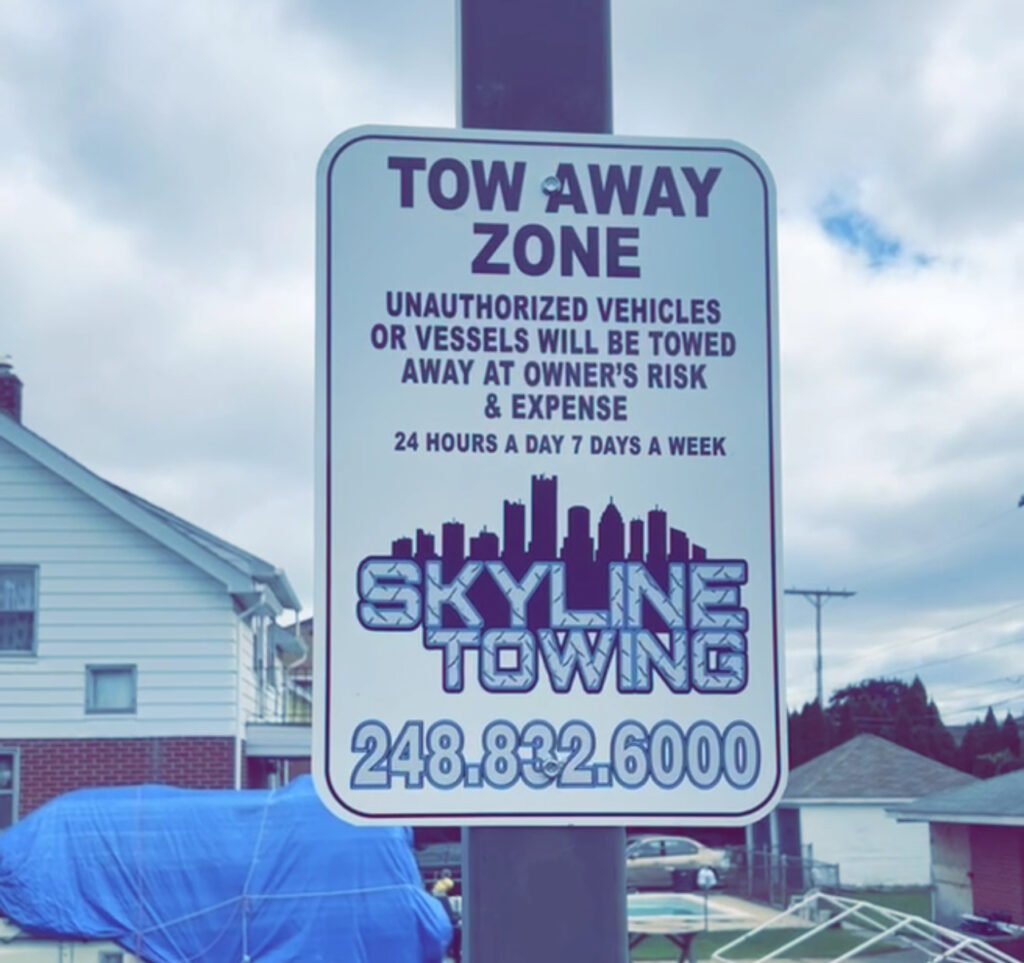
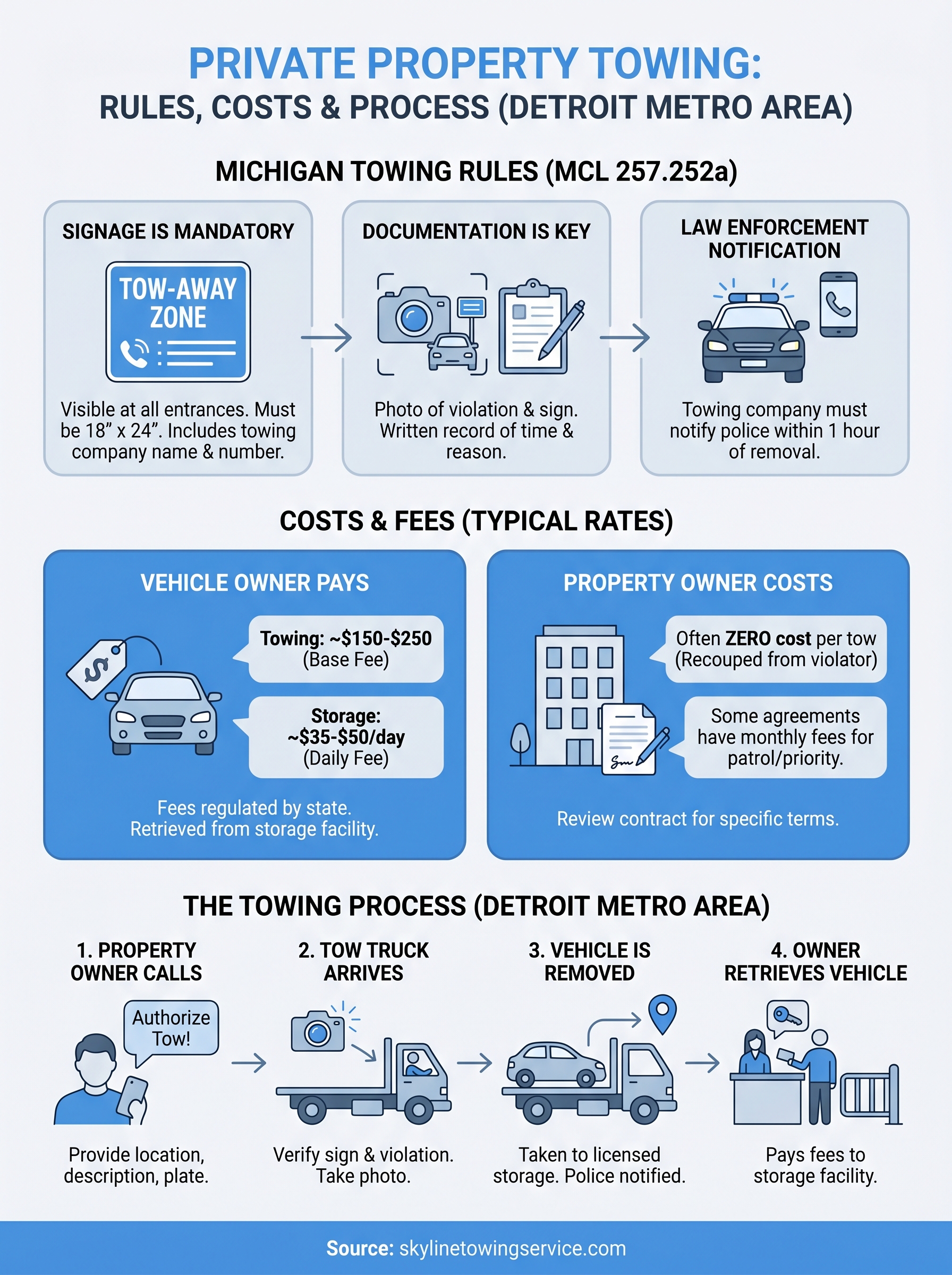
Michigan law gives property owners the right to remove unauthorized vehicles, but it also sets specific conditions you must meet before any tow happens. The most critical requirement is proper signage. Under Michigan’s Vehicle Code, MCL 257.252a, private property must display signs at all entrances that are clearly visible, at least 18 inches by 24 inches, and include the towing company’s name and phone number along with the reason vehicles may be towed. If your signs do not meet these requirements, a tow can be challenged and reversed, leaving you responsible for any costs the vehicle owner incurred.
Post compliant signs before you call
Every entrance to your lot needs a visible, compliant sign in place before you can legally authorize a tow. The sign must state that unauthorized vehicles will be towed at the owner’s expense and must display the contact information for the towing company you have under contract. Detroit city ordinances also require that signs remain in readable condition, so faded or damaged signs do not count. Before you work with a private property towing service, walk your lot and confirm every entry point is covered.
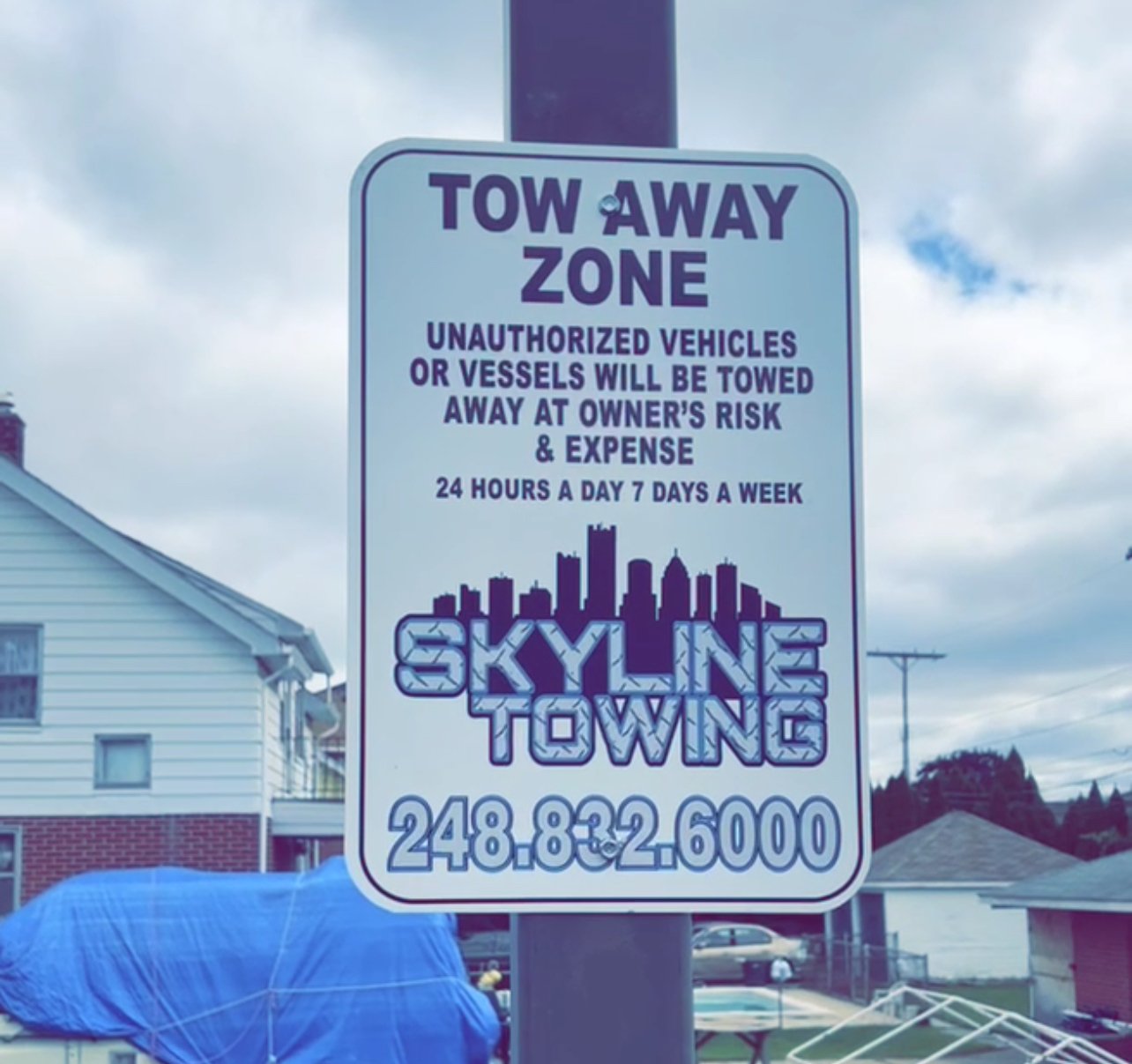
Skipping the sign requirement is the fastest way to turn a clean tow into a legal dispute that costs you more than the original parking problem.
Document everything before and after
Each tow needs thorough documentation to hold up if the vehicle owner disputes the removal. This means photographs of the vehicle in violation, your posted signage, and a written record of the time and reason for the tow. Michigan also requires that the towing company notify law enforcement within one hour of removing a vehicle from private property. Make sure your towing provider handles this step automatically, because that obligation does not disappear just because you assumed it was covered.
Understand costs, fees, and who pays
When an unauthorized vehicle gets towed from your property, the vehicle owner is responsible for paying retrieval fees, not you. This is a core reason why private property towing works as an enforcement tool: it shifts the financial burden entirely onto the person who violated your rules. That said, you need to understand the full cost picture before you set up any agreement with a towing provider.
What the vehicle owner pays
The person whose car gets towed covers the base tow fee and any daily storage charges that accumulate while the vehicle sits at the impound lot. In Michigan, towing fees from private property typically run between $150 and $250 for a standard passenger vehicle, with storage adding $35 to $50 per day depending on the facility. These amounts are regulated to some extent under Michigan law, and a licensed towing company must post their rate schedule in a visible location at the storage facility.
Vehicle owners have the right to retrieve their car at any hour, and the storage facility must allow after-hours pickup for a reasonable fee under Michigan law.
What you pay as the property owner
Your costs as a property owner or manager depend on the type of agreement you have with your towing provider. Many private property towing service agreements operate on a zero-cost model for the property owner, meaning you pay nothing per tow because the towing company recoups fees directly from the vehicle owner at the time of retrieval. However, some arrangements include a monthly contract fee in exchange for priority response and dedicated patrol of your lot. Make sure you read the agreement carefully and confirm exactly what you are responsible for before you sign anything.
Set up parking enforcement that actually works
Reactive towing, where you only call when a specific car is already causing a problem, works but it rarely solves the underlying issue. Consistent enforcement is what actually changes driver behavior, and that starts with building a clear system before problems pile up. A private property towing service with a dedicated lot patrol agreement means violators face real consequences every time, not just occasionally.
Put your towing agreement in writing
Before your first call, get a signed contract with your towing provider that spells out response times, documentation requirements, and fee structures. Skyline Towing, based at 6450 E Hancock St, Detroit, MI 48207, offers property managers in Detroit, Dearborn, Southfield, Livonia, and Taylor written agreements that outline exactly what happens from the moment you call to when the vehicle reaches the storage facility. Having that agreement documented protects you legally and sets clear expectations on both sides.
A written contract with your towing provider is not optional if you want enforcement that holds up when a vehicle owner disputes a tow.
Communicate the rules clearly to authorized users
Tenants, employees, and regular visitors need to know your parking policy in writing before they ever park on your lot. Send notices at lease signing, post rules in common areas, and keep records of who received that information. Clear communication upfront reduces the chance of legitimate users getting towed by mistake, which prevents conflicts that damage your relationship with the people you actually want on your property.
Pair written notices with periodic reminders, especially when signage changes or enforcement ramps up. Lot users who feel informed tend to comply, and that means fewer tows overall while keeping your space clear for the people who belong there.
Keep your lot clear without drama
Consistent enforcement, clear signage, and a reliable towing partner are the three things that keep unauthorized vehicles off your property without creating ongoing headaches. When drivers know your lot is actively monitored and violations carry real consequences, most of them find somewhere else to park. You rarely have to escalate when the system is already working.
Picking the right private property towing service makes the difference between sporadic enforcement and a lot that actually stays clear. Skyline Towing operates out of 6450 E Hancock St, Detroit, MI 48207 and serves property owners and managers across Detroit, Dearborn, Southfield, Taylor, Livonia, and surrounding Metro Detroit communities. We document every tow, comply with Michigan law on every call, and respond fast because we know the roads and neighborhoods here. If you’re ready to take control of your parking situation, contact Skyline Towing and get a property enforcement plan that fits your lot.