
If you’ve ever walked out to your car on a freezing January morning in Detroit and heard nothing but a weak click when you turned the key, you already know the frustration. Knowing how to jump start a dead car battery can save you hours of waiting on the side of the road, whether you’re parked on Michigan Avenue in Dearborn or stuck in a lot off Gratiot. It’s one of the most common calls we get here at Skyline Towing, and it’s also one of the easiest problems to fix yourself if you have the right tools and know the correct steps.
The catch is that doing it wrong can damage your vehicle’s electrical system or, worse, cause a battery to spark or crack. Cable connection order matters. So does knowing what to do when the engine still won’t turn over after multiple attempts. We’ve responded to plenty of jump start calls across Southfield, Taylor, Livonia, and throughout metro Detroit where a quick fix turned into a bigger problem because the cables were hooked up backward.
This guide walks you through the full process, from checking your battery to connecting jumper cables in the right sequence to getting back on the road safely. We’ll also cover what to do if you don’t have another vehicle nearby and when it makes more sense to call for professional roadside assistance. Everything here comes from what our crew at 6450 E Hancock St, Detroit MI 48207 deals with daily, across every season and road condition metro Detroit throws at drivers.
Before you start and stay safe
Safety comes first, before you touch a single cable. Detroit winters are brutal, and summer heat along I-94 or I-75 isn’t much kinder to aging batteries. Before you learn how to jump start a dead car battery the right way, you need to know what to check, what to gather, and what warning signs tell you to put the cables back in the trunk and call for help instead. Rushing past this part is how a simple fix turns into a tow and a repair bill.
Gather your equipment first
You don’t want to be digging through your trunk in the dark on the shoulder of I-96. Get your gear organized before you’re ever in that situation. Heavy-gauge jumper cables are the most important item, and the gauge rating makes a real difference. Ideally, use 4-gauge or 6-gauge copper cables that are at least 20 feet long. Shorter cables make it hard to position two vehicles safely, especially in tight parking lots off Woodward or on a narrow side street in Dearborn Heights.
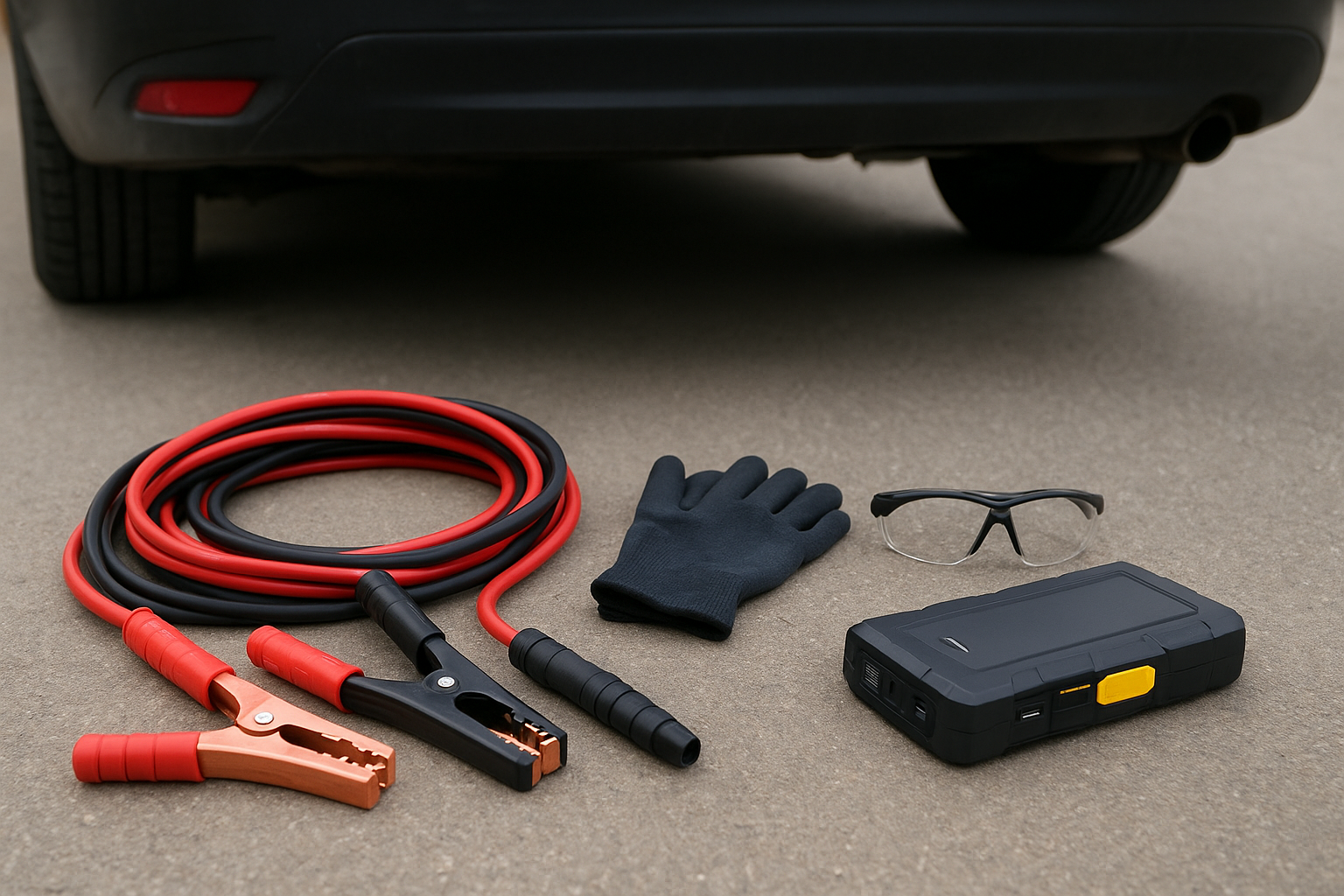
Here’s what you should keep in your vehicle at all times:
- Jumper cables (4-gauge or 6-gauge, 20 feet minimum)
- Insulated gloves to protect your hands from sparks and battery acid
- Safety glasses to shield your eyes during the connection process
- A flashlight or headlamp for nighttime situations on unlit streets
- A portable jump starter pack as a backup when no donor vehicle is available
A portable jump starter pack is one of the best investments you can make for winter driving in metro Detroit. Temperatures below 20°F can drain a weak battery overnight, and you may not always find another driver willing to stop on a deserted stretch of road at 2 a.m.
Check the battery before you do anything
Not every dead battery is safe to jump. Cracked casings, bulging sides, or a strong sulfur smell are all signs that the battery is damaged and should not be connected to cables under any circumstances. A damaged battery can leak acid or rupture during a jump attempt. If you notice any of these signs, step away from the vehicle and call a professional.
Also inspect the terminal connections before connecting anything. Heavy corrosion, which looks like a white or blue-green powder built up around the posts, can block current transfer and prevent the jump from working. A small amount of corrosion can sometimes be cleaned with a wire brush, but heavy buildup means the terminals need service before a jump attempt will do anything useful.
Understand the risks to modern vehicle electronics
Newer vehicles, particularly those built in the last ten years, carry a significant amount of sensitive electronics. Incorrect cable polarity, meaning connecting positive to negative or negative to positive, can blow fuses, damage the alternator, or destroy the battery management system in seconds. That mistake is not a quick fix. In many vehicles, it runs into hundreds of dollars in parts and labor.
Your owner’s manual will often specify whether your vehicle has special jump start procedures or requires connection at a dedicated terminal location rather than directly at the battery. Some European models and hybrids use remote terminals in the engine bay or trunk specifically to protect the battery and surrounding electronics. Check your manual before you assume the battery is accessible the standard way.
Pick a safe location before anything else
Where you attempt the jump matters as much as how you do it. Never attempt a jump start on a busy lane of I-75 or in the middle of a high-traffic intersection. If you can move the vehicle at all, push or roll it to a parking lot, a side street, or at minimum the far shoulder away from traffic. Turn on your hazard lights, and if you have road flares or reflective triangles, place them behind the vehicle to alert other drivers. Our crew at 6450 E Hancock St, Detroit MI 48207 responds to secondary accidents caused by vehicles stopped in dangerous positions more often than most people realize.
Step 1. Park, prep, and find the terminals
Before you touch any cables, you need both vehicles positioned correctly and the battery terminals identified. This step might seem straightforward, but getting it wrong adds time and creates risk. Poor positioning forces you to stretch cables across hot engine components or connect at odd angles, which increases the chance of a slip or a short. Take two minutes here and the rest of the process goes much smoother.
Position both vehicles correctly
Pull the donor vehicle nose-to-nose with your dead vehicle so both engine bays face each other. You want the batteries as close as possible without the bumpers actually touching. In a standard parking lot, parking space to parking space, front ends lined up, works well. If you’re on a side street in Detroit or parked along a curb, position the donor vehicle parallel and as close as the cable length allows.
Once both vehicles are in position, shift both into park (or neutral with the parking brake engaged for manual transmissions) and shut off the donor car’s engine. Turn off all accessories in both vehicles, including headlights, heat, and the radio. Running accessories during the connection process pulls current away from where it needs to go and can cause voltage spikes in sensitive electronics.
Locate the battery terminals
Pop both hoods and find the battery in each vehicle. Most batteries sit near the front of the engine bay, often on the driver’s or passenger’s side depending on the make and model. Some vehicles, including certain Ford and BMW models, keep the battery in the trunk or under the rear seat, but they’ll have a remote positive terminal in the engine bay marked with a red cover and a plus (+) sign. Check your owner’s manual if you don’t see the battery right away.
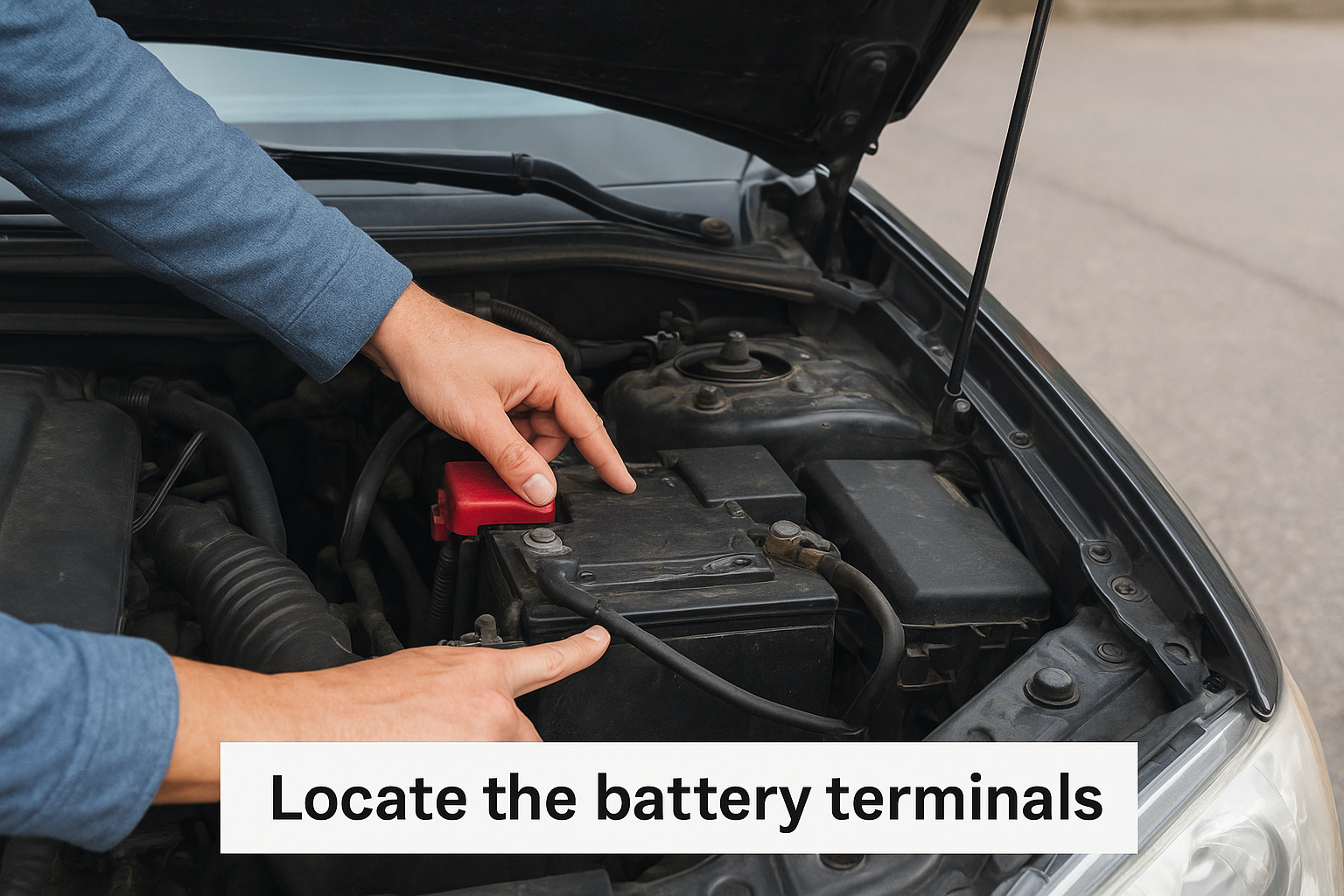
Once you’ve found both batteries, identify the positive terminal (marked + and usually red) and the negative terminal (marked – and usually black) on each one. Look at both batteries for any visible damage, such as cracks, bulging, or heavy corrosion, before you go any further. Learning how to jump start a dead car battery correctly means confirming everything looks safe before cables ever come out of your trunk.
If either battery shows cracks, bulging, or a chemical smell, stop immediately and call for professional help. Attempting to jump a damaged battery can cause acid spray or a rupture.
Take a clear mental note of which terminal is positive and which is negative on both batteries. Mixing these up in the next step causes serious electrical damage.
Step 2. Connect jumper cables in the right order
This is the step where most people make costly mistakes. Cable order is not optional, and it’s not just a technicality. The sequence you follow here determines whether you safely transfer power between the two batteries or create a dangerous electrical arc near flammable hydrogen gas that batteries naturally emit. Every technician at Skyline Towing’s 6450 E Hancock St, Detroit MI 48207 location follows this exact process, whether they’re working a call in Livonia or pulling someone off the shoulder of I-696.
Follow this four-step connection sequence
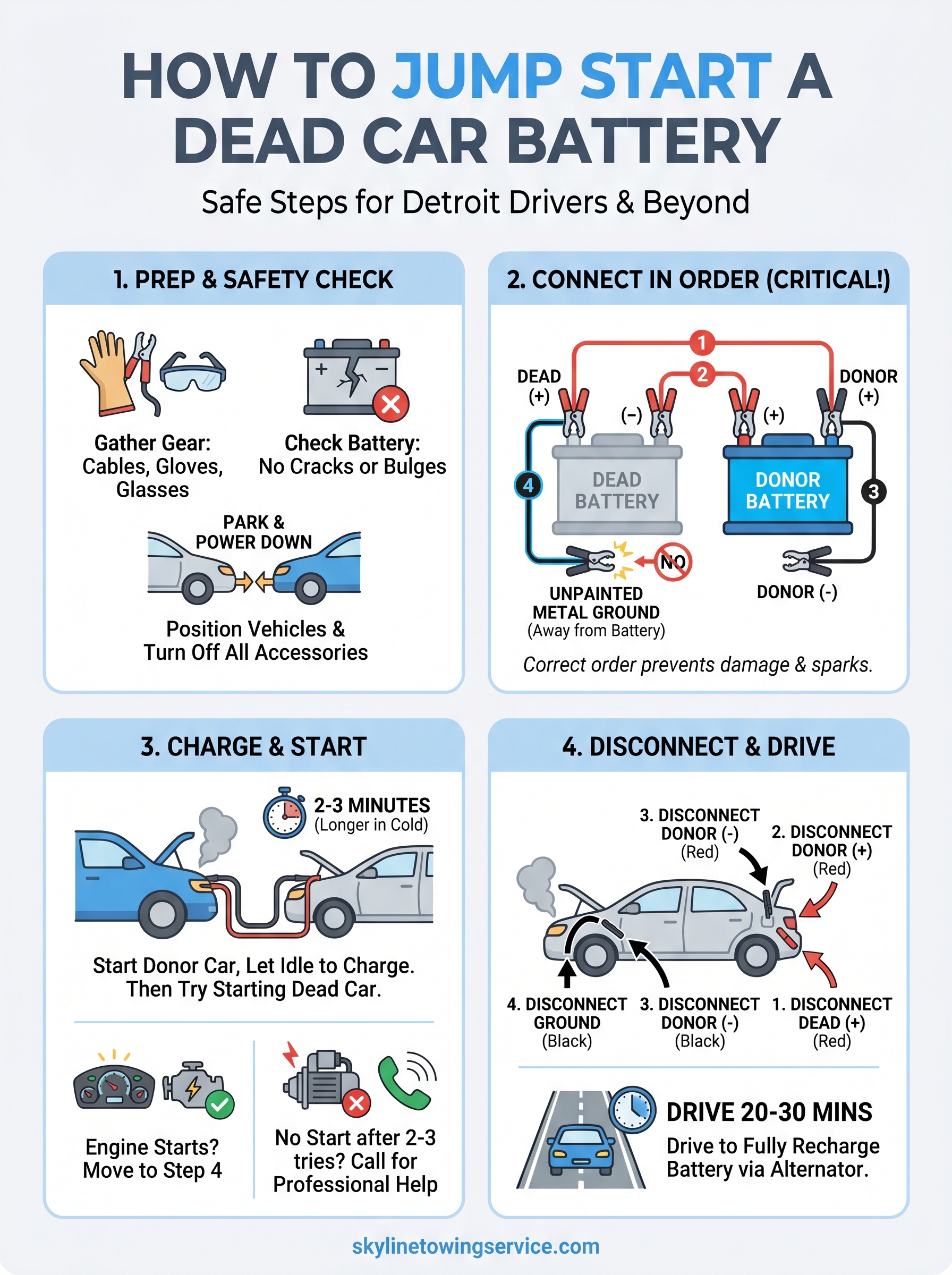
Connecting the cables in the right order is the core of how to jump start a dead car battery without damaging either vehicle. Start with the positive cables first, then move to the negatives. That order is intentional and protects both you and the vehicles involved. Follow these steps exactly:
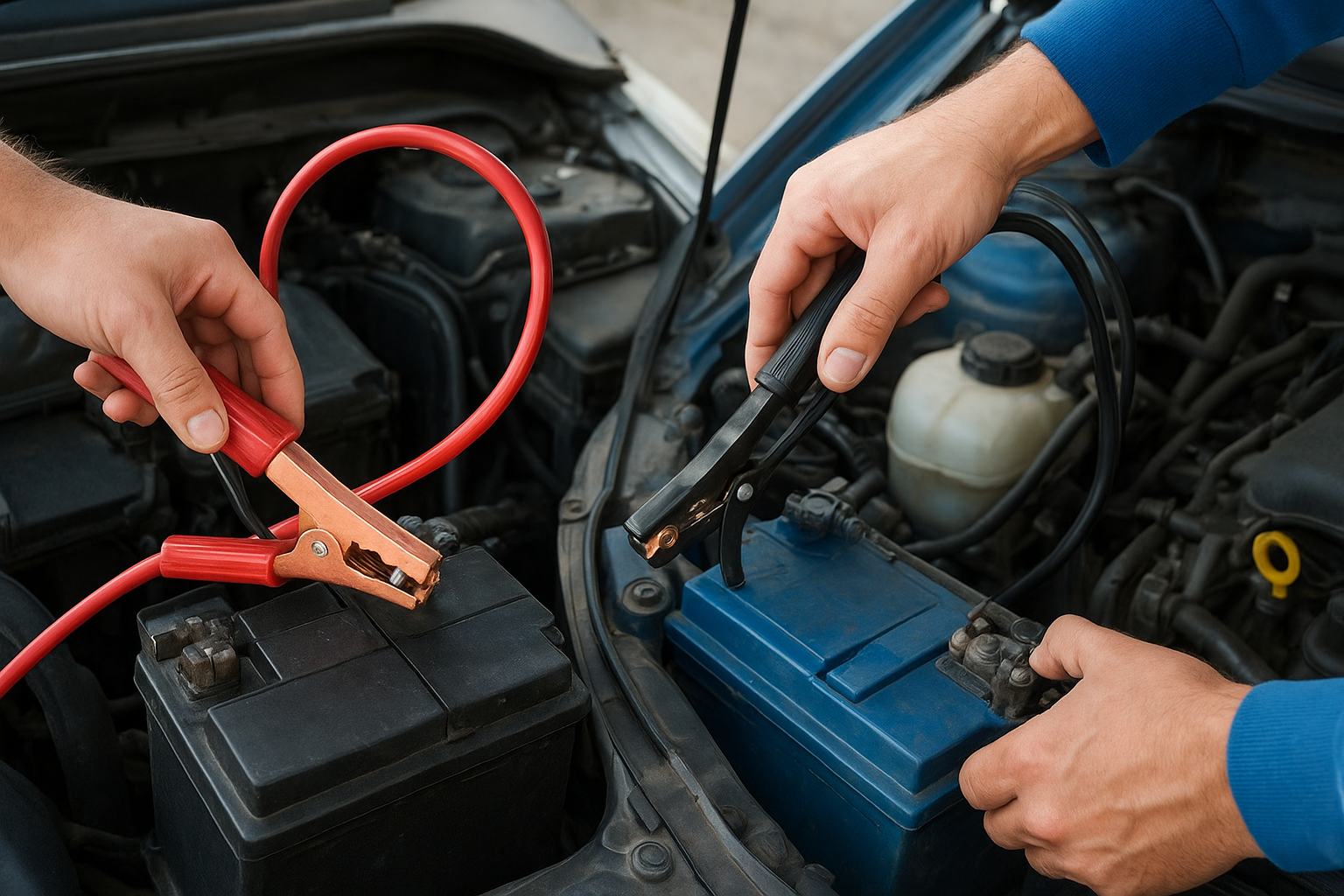
- Red cable to dead battery positive (+): Clamp the red cable to the positive terminal on the dead battery. Make sure the clamp bites firmly onto the terminal post and does not slip.
- Red cable to donor battery positive (+): Connect the other end of the red cable to the positive terminal on the donor battery. Both positive terminals are now linked.
- Black cable to donor battery negative (-): Clamp the black cable to the negative terminal on the donor battery. This completes the ground circuit on the working vehicle.
- Black cable to unpainted metal on dead vehicle: Do not connect this final clamp to the dead battery’s negative terminal. Instead, find a clean, unpainted metal bracket or bolt in the engine bay, away from the battery. This reduces spark risk near the battery and acts as a safe ground point.
Never connect the final black cable directly to the negative terminal of the dead battery. Sparks near a battery can ignite hydrogen gas, and that risk is not worth the few seconds you save.
Why the ground point matters
Many drivers skip the unpainted metal ground step and clip straight to the dead battery’s negative post. That shortcut creates a spark directly next to the battery, which vents small amounts of hydrogen gas during normal operation. A spark near hydrogen is a serious hazard. Instead, pick a solid metal surface like an engine block bracket, a bolt head on the chassis, or a metal strut tower brace.
Check that all four clamps are secure before you step back from both engine bays. A loose connection prevents the charge from transferring properly, and you will waste time troubleshooting a problem that a firm clamp would have solved in seconds.
Step 3. Start the donor car and charge a few minutes
With all four cables connected, start the donor vehicle and let it run for two to three minutes before you attempt to start your dead car. This waiting period allows the donor battery to push a charge into your flat battery through the cables. Skipping this step and jumping straight to cranking your dead car is one of the most common mistakes drivers make, and it often results in nothing happening because the dead battery doesn’t have enough reserve yet to turn the engine over.
Let the donor engine run and build charge
Keep the donor vehicle idling at a slightly elevated RPM, around 1,500 to 2,000 RPM, during the charging period. You can do this by pressing lightly on the gas pedal or having the other driver hold it at that range. A higher idle increases alternator output, which means more current flows through the cables into your dead battery. On a cold Detroit morning when temperatures drop below 20°F, give it closer to four or five minutes rather than the minimum two. Cold batteries absorb charge more slowly than warm ones, and the extra time makes a real difference when you’re sitting in a lot off Michigan Avenue in January.
Charging for at least two full minutes before attempting a start is the single most skipped step when drivers learn how to jump start a dead car battery on their own.
Watch for signs the charge is transferring
Your dead vehicle will give you clear signals that power is moving through the cables. Interior lights, the dashboard display, or the radio should flicker or come on during the charging period even before you try to start the engine. If nothing activates after four or five minutes, check each cable clamp and confirm it’s seated firmly on its terminal or ground point. A loose clamp, particularly the final black cable on the unpainted metal ground, is the most common reason a jump attempt stalls at this stage without any obvious explanation.
Watch the donor vehicle’s engine behavior closely during this time as well. If the donor car begins to stumble or stall, that’s a signal your dead battery has a severe internal drain or a shorted cell. A battery in reasonably recoverable condition will pull current steadily without straining the donor vehicle’s electrical system. If the donor car’s engine repeatedly struggles or drops in RPM, disconnect everything and call for professional help rather than risk damaging a second vehicle in the process.
Step 4. Start your car, then remove cables safely
After the charging period, you’re ready to attempt the start. Turn the ignition key or press the start button in your dead vehicle while the donor car continues to idle. Give it a full crank for three to five seconds maximum. If the engine catches and starts running, let it idle for at least 30 seconds before moving to cable removal. If it does not start on the first attempt, wait another two minutes with the donor running before trying again. Understanding how to jump start a dead car battery fully means knowing that rushing the start attempt is one of the most common reasons the process fails and frustrates drivers.
What to do if the engine still won’t turn over
If your vehicle does not start after two or three attempts with adequate charging time in between, something beyond a simple dead battery is likely involved. A completely failed battery cell, a bad starter motor, or a parasitic drain pulling the battery down faster than the donor can charge it are all realistic possibilities. In metro Detroit winters, a battery that was already marginal can fail completely in one overnight freeze, and a jump will not resurrect a battery that no longer holds any charge capacity. At that point, continuing to crank risks overheating the starter motor, which adds another repair to the bill.
If your engine cranks slowly but does not start after multiple attempts, stop trying and call a professional rather than draining the donor vehicle’s battery as well.
Remove cables in the reverse order
Once your vehicle is running, remove the jumper cables in the exact reverse order you connected them. This sequence protects both vehicles’ electrical systems as the circuit breaks down safely. Follow these steps without skipping or reordering them:
- Black cable from the unpainted metal ground on your vehicle
- Black cable from the donor battery negative (-) terminal
- Red cable from the donor battery positive (+) terminal
- Red cable from your battery positive (+) terminal
Keep both engines running during removal and avoid letting the clamps touch each other or any metal surface once they come free. A clamp swinging loose and contacting the wrong surface with live current still in the cables can cause a spark or a short.
Drive to recharge the battery fully
Your battery needs time to rebuild a full charge after a jump start, and idling in a parking lot will not accomplish this. Drive your vehicle for at least 20 to 30 minutes on a highway or a longer surface road like I-94 or M-39, where the alternator operates at higher output and pushes a meaningful charge back into the battery throughout the drive.
No start in Detroit: 6450 E Hancock St, Detroit MI 48207
Sometimes you follow every step of how to jump start a dead car battery exactly right, and the engine still will not fire. That outcome is more common than most drivers expect, especially in metro Detroit where extreme temperature swings between January and August can destroy a battery’s internal capacity in a single season. When a battery fails completely, no amount of charge from a donor vehicle will bring it back. At that point, you need professional help, not another attempt.
If your car cranks slowly or not at all after two full jump attempts with adequate charging time, stop trying and call for a tow rather than drain the donor battery too.
Signs You Need a Tow Instead of Another Jump
Your vehicle will tell you when a jump is not going to solve the problem. A battery that clicks rapidly but does not crank often points to a dead cell or a failed battery that cannot hold any charge. A starter motor that grinds or makes a hard mechanical sound is a separate issue entirely, and running more current through it with jumper cables will not change that outcome. Flickering dash lights combined with zero cranking response after a full charging period almost always means the battery needs full replacement, not a jump.
Here are the specific signs that tell you to put the cables away and make the call:
- Engine clicks once or rapidly but never cranks
- Battery voltage warning stays lit after multiple attempts
- Dome lights and accessories work but the engine will not turn over
- You smell burning from the engine bay after cranking
- The donor car struggles badly during every charging attempt
How Skyline Towing Reaches You Across Metro Detroit
Skyline Towing operates out of 6450 E Hancock St, Detroit MI 48207, and our crew covers Detroit, Dearborn, Southfield, Taylor, Livonia, and the surrounding metro area around the clock. Whether you’re stuck in a parking structure downtown, stranded on the shoulder of I-94, or sitting in a lot off Telegraph Road at midnight, we dispatch quickly and bring the equipment to handle battery replacements, jump starts, and tows on the spot.
Our technicians carry portable battery packs and testing equipment on every service call, so we can confirm whether your battery can hold a charge or needs replacement before we leave the scene. You get an answer and a fix, not just a temporary boost that leaves you guessing whether the car will start again tomorrow morning.
Back on the road safely
Following the steps in this guide gives you a real shot at handling a dead battery on your own, whether you’re parked outside a store in Southfield or sitting in your driveway on a cold morning in Livonia. Knowing how to jump start a dead car battery correctly, including the right cable order and the proper removal sequence, protects your vehicle’s electronics and keeps you out of a much more expensive repair situation. Once your car starts, drive it for at least 20 to 30 minutes on a highway like I-94 or I-75 so the alternator can fully recharge the battery.
Sometimes the battery is too far gone for a jump to fix, and that is where a professional makes the difference. Our team at Skyline Towing operates out of 6450 E Hancock St, Detroit MI 48207 and reaches drivers across metro Detroit fast, any time of day or night.