
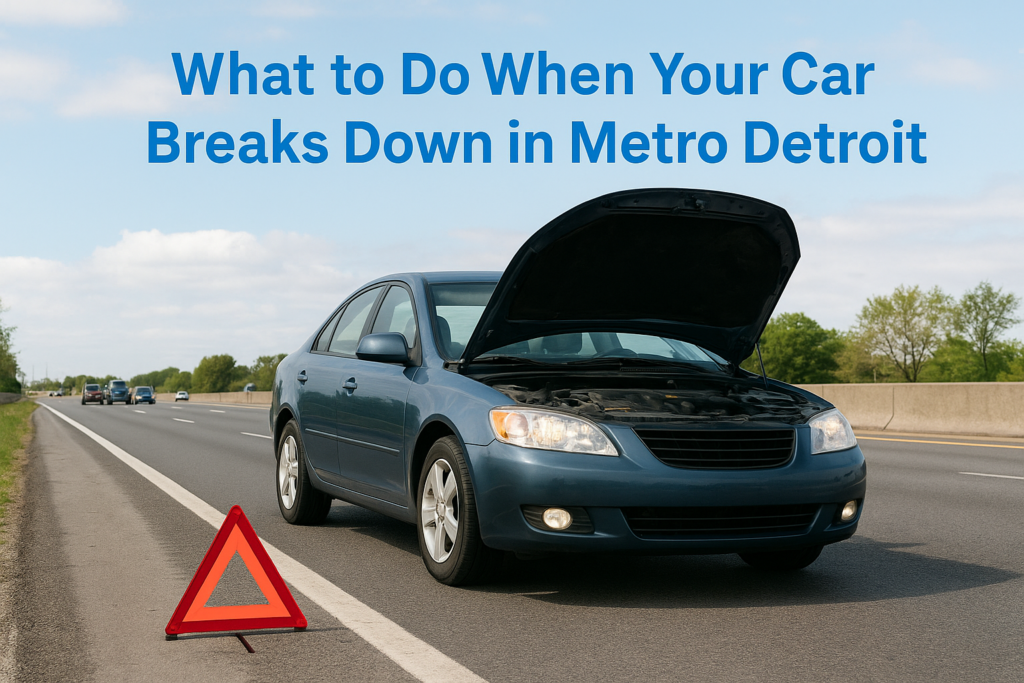
Your car sputters and dies right as you merge onto I-75 near the Ambassador Bridge, or it just quits at a red light on Michigan Avenue in Dearborn. Your heart races, traffic keeps moving, and you’re not sure whether to stay put or get out. Knowing what to do when your car breaks down in that first minute matters more than anything else, because the wrong move on a busy freeway can turn a mechanical problem into something far worse.
This guide walks you through exactly what to do, in order, whether you’re stuck on the Lodge Freeway during rush hour or stranded on a quiet road in Southfield after dark. You’ll learn how to get your car safely out of traffic, signal to other drivers that you’re disabled, and protect yourself while you wait, especially important during Michigan winters when a breakdown on I-94 can turn dangerous fast.
We’ve pulled cars off Detroit’s busiest highways for years, so this isn’t generic advice pulled from a manual. It’s the same step-by-step process we tell customers over the phone every day, from that first call to our team at 6450 E Hancock St to the moment help arrives. Read through it now, or bookmark it for when you actually need it.
Why having a plan matters on Metro Detroit roads
Breaking down on a Detroit freeway isn’t like stalling out in a quiet neighborhood. Metro Detroit traffic moves fast, lanes are tight, and shoulders on stretches like I-96 near the Southfield interchange barely give you room to breathe, let alone think. Add in Michigan’s unpredictable weather, lake-effect snow squalls in January, sudden ice on the Lodge Freeway, or blinding rain on I-94 near the Ambassador Bridge, and a simple mechanical failure becomes a real safety threat within seconds.
The roads that catch drivers off guard
Certain stretches see more breakdown-related close calls than others, and knowing them ahead of time helps you react faster instead of freezing up.
| Road/Area | Common Risk |
|---|---|
| I-75 through Detroit | Narrow shoulders, heavy semi traffic |
| Lodge Freeway (M-10) | Sharp curves, low visibility at night |
| I-94 near Dearborn | High speeds, frequent congestion |
| Southfield surface roads | Limited lighting after dark |
Hesitation costs you time and safety
Drivers who don’t have a plan tend to freeze, sitting in a live lane, stepping out without checking traffic, or waiting too long to call for help. Every extra second in that spot raises your risk.
On a Metro Detroit freeway, the seconds right after your car dies matter more than any repair that comes after.
Having a clear breakdown safety plan turns panic into a routine you can follow, even with your hands shaking and traffic roaring past.
Step 1. Get off the road safely
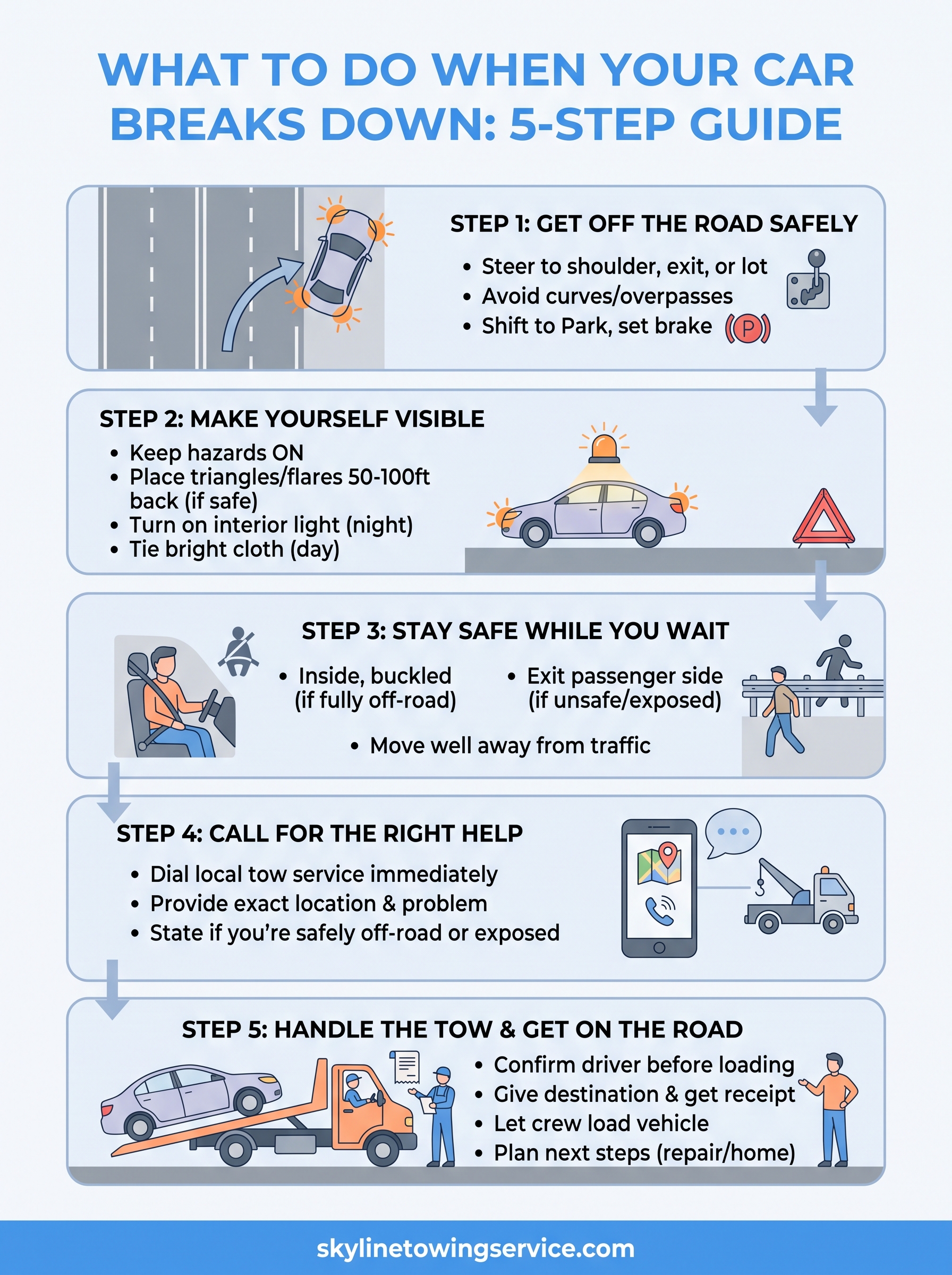
The moment you feel your car losing power on I-75 or stalling at a light on Gratiot Avenue, stay calm and steer, don’t slam the brakes. Ease off the gas, flip on your hazard lights immediately, and check your mirrors before making any lane changes toward the shoulder or a side street.
Steer toward the safest spot
Aim for the widest shoulder you can reach, an exit ramp, a parking lot, or even a quiet side street off Woodward Avenue. Avoid stopping under overpasses or in curves where oncoming drivers won’t see you until it’s too late.
Getting your car fully off the travel lane is the single biggest thing you can do to stay safe.
Once you’re stopped
- Shift into park and set the emergency brake
- Turn your wheels away from traffic if you’re on a slope
- Stay buckled until you’ve assessed the traffic around you
If you can’t move at all, especially in heavy Lodge Freeway traffic, stay inside with your seatbelt on and call for help before doing anything else.
Step 2. Make yourself visible to traffic
Once you’re stopped, your next job is making sure other drivers see you long before they reach you. Hazard lights alone aren’t enough on a dark stretch of I-96 or during a Michigan snow squall, so you need extra layers of visibility working for you.
Set up your warning signals
Pop the trunk and grab your gear if you keep any in the car. Here’s what actually helps:
- Keep hazards flashing the entire time you’re stopped
- Place reflective triangles or flares 50 to 100 feet behind your car if it’s safe to walk there
- Turn on your interior dome light at night so drivers see movement inside
- Tie a bright cloth to your antenna or mirror during daytime breakdowns
A driver who sees you from a distance has time to react. One who doesn’t, doesn’t.
Skip the visibility step if traffic’s too heavy
On fast-moving roads like the Lodge Freeway, don’t risk walking behind your car. Stay inside, buckled, with hazards on, and let visibility come from your lights alone until help arrives.
Step 3. Stay safe while you wait
Waiting for help feels like the calm part, but it’s where a lot of drivers get hurt because they let their guard down. Passenger-side exits are almost always safer than stepping out into a live lane, even if it means climbing over a console on Southfield surface roads.
Where you should actually sit
If your car is fully off the road, staying inside with your seatbelt buckled is usually your safest option, especially on I-75 or I-94 where semis pass just feet from your door. If your car is still partly in a lane, or you smell smoke or fuel, get out on the passenger side and move well away from traffic, ideally behind a guardrail.
Your seatbelt protects you sitting still just as much as it does driving.
Watch for these warning signs
- Smoke, unusual smells, or fluid leaking underneath
- Passing trucks rocking your car from wind gusts
- Drivers drifting toward the shoulder
Stay alert, keep your phone charged, and don’t wander far from your vehicle while you wait for help from Skyline Towing.
Step 4. Call for the right help
Once you’re settled and out of the traffic lane, dial for help before doing anything else. Give your dispatcher your exact location, nearest cross street or mile marker, and what happened, whether it’s a dead battery on Michigan Avenue or a blown tire on I-96. This information helps a Detroit-based crew reach you faster than a generic 800 number that has to relay your call three times before dispatching anyone local.
What to tell the dispatcher
- Your exact location or nearest exit/cross street
- Direction of travel and which lane or shoulder you’re on
- Vehicle type and the problem (won’t start, flat tire, overheating)
- Whether you’re safely off the road or still exposed to traffic
The clearer your call, the faster help finds you.
Why local matters here
A Detroit towing company already knows the Lodge Freeway’s tricky shoulders and Southfield’s back roads, so you’re not explaining directions to someone unfamiliar with the area. Call Skyline Towing at 6450 E Hancock St, Detroit, and we’ll get a truck moving toward you immediately.
Step 5. Handle the tow and get back on the road
When the truck rolls up, confirm the driver before anything else. A Skyline driver will know your name, your location, and the problem you called in about, so don’t wave down just any flatbed idling nearby on I-94 or Gratiot Avenue.
What happens once the driver arrives
Your driver will ask where you want the car taken, a repair shop in Dearborn, your home in Southfield, or our yard near 6450 E Hancock St. Hand over your keys, grab your belongings, and let the crew load the vehicle while you wait somewhere off the shoulder.
Before you ride off
- Get a copy of the tow receipt with mileage and destination
- Note the driver’s name and truck number
- Ask about next steps if your car needs a repair shop referral
A smooth tow ends with your car somewhere safe and you with a clear plan for what’s next.
Riding along or following behind, you’ll be off that stretch of highway and back in control within minutes.
Getting back on the road with confidence
Breakdowns happen fast, but your response doesn’t have to be a guessing game. Pull over safely, make yourself seen, stay protected while you wait, call someone who knows these roads, and hand things off to a driver you can trust. That’s the whole process, and it works whether you’re stuck on I-75 during rush hour or sitting on a dark shoulder off Southfield surface roads at midnight.
Confidence on the roadside comes from knowing your next move before you need it, not scrambling for answers while trucks roar past your window. Keep this guide in mind, save a number in your phone, and you’ll handle your next breakdown like someone who’s done it before.
When your car stalls anywhere in Metro Detroit, don’t wait around wondering who to call. Contact Skyline Towing and get a local crew heading your way in minutes.