
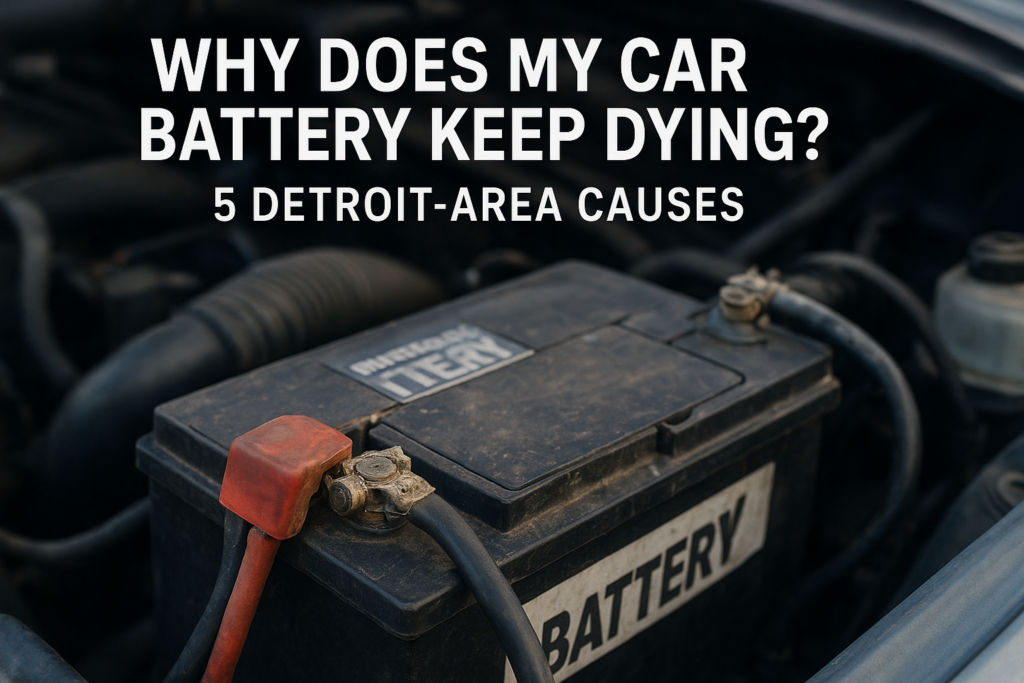
You’ve jumped your battery three times this month, and it’s dead again sitting in your driveway on Hancock or out on a side street off Woodward. If you’re asking why does my car battery keep dying, you’re not imagining things and you’re not just unlucky. Something specific is draining that battery faster than it can recover, and Detroit’s climate swings from January deep freezes to August humidity make the problem worse than it would be almost anywhere else.
The short answer is that a repeatedly dead battery almost always points to one of a handful of culprits: a bad alternator, a parasitic drain, corroded terminals, an aging battery showing symptoms it’s failing, or short trips that never let it fully recharge. We see all five constantly on calls across Dearborn, Southfield, Taylor, and Livonia, and each one has its own telltale signs.
Below, we’ll walk through the five most common causes we run into on service calls out of our Detroit shop at 6450 E Hancock St, how to tell which one you’re dealing with, and what actually fixes it instead of just masking the symptom for another week.
1. Call Skyline Towing for a jump start or battery check
Before you troubleshoot anything else, get a professional set of eyes on the battery itself. A dead car battery can mean the battery is simply worn out, or it can be the first symptom of a deeper electrical problem that a jump start won’t fix twice, so it helps to know whether to jump-start, test, or replace it. When you’re stuck on I-94 near the Ambassador Bridge or in a parking garage downtown, the fastest and safest move is calling a 24 hour jump start service with roadside battery gear, not guessing with jumper cables from a stranger.
How it happens
Batteries typically last three to five years, and Detroit’s temperature swings shorten that lifespan considerably. Cold weather thickens the oil in your engine and slows the chemical reaction inside the battery, so a battery that was borderline in October can fail outright during a January cold snap on I-75. Heat isn’t kind either, since summer humidity accelerates internal corrosion and fluid loss, quietly weakening a battery that seemed fine all spring.
Warning signs to watch for
Watch for these ways to tell if your car battery is dead before you’re stranded:
- Slow or clicking crank when you turn the key
- Dashboard lights that dim when you start the AC or headlights
- A battery warning light that comes and goes
- The engine turning over sluggishly on the first cold morning of the season
If your battery needs a jump more than once in a month, it’s not bad luck, it’s a warning.
What to do about it
Don’t keep jumping it and hoping. Our technicians carry load testers on every Detroit roadside assistance call, so we can tell you on the spot whether you need a fresh battery, a charging system check, or something else entirely. A jump start gets you moving again, but a proper battery check tells you why it died in the first place. If you’re anywhere in Detroit, Dearborn, Dearborn Heights, Southfield, Taylor, or Livonia, call Skyline Towing and we’ll come out, test the battery, and either get you charged up or swap it on the spot so you’re not calling again next week.
2. A parasitic drain from lights or electronics left running
Sometimes the battery itself is fine, but something in the car keeps sipping power after you shut the engine off. A parasitic drain happens when a dome light, glovebox light, aftermarket stereo, or phone charger keeps pulling current while the car sits overnight in your driveway in Southfield or a parking lot in Dearborn. Give it enough hours and that small draw is enough to leave you with a dead battery by morning.
How it happens
Modern cars run dozens of small computers and modules that stay partially awake even with the key out, and that’s normal to a point. Problems start when something fails to shut off completely, like a trunk light stuck on from a bad latch sensor, an aftermarket alarm wired incorrectly, or a phone left plugged into a charger that pulls power even when nothing’s connected.
Warning signs to watch for
Here’s what usually tips people off:
- Battery is dead after sitting for a day or two, even though it started fine before
- You notice a light staying on after you lock up and walk away
- The problem disappears after you disconnect the battery for a night
A battery that dies overnight, not during driving, almost always points to something draining it while parked.
What to do about it
Skyline’s roadside crew can run a quick draw test to isolate the circuit pulling power, so you’re not guessing which fuse to pull, and if you need to get moving first, here’s how to jump start a dead car battery with jumper cables.
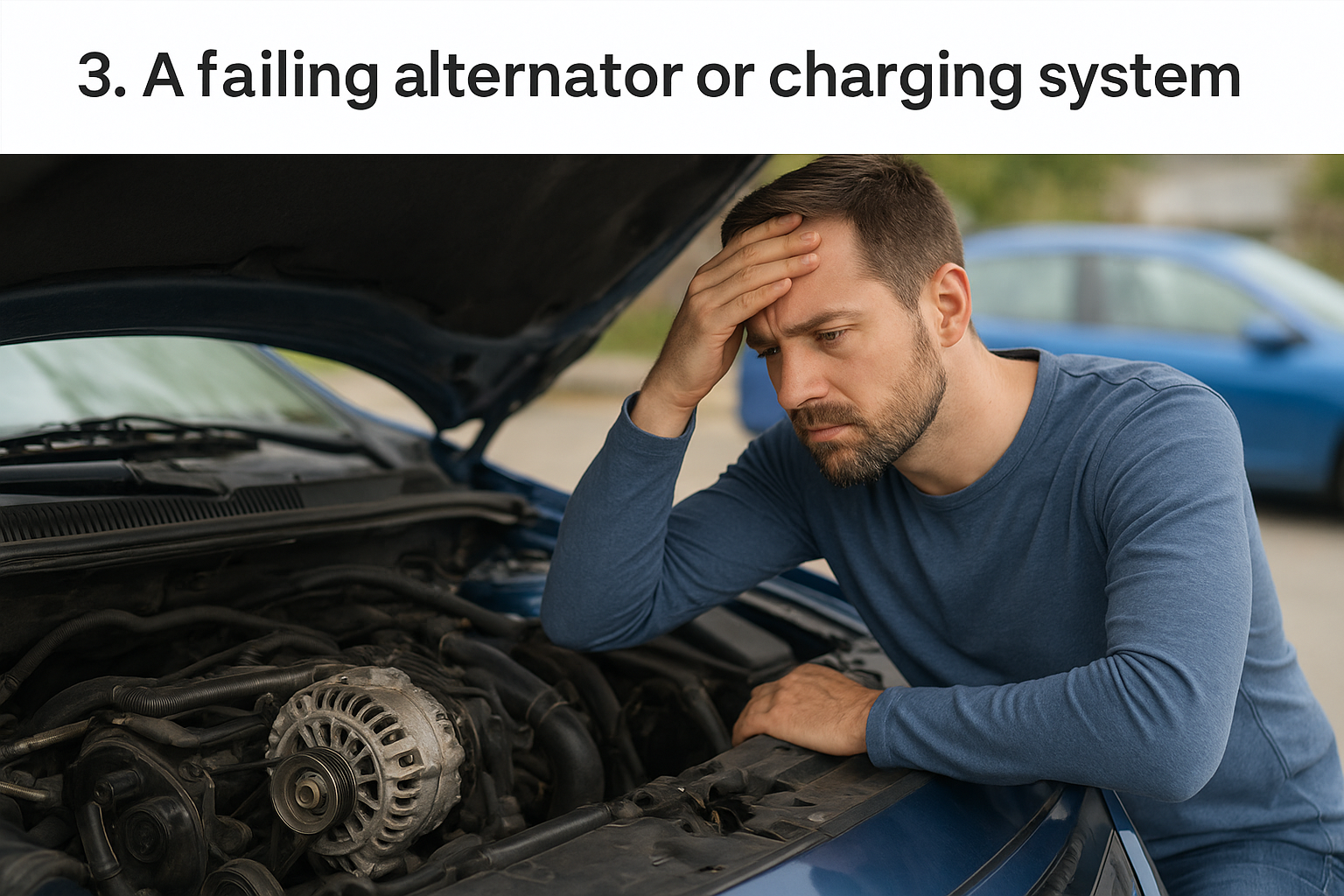
3. A failing alternator or charging system
Sometimes the battery isn’t the problem at all. Your alternator is what recharges the battery while you drive, and once it starts failing, the battery drains a little more each trip until it can’t start the car. Drivers on I-96 or the Southfield Freeway often notice this only after the third jump in two weeks, when the real issue was under the hood the whole time.
How it happens
Alternators wear out from worn brushes, a slipping belt, or a failing voltage regulator, and once output drops below what your car needs, the battery picks up the slack until it’s empty. Detroit stop-and-go traffic on Gratiot or the Lodge Freeway is especially hard on alternators because idling and short bursts of speed don’t let them charge efficiently.
Warning signs to watch for
Watch for these together, not just a slow crank:
- Dimming or flickering headlights while driving
- A battery or charging light on the dash
- A whining or grinding noise from the alternator area
- The car stalling shortly after a jump start
A battery that dies again minutes after a jump almost always means the alternator, not the battery, is the real problem.
What to do about it
Get the charging system tested rather than replacing the battery blind. Skyline’s techs check alternator output on scene and can tow you to a trusted shop in Dearborn or Detroit if the alternator needs replacing.
4. Corroded or loose battery terminals and cables
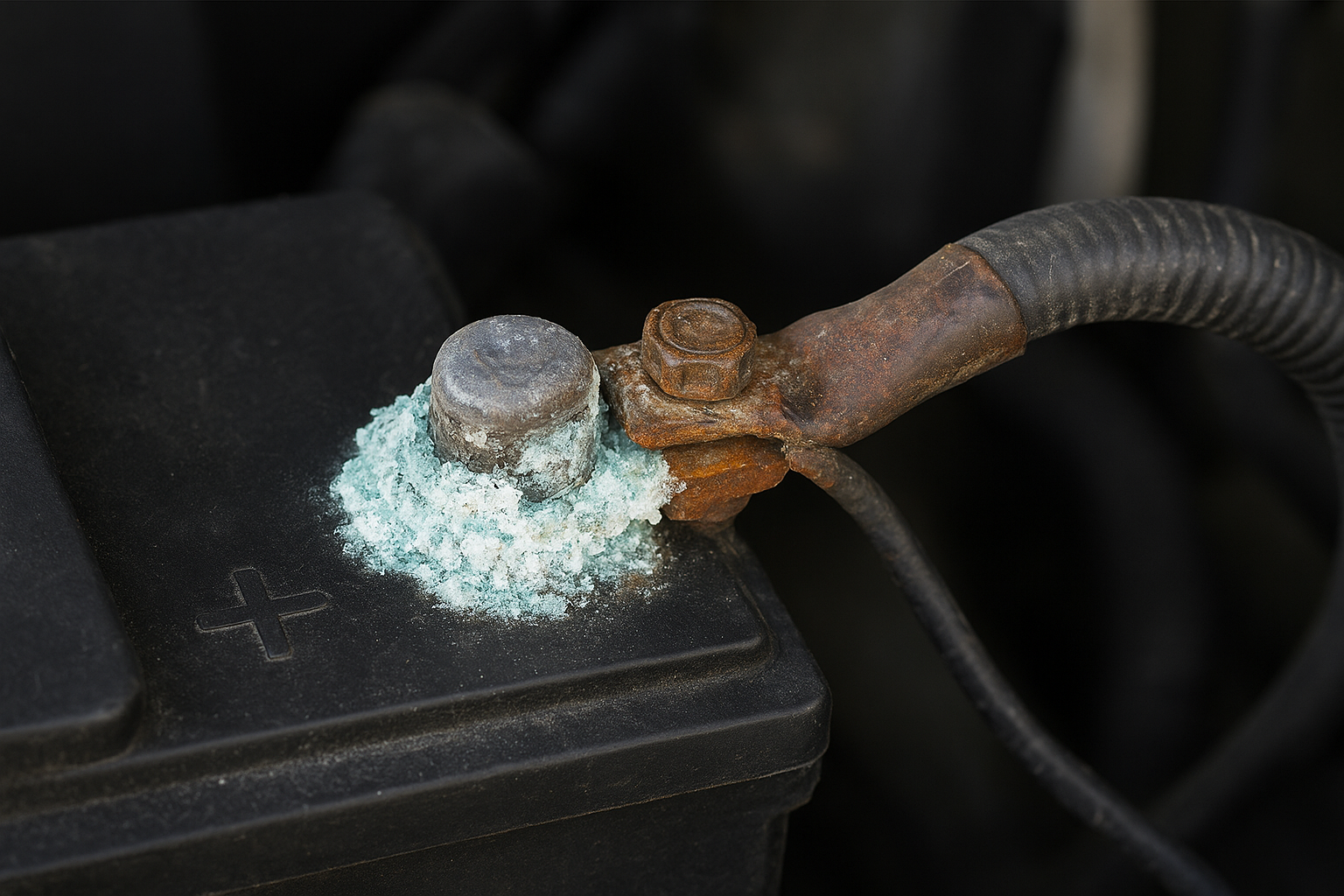
Sometimes the battery and alternator are both fine, but the connection between them is the weak link. Corroded battery terminals build up a chalky white or greenish crust that blocks the electrical connection, and a loose cable clamp can cause the same intermittent no-start whether you’re parked in Livonia or fueling up on Michigan Avenue.
How it happens
Corrosion forms when battery acid gas reacts with the metal terminals, and it happens faster in Detroit’s humid summers and salty winter roads. A clamp that isn’t tight enough lets vibration from potholes on Grand River or the Lodge Freeway work it looser over time, breaking the connection just enough to cause trouble without cutting power completely.
Warning signs to watch for
Check under the hood for these clues:
- White, blue, or greenish crust around the terminals
- The car starts fine after wiggling the battery cables
- Headlights or accessories flicker over bumps
- Intermittent starting problems with no clear pattern
A dead battery that comes back to life after you jiggle the cables isn’t the battery’s fault at all.
What to do about it
Cleaning corrosion and tightening clamps is a five-minute fix once you know that’s the problem. Our jump start and roadside techs check terminals and cables on every call before we ever recommend a new battery, so you’re not paying to replace a part that was never broken.
5. Detroit winters and summer heat wearing down your battery
Extreme temperature swings are simply part of living in Metro Detroit, and your battery pays the price twice a year. Detroit winters force the battery to work harder cranking thickened engine oil while the cold itself cuts the battery’s output by nearly half, and summer heat cooks the internal components and evaporates fluid even when the car is just sitting in a driveway off Woodward.
How it happens
Freezing temperatures slow the chemical reaction that produces current, so a battery that’s already a little weak can fail outright during a January cold snap along I-94, which is why so many cars won’t start in cold weather. Come August, humidity and heat accelerate corrosion inside the battery case, quietly shortening its life without any obvious symptoms until it just won’t start one morning.
Warning signs to watch for
Keep an eye out for:
- Slower cranking the first freezing morning of the season
- A battery that’s fine in spring but struggles by midsummer
- Reduced power right after refueling on a hot afternoon
- A battery over three years old that’s never been tested
Detroit’s seasonal extremes shorten a car battery’s life faster than almost anywhere else in the country.
What to do about it
Seasonal testing before winter and again before summer catches a weak battery before it strands you. Skyline Towing offers battery testing and replacement as part of our roadside assistance calls, so you can get ahead of the freeze or the heat instead of reacting to it.
Getting back on the road with confidence
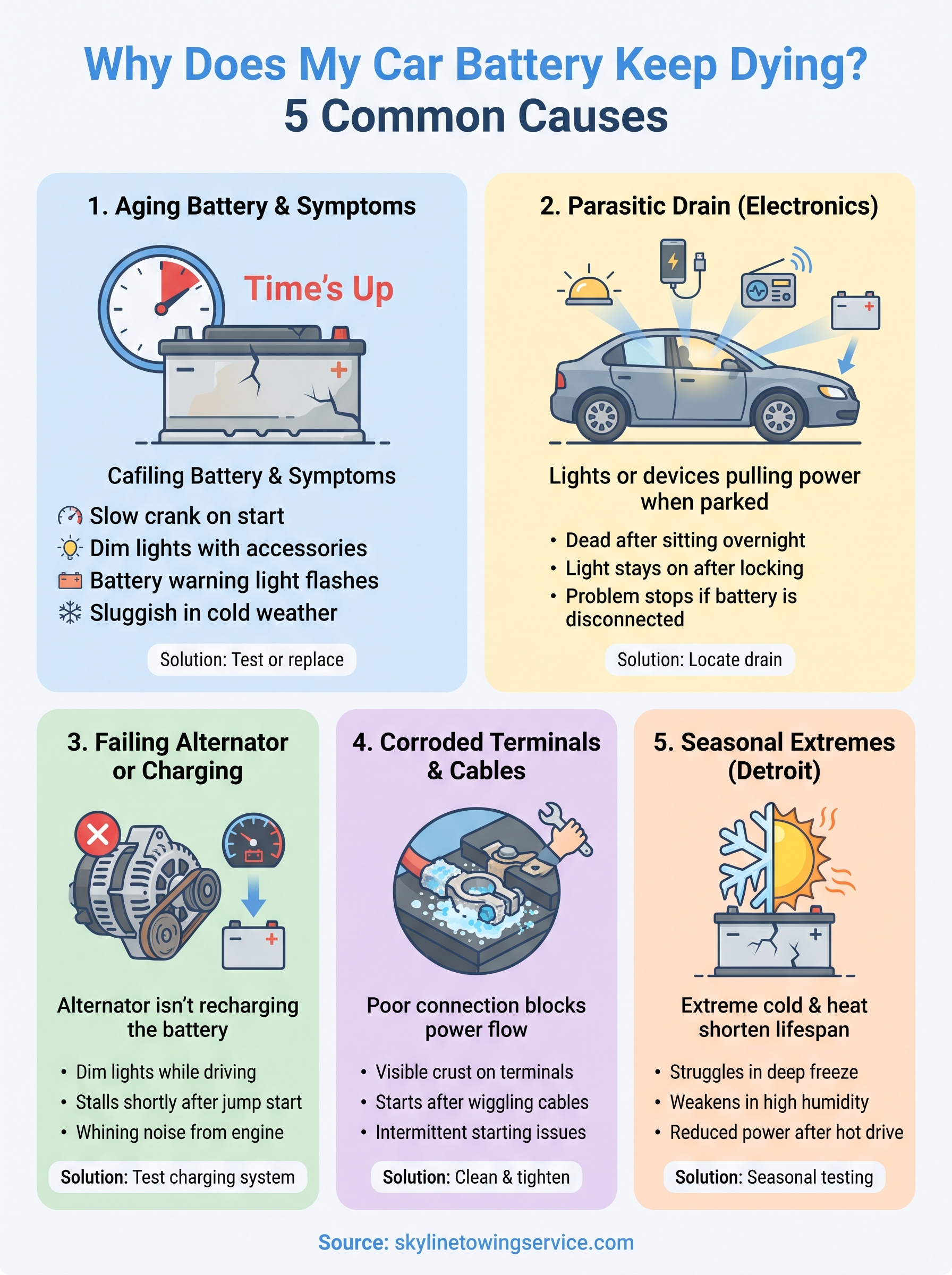
A battery that keeps dying isn’t random, and now you know the five usual suspects: a worn-out battery, a parasitic drain, a failing alternator, corroded terminals, or Detroit’s own seasonal extremes grinding down the cells twice a year. Most drivers only find out which one applies to them after the third jump start, when a five-minute test earlier would have saved the headache. Whether you’re parked off Woodward, stuck near the Ambassador Bridge, or sitting in a Southfield driveway wondering why your car battery keeps dying, the fix starts with an actual diagnosis, not another set of jumper cables from a stranger.
Our crews carry load testers and know these patterns because we see them every week across Detroit, Dearborn, Southfield, Taylor, and Livonia. Skip the guesswork and the repeat breakdowns. Call Skyline Towing for 24/7 roadside assistance for a dead battery in Detroit, from a jump start to a full battery test, and get back on the road knowing exactly what happened and why.