
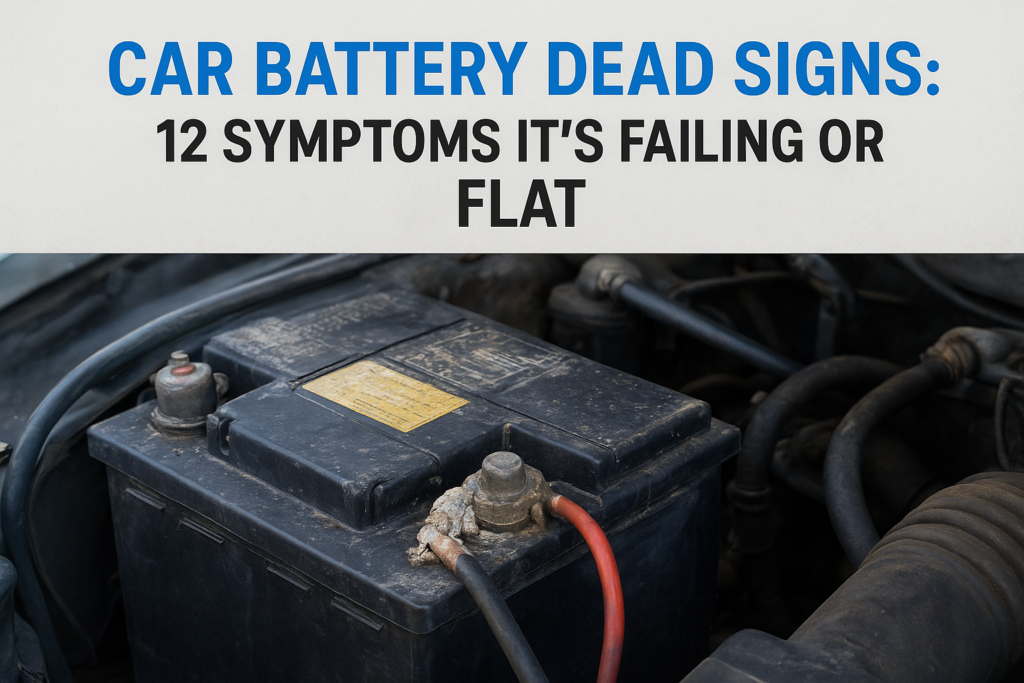
You turn the key or press the start button, and nothing happens, or maybe you get a weak cough from the engine before silence. These are classic car battery dead signs, and they can leave you stranded in a parking lot, a driveway, or worse, on the side of a busy road. The tricky part is that a dying battery can mimic other problems, like a bad starter or a failing alternator, making it hard to pin down the real culprit without knowing what to look for.
At Skyline Towing Service, we respond to battery-related breakdowns across Detroit, Dearborn, Southfield, and the surrounding metro area every single day. Our roadside assistance team has seen every stage of battery failure, from the first subtle warning flicker to a completely dead cell that leaves no sign of life. That hands-on experience is exactly what shaped this guide.
Below, we break down 12 specific symptoms that point to a failing or flat battery. Each one helps you distinguish a battery issue from other mechanical problems so you can decide whether you need a jump, a replacement, or a tow. Knowing these signs early can save you time, money, and the stress of an unexpected breakdown.
The 12 most common signs your car battery is dead
These car battery dead signs range from obvious no-starts to subtle electrical glitches you might dismiss as something unrelated. Recognizing them early and accurately gives you a real chance to act before you end up stranded. Here are the 12 symptoms broken into groups so you can check each one systematically.
Starting and cranking problems
The most direct symptoms hit you at the ignition. If your engine cranks slowly when you turn the key, that sluggish rotation usually means the battery lacks enough power to spin the starter motor at full speed. If you hear a single click or rapid clicking but the engine never catches, the battery is likely too weak to engage the starter at all.
A slow crank that gets noticeably worse in cold weather is one of the most reliable early warnings that your battery is failing.
- Engine turns over slowly before starting
- Rapid clicking with no engine start
- Engine cranks but never fully fires up
Electrical and interior warning signs
Your car’s electrical system depends heavily on consistent battery voltage. Dim or flickering headlights, a dashboard that lights up then goes dark, and accessories like power windows or the radio responding sluggishly all point to a battery struggling to hold a charge. Watch for the battery warning light on your dashboard, which can appear even before a complete failure occurs.
- Dim or flickering headlights
- Battery symbol illuminated on the dashboard
- Sluggish power windows, radio, or interior lights
Physical signs on the battery itself
Sometimes you can spot the problem before you even try to start the car. Visible corrosion around the terminals, a swollen or bloated battery case, or a sulfur smell near the battery compartment are all clear red flags. A warped battery casing typically means the battery overheated internally, and at that point replacement is the only real option.
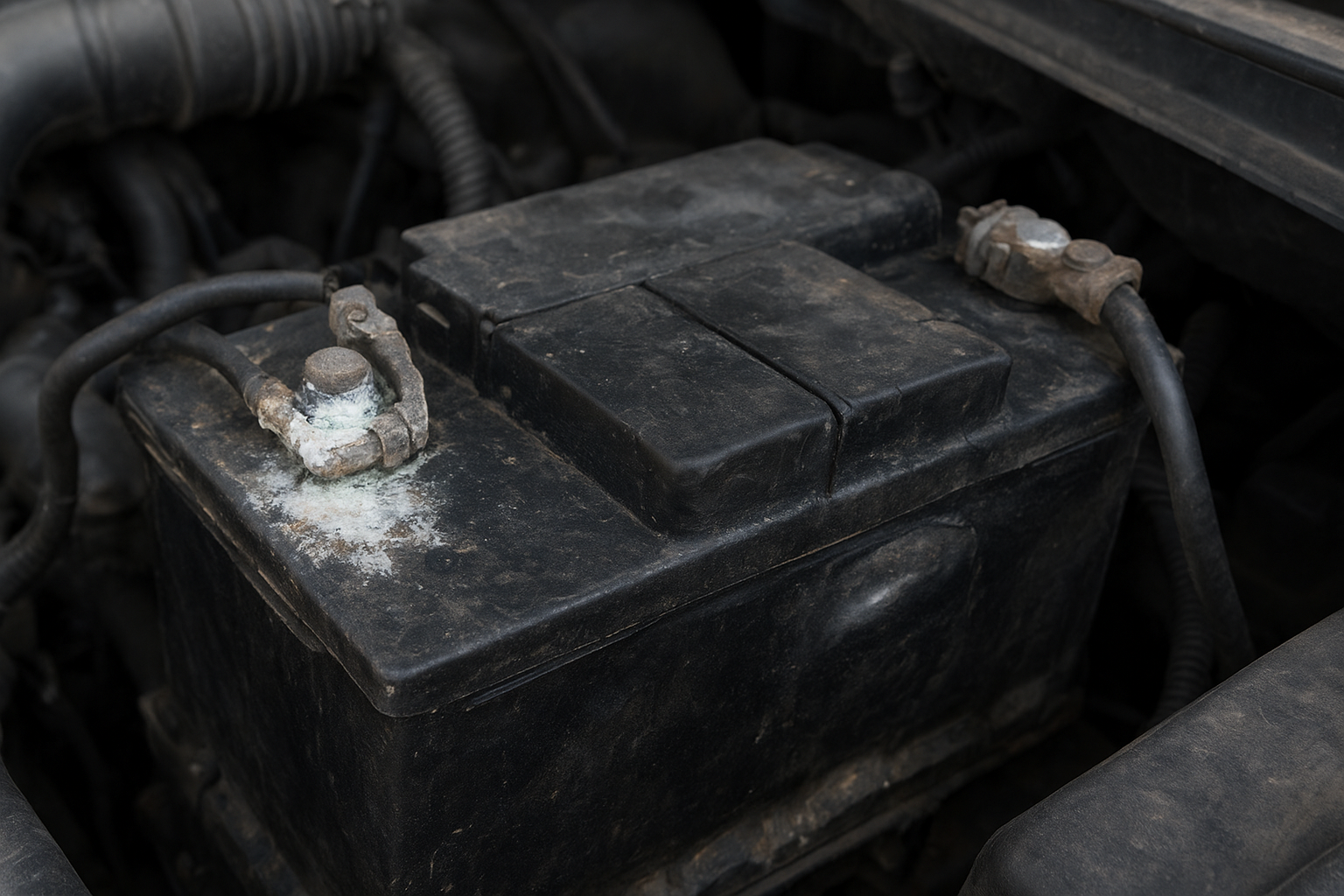
- White or bluish corrosion on battery terminals
- Swollen or warped battery case
- Rotten egg odor near the engine bay
- Needing a jump-start multiple times within weeks
Why car batteries die and how long they usually last
Understanding what kills a battery helps you spot car battery dead signs before they catch you off guard. Most batteries don’t fail all at once. They degrade gradually over months or even years, and knowing the root causes gives you a real chance to act before you end up stranded.
Common causes of battery failure
Extreme temperatures are the single biggest culprit behind early battery failure. Summer heat accelerates internal corrosion inside the cells, while cold weather thickens engine oil and forces the battery to work much harder just to crank the engine. Leaving lights or accessories running with the engine off, making frequent short trips that prevent a full recharge, and driving with a failing alternator all drain the battery faster than normal wear alone.
A battery that keeps dying after short city drives almost always points to a charging system problem or a parasitic drain pulling power while the car sits idle.
Common causes of premature battery failure include:
- Lights or accessories left on with the engine off
- Repeated exposure to extreme heat or cold
- Frequent short trips with no full alternator recharge
- Corroded or loose battery terminals
How long a car battery lasts
Most standard lead-acid batteries last between three and five years, with climate and driving habits pushing that range in either direction. If your battery is older than four years, treat any starting hesitation or electrical oddity as a serious warning sign rather than something minor to ignore.
Testing the battery annually after year three is a simple, inexpensive step that most auto parts stores offer for free. Catching a weak battery before it fails completely saves you from a dead car at the worst possible moment.
How to confirm it’s the battery, not the starter or alternator
Three components share responsibility for getting your engine running: the battery, the starter, and the alternator. When your car refuses to start, the symptoms can overlap enough to cause real confusion. Knowing how each one fails helps you read the car battery dead signs accurately and avoid paying for the wrong repair.
Quick tests you can run yourself
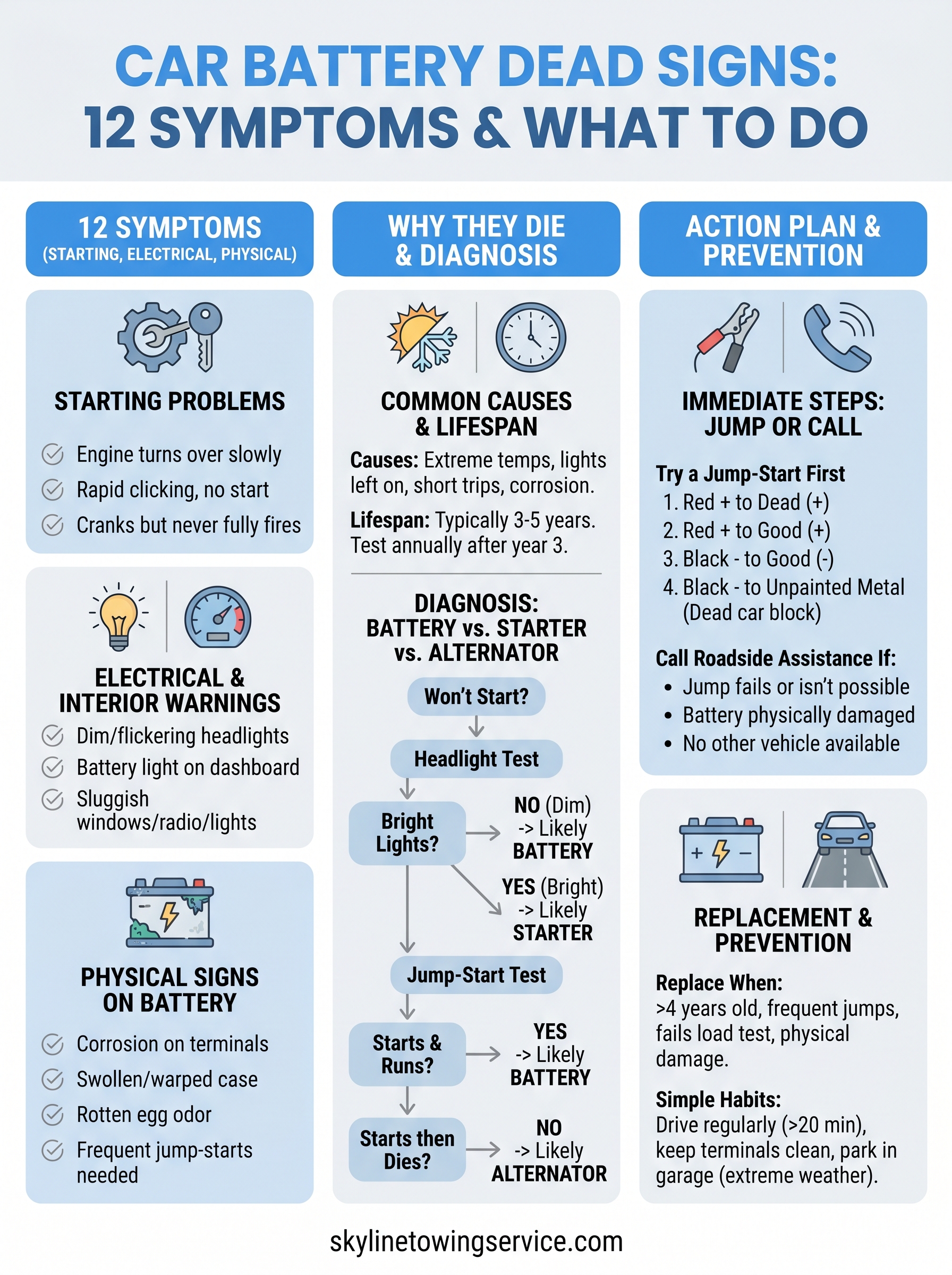
A simple way to narrow things down is to turn on your headlights before you try to start the car. If the lights are dim or barely visible, the battery is almost certainly the problem. If the lights are bright and strong but the engine still won’t crank, the starter or a related electrical connection is more likely the culprit.
Jump-starting the car gives you a fast confirmation: if the engine starts immediately with a jump and runs fine, the battery is the weak link, not the starter or alternator.
What each component actually sounds like
The sound your car makes during a failed start is one of the clearest diagnostic tools available to you. A dead or weak battery produces rapid clicking or complete silence. A bad starter often makes a single heavy clunk with no follow-through. An alternator problem typically shows up as a car that starts fine but then dies within a few minutes of driving, because the alternator is not recharging the battery while the engine runs.
What to do right now if your car won’t start
Once you spot the car battery dead signs, your next move determines how fast you get back on the road. Work through these steps in order before assuming a more serious mechanical problem. Most battery situations have a straightforward fix when you respond correctly.
Try a jump-start first
A jump-start is the fastest option when a weak or dead battery is the problem. Use jumper cables with a running vehicle, or a portable jump starter pack if you carry one in your trunk.
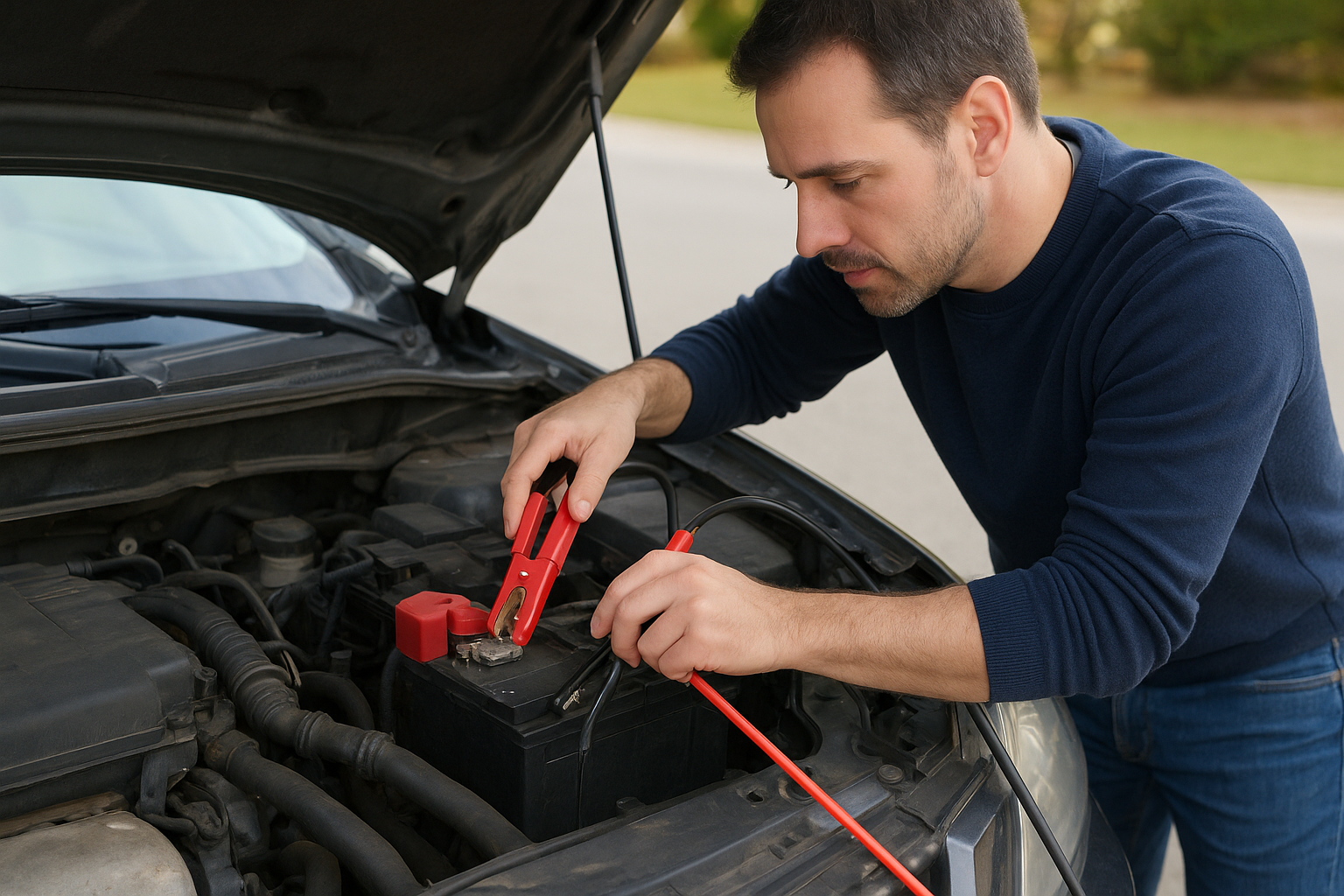
- Connect the red cable to the positive terminal on the dead battery
- Connect the other red end to the positive terminal on the good battery
- Connect the black cable to the negative terminal on the good battery
- Connect the other black end to an unpainted metal surface on the dead car’s engine block
If the engine starts but dies again within minutes, the alternator is not recharging the battery, and you need a mechanic before driving any further.
Call for roadside assistance
Sometimes a jump-start is simply not possible, either because no other vehicle is nearby or the battery is too far gone to hold a charge. Calling a local roadside assistance team is the right move in that situation.
A technician can test your battery on the spot and arrange a tow if the battery needs full replacement at a shop. Saving a roadside assistance number in your phone before you ever need it makes the entire process significantly faster.
When to replace the battery and prevent it happening again
Once you have confirmed the battery is the problem, deciding when to replace it versus when to recharge it comes down to age and test results. A battery that jumps fine but repeatedly loses charge within days is telling you it can no longer hold a full cycle. At that point, recharging it again is only delaying the next breakdown, not preventing it.
Signs it’s time for a new battery
If your battery is older than three to four years and you are already seeing car battery dead signs, replacement is the smarter financial move over repeated jump-starts or shop visits. Most auto parts stores will load-test your battery for free, which measures how well it holds voltage under real starting conditions. That test gives you a clear answer in minutes.
A battery that tests below 12.4 volts at rest or drops sharply under load has already started its final decline.
- Battery is four or more years old
- Requires a jump-start more than once per month
- Fails a free load test at an auto parts store
- Shows physical swelling or heavy terminal corrosion
Simple habits that extend battery life
Driving your car regularly for trips longer than 15 to 20 minutes gives the alternator enough time to fully recharge the battery. Keeping your terminals clean and tight prevents the resistance buildup that quietly drains power over time. Parking in a garage during extreme cold or heat also reduces the thermal stress that shortens battery life fastest.
Get moving again
Recognizing car battery dead signs early puts you in control of the situation instead of guessing on the side of the road. You now know the 12 symptoms to watch for, what causes batteries to fail, how to tell a dead battery from a bad starter or alternator, and what steps to take the moment your car refuses to start. That knowledge alone removes most of the stress that comes with an unexpected breakdown.
If your car goes dead and a jump-start does not fix it, do not wait and hope the problem resolves on its own. Getting the battery tested and replaced quickly keeps a minor inconvenience from turning into a much more expensive repair. Our team at Skyline Towing Service is available across Detroit, Dearborn, Southfield, and the surrounding metro area to get you back on the road fast. Contact us for roadside assistance the moment you need it.