
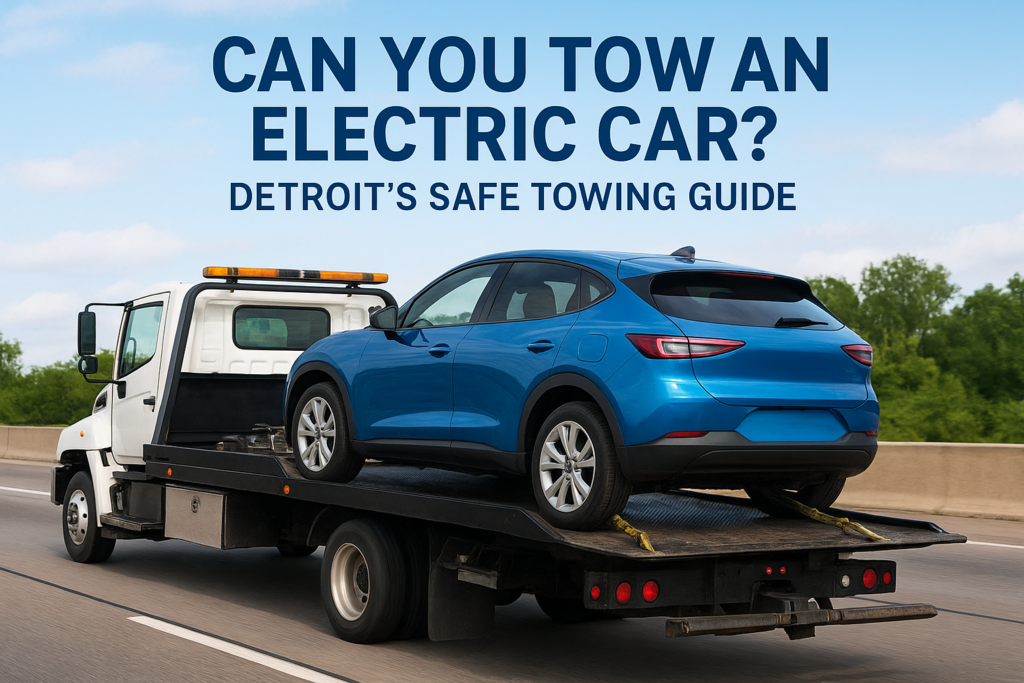
You’re stuck on I-94 near the Ambassador Bridge with a dead Tesla or a Chevy Bolt that won’t shift out of park, and every instinct says to call the nearest flatbed. But can you tow an electric car the same way you’d tow a gas-powered one? Not exactly, and getting it wrong can fry a drivetrain that costs more to fix than the tow itself.
The short answer is yes, EVs can be towed, but almost always on a flatbed, never with the drive wheels touching the pavement unless the manufacturer specifically says otherwise. Skidding a Ford Mustang Mach-E or Nissan Leaf down Michigan Avenue on a dolly can spin the motor and generate damaging voltage, which is why wheel-lift towing is off the table for most electric models, and why it helps to know how flatbed and wheel-lift hookups differ.
At Skyline Towing, based at 6450 E Hancock St in Detroit, our drivers handle EV calls across Dearborn, Southfield, Livonia, and Taylor all year, including brutal winter mornings when cold-soaked batteries won’t cooperate. This guide walks through flatbed requirements, manufacturer differences, and what to expect when you call us for an EV breakdown anywhere in metro Detroit.
Why towing an electric car takes special care
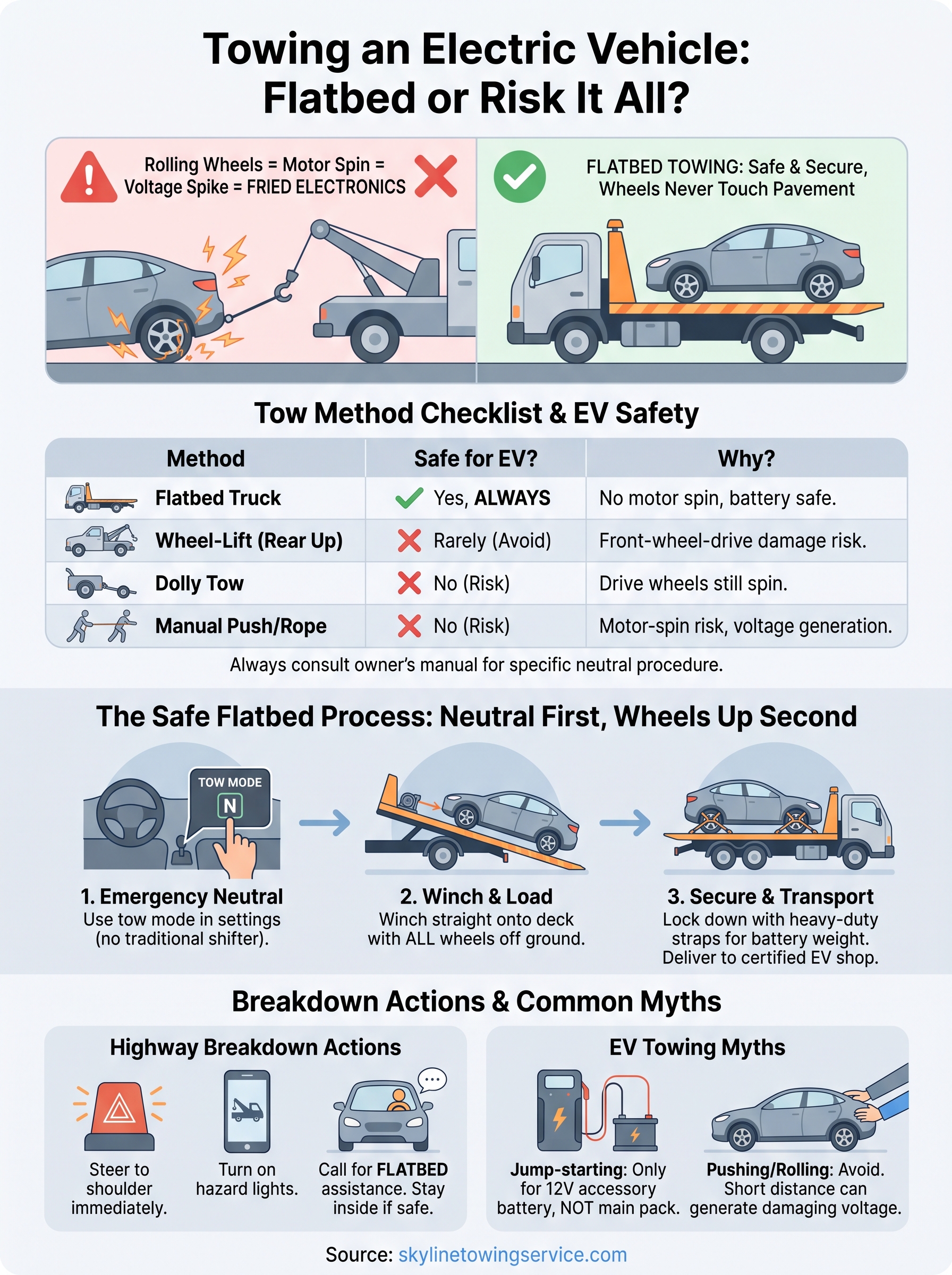
Most gas cars can survive a quick tow with the drive wheels rolling, but electric motors work backward when they spin without power flowing to them. Turning the wheels manually on a Chevy Bolt or Tesla Model 3 generates electricity that has nowhere to go, and that voltage can overheat the motor windings or fry the inverter in minutes. That’s the core reason towing an electric vehicle looks so different from towing your neighbor’s F-150.
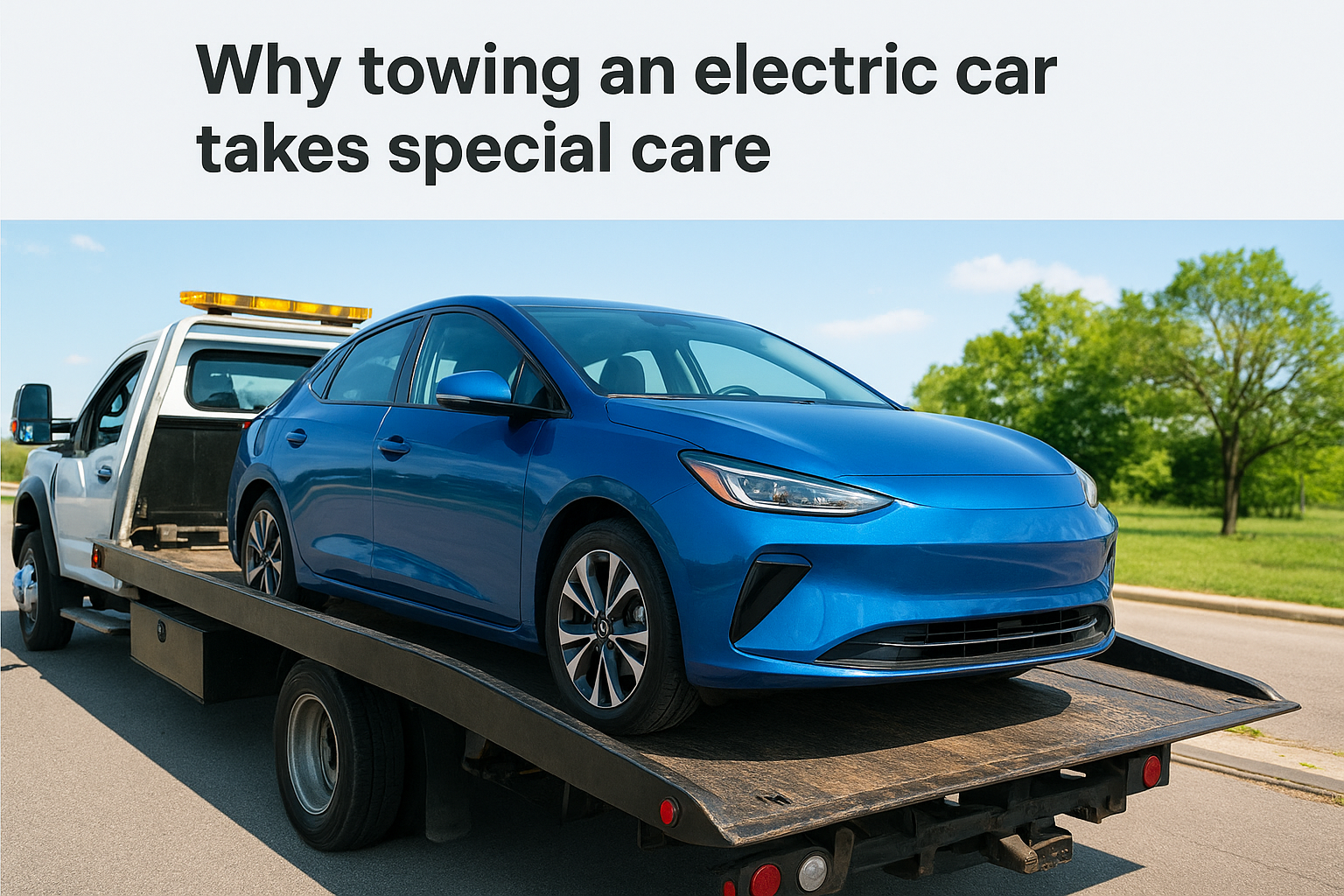
Battery packs add another layer of risk. A damaged or improperly secured EV battery can short, overheat, or in rare cases ignite, and that’s not a fire Detroit Fire Department crews can put out with a garden hose. High-voltage systems also mean a driver can’t just pop the hood and start disconnecting cables like they might on an older Buick. Every EV has specific shutdown and tow procedures listed in the owner’s manual, and skipping them voids warranties fast.
An EV towed the wrong way doesn’t just get scratched, it can lose its drivetrain entirely.
Weight is the other factor Detroit drivers underestimate. A Ford F-150 Lightning or Rivian R1T can weigh 6,000 to 7,000 pounds with the battery pack, well beyond what a light-duty dolly setup can safely handle on I-75 or the Lodge Freeway, so flatbed weight limits matter here. Here’s how the common tow methods stack up for EVs:
| Tow Method | Safe for EVs? | Why |
|---|---|---|
| Flatbed | Yes | Wheels never touch the road, no motor spin |
| Wheel-lift (rear wheels up) | Rarely | Front-wheel-drive EVs can be damaged |
| Dolly | No | Drive wheels still spin freely |
| Manual push/roll | No | Same motor-spin risk as dolly towing |
Given those risks, our dispatchers ask a few quick questions the moment you call, including the make, model, and drivetrain, so it helps to know the details dispatch needs from you before we send a driver equipped for flatbed towing anywhere from Corktown to Southfield.
How to safely tow a dead electric car in Detroit
Finding your EV dead in a Southfield parking garage or stalled near Eastern Market calls for a specific sequence, not a guess. Skyline drivers follow the same routine on every call because it protects both the car and the crew loading it.
Flatbed loading starts with putting the vehicle in neutral, which on most EVs means using an emergency tow mode buried in the settings menu since there’s no traditional shifter to move. Once it’s in neutral, our flatbed towing service winches the car straight onto the deck with all four wheels off the ground, then locks it down with wheel straps rated for the extra battery weight.
Neutral first, wheels up second, that order keeps an EV tow from turning into a repair bill.
Here’s the general order our drivers stick to on every EV breakdown call:
- Confirm the make and model with dispatch before the truck rolls
- Check the manual (or manufacturer app) for the emergency neutral procedure
- Load onto the flatbed with straps rated for 7,000+ pounds
- Secure the battery area from road debris on longer hauls down I-75
- Deliver to a certified EV shop, not just any garage
That last step matters more than people expect. Plenty of general repair shops in Wayne County won’t touch high-voltage repairs, so we ask where you want it dropped before we ever hook up the winch.
What to do if your EV dies on I-94, I-75, or I-96
Highway breakdowns turn scary fast when your EV loses power in a live lane near the Ambassador Bridge interchange or the I-96/I-275 split during rush hour. Getting the car and yourself out of traffic matters more than diagnosing anything on the spot, and the first moves after a breakdown are the same whether you drive electric or gas.
Steer toward the shoulder the moment you feel power dropping, since most EVs give you a warning on the dash before they fully shut down. Hazard lights go on immediately, and if you can coast onto the shoulder or an exit ramp, take it, even if it means rolling a few hundred extra feet past where you stalled.
A dead EV on the shoulder is a problem, a dead EV in a live lane is a five-alarm one.
Once you’re stopped, stay inside with your seatbelt on if traffic is heavy, especially on I-75 through downtown where lanes are narrow and semis run close. Call for emergency roadside assistance right away, since the fastest way to get a truck to your location starts with that call, and give your exact mile marker or the nearest exit, because I-94 and I-96 both have long stretches with sparse signage. Skyline dispatchers prioritize highway calls because every minute your hazard-flashing EV sits in a traffic lane raises the odds of a secondary crash. Our trucks carry the same flatbed gear whether you’re stuck near Metro Airport on I-94 or up by the Southfield Freeway interchange on I-96, so the response looks the same no matter which corridor you’re stranded on.
Can an electric car tow a trailer or caravan
Plenty of Detroit drivers ask this the moment they buy an EV, usually because they’ve got a boat to haul to Belle Isle or a camper for a trip up I-75 to northern Michigan. Yes, many electric vehicles can tow, but the capacity and range hit are worth understanding before you hook up a trailer. A Rivian R1T or Ford F-150 Lightning can pull 7,700 to 10,000 pounds, while a Tesla Model Y tops out closer to 3,500 pounds, and plenty of smaller EVs like the Nissan Leaf aren’t rated to tow at all.
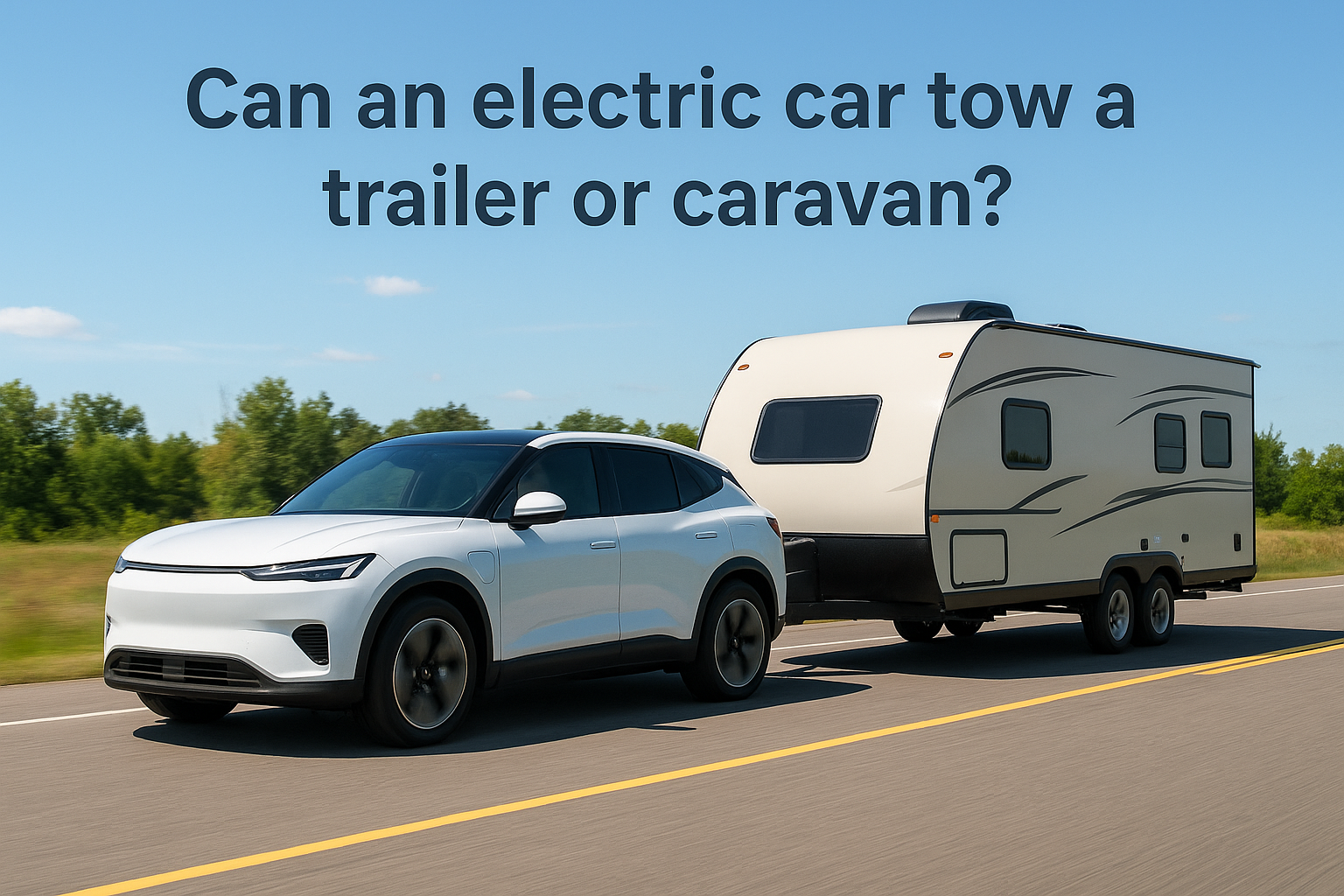
Range drops fast under load, sometimes 30 to 50 percent, because the battery has to fight wind resistance and extra weight at the same time. That’s a real concern on a long haul up US-23 toward the Bay City area, where charging stations thin out.
Towing with an EV works, but plan your charging stops like you’re driving twice as far as the odometer says.
| EV Model | Max Tow Rating |
|---|---|
| Ford F-150 Lightning | 10,000 lbs |
| Rivian R1T | 11,000 lbs |
| Tesla Model Y | 3,500 lbs |
| Nissan Leaf | Not rated |
Check your owner’s manual before renting a trailer hitch, since exceeding the rating stresses the motor and drains the pack faster than advertised.
Jump-starting, pushing, and other EV towing myths
Google "how to tow an electric car" and you’ll find advice that only works on gas engines. Jump-starting an EV with dead 12-volt accessory battery is real and sometimes fixes a no-start, but it won’t revive a depleted main battery pack, and trying to jump the high-voltage system yourself risks a serious shock. Skyline drivers carry jump packs for the small battery only, never for the traction battery, the same gear we bring on mobile jump start calls around Metro Detroit.
Pushing or rolling a dead EV a short distance, like out of a Woodward Avenue intersection, feels harmless but isn’t. Even a few rotations of the wheels can spin the motor enough to send a damaging voltage spike back through the system on some models. Rope towing behind a pickup is worse, since sustained wheel spin at speed multiplies that risk fast.
If a myth involves the wheels turning without power on, assume it can hurt an EV.
Here’s what actually holds up:
- 12-volt jump: fine for a dead accessory battery
- Rolling a few feet to clear traffic: usually okay, check your manual first
- Rope or chain towing any distance: never
- Flatbed transport: always the safe answer
Friends with pickups mean well, but a flatbed tow stays the only method that protects the motor, the inverter, and your warranty every time.
Getting your EV where it needs to go
So yes, can you tow an electric car? Absolutely, but only with a flatbed, a clear neutral procedure, and a driver who knows the difference between a Tesla and a Rivian’s tow settings. Skip those steps and you risk a fried inverter instead of a simple tow bill. Detroit’s mix of winter cold snaps, potholed side streets, and packed highways like I-94 and I-75 makes EV breakdowns a matter of when, not if, for a lot of drivers switching over from gas.
What matters most is calling a crew that treats your EV differently from day one, not one that shows up with a dolly and hopes for the best. Our drivers at Skyline handle these calls across Detroit, Dearborn, Southfield, and beyond every week, rain or snow. If your EV won’t budge, schedule an EV flatbed tow with Skyline Towing and we’ll get it loaded right and delivered where it actually needs to go.