
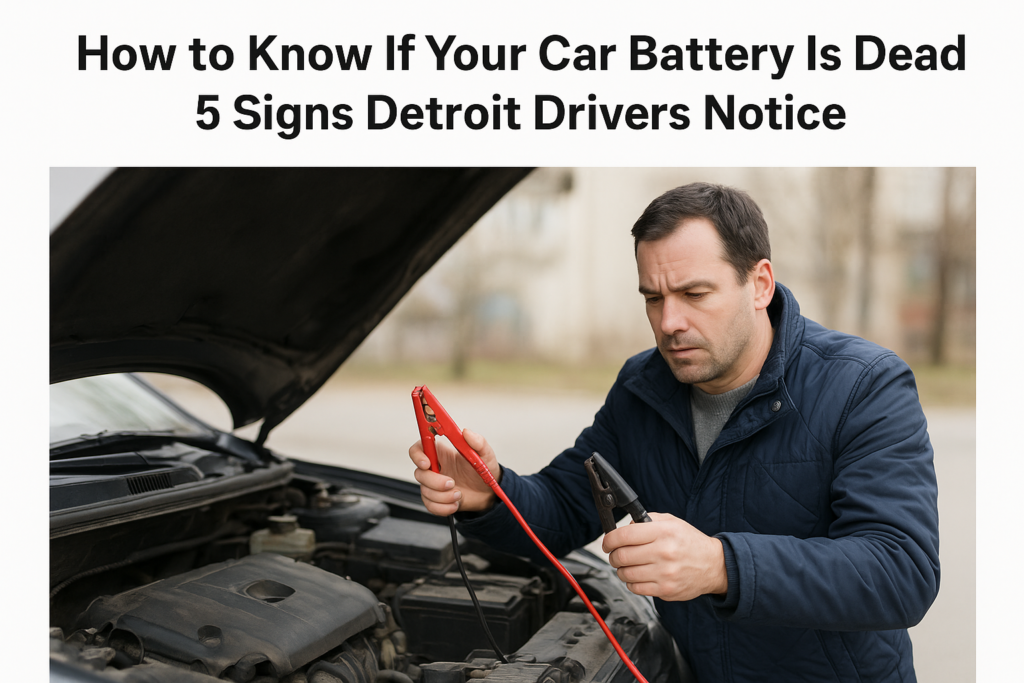
Your car won’t start on a cold morning in Detroit, and you’re standing in the driveway trying to figure out if it’s the battery, the alternator, or something worse. How to know if car battery is dead comes down to a handful of clear signs, and once you know what to look for, you can usually tell within a minute or two. That matters when you’re already running late for a shift near Southfield or trying to get the kids to school in Dearborn Heights.
The short answer: a dead battery usually announces itself through slow cranking, dim interior lights, or a dashboard that flickers instead of lighting up steady. The tricky part is separating a battery problem from a failing alternator or starter, since all three can mimic each other, especially in the cold snaps we get off Lake Erie and Lake St. Clair.
Below, we’ll walk through five signs Detroit drivers notice most often, based on real calls we’ve handled from Livonia to Taylor. By the end, you’ll know whether you need a jump, a new battery, or a closer look under the hood, and when it’s time to call Skyline Towing at 6450 E Hancock St for backup.
1. Your engine cranks slowly or won’t turn over at all
What it looks like
You turn the key or push the start button, and instead of a quick, confident start, you hear the engine groan through a slow, dragging crank. Sometimes it catches after a second or two of struggling. Other times it just stops mid-crank, like the car ran out of energy before the engine could fire. Drivers we’ve helped near I-96 and the Southfield Freeway describe it as the car "trying but not quite making it," which is about as accurate a description as you’ll get.
What’s causing it
Slow cranking almost always points to a battery that can’t deliver enough current to spin the starter motor at full speed. Cold weather makes this worse because the chemical reaction inside the battery slows down as temperatures drop, and Detroit winters routinely test batteries that were already on their last leg. That said, a failing starter motor or corroded battery cable can produce a similar sound, so slow cranking isn’t automatically a death sentence for your battery, it’s a strong clue that something in the starting system needs attention.
A slow, groaning crank is the clearest early warning that your battery is losing its charge before it fails completely.
What to do about it
If your engine cranks slowly, don’t keep trying the key over and over. Each attempt pulls more power from an already weak battery and can flood the engine.
- Try a jump start if you have cables or a portable jump box
- Check battery terminals for corrosion or loose connections
- Note how long it’s been since your last battery replacement
- Call for a professional jump or battery test if the car won’t start after one or two tries
If a jump gets you going but the problem returns within a day, that’s your battery talking. We see this pattern constantly on calls around Dearborn and Taylor, and it rarely resolves itself.
2. Headlights and interior lights are dim or accessories won’t power on
What it looks like
You climb into the car and notice the dome light glowing weaker than usual, or your headlights look yellowish instead of bright white against the dark on Jefferson Avenue. The radio might reset itself, power windows crawl instead of zipping up, or your phone charger stops working mid-charge. Drivers heading through Dearborn at night often catch this first, since dim headlights are hard to miss once the sun goes down.
What’s causing it
Dim electrical accessories mean your battery can’t hold enough voltage to run everything at once. A healthy battery sits around 12.6 volts at rest and should handle headlights, climate control, and infotainment without dropping power anywhere. When voltage sags under load, it’s usually a sign the battery’s internal cells are wearing out, though a failing alternator can cause the same dimming once the engine’s running.
Dim lights and sluggish accessories are your battery telling you it’s running out of reserve power, even before the engine won’t start.
What to do about it
Get your battery and charging system tested at a shop or with a roadside technician before you’re stuck somewhere like Southfield with a dead car and no daylight left.
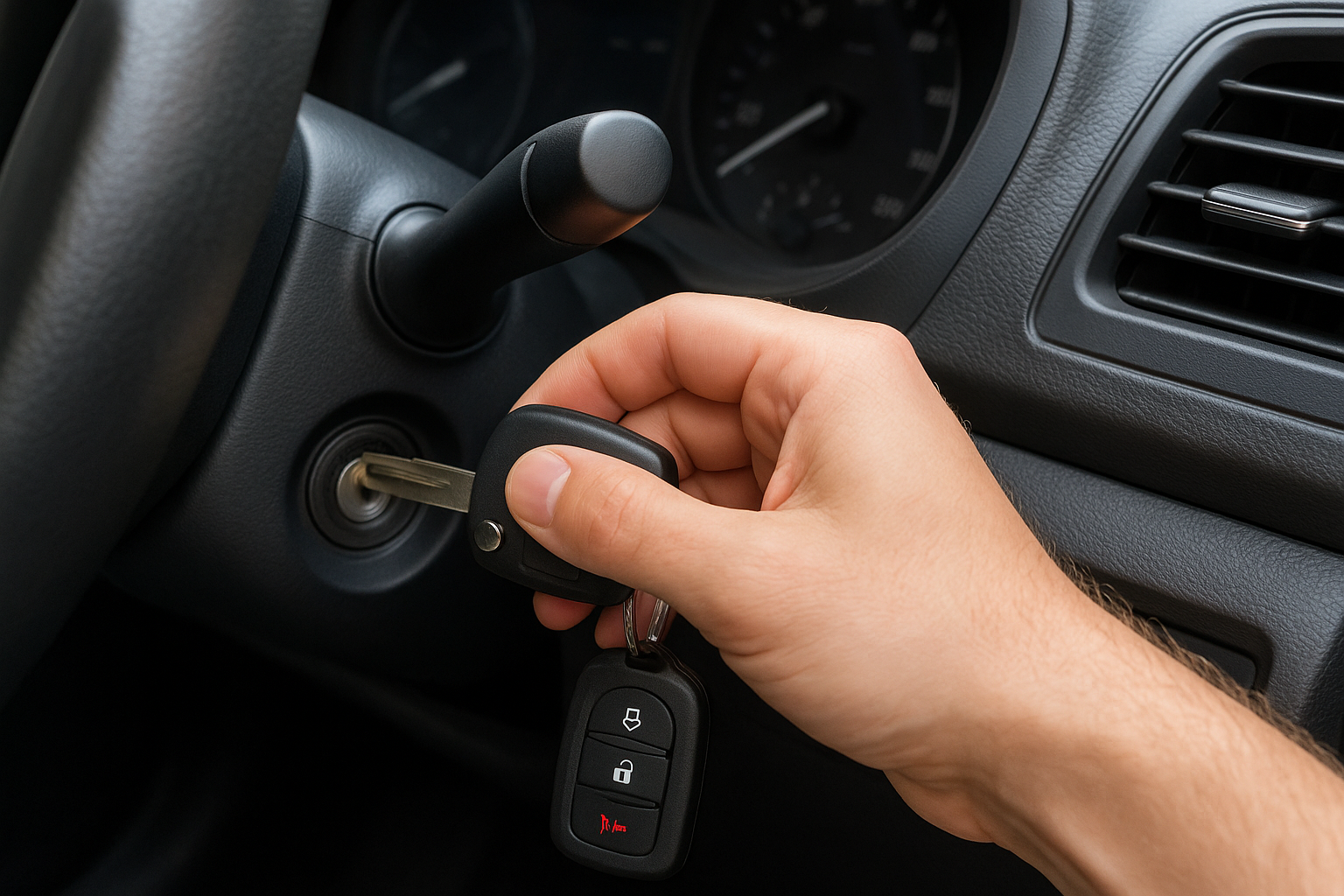
3. You hear a single click or rapid clicking when you turn the key
What it looks like
You turn the key and instead of the engine cranking, you get one loud click from under the hood and nothing else. Or you hear a fast, machine-gun clicking that keeps going as long as you hold the key. Drivers stuck outside grocery stores on Ford Road or in parking structures downtown describe it as the car sounding like it wants to start but can’t get the words out.
What’s causing it
A single click usually means the starter solenoid is trying to engage but there’s not enough battery power to spin the starter motor. Rapid clicking points to the same root problem: the battery has just enough juice to trigger the solenoid repeatedly but not enough to actually crank the engine. It’s a classic low-voltage symptom, though a bad starter or loose ground cable can occasionally produce a similar click.
Clicking without cranking almost always means your battery voltage has dropped below what the starter needs to work.
What to do about it
Stop turning the key after two clicking attempts. Try a jump start, and if clicking continues after that, call for roadside help rather than risk damaging the starter.
4. The battery case is swollen, corroded, or smells like rotten eggs
What it looks like
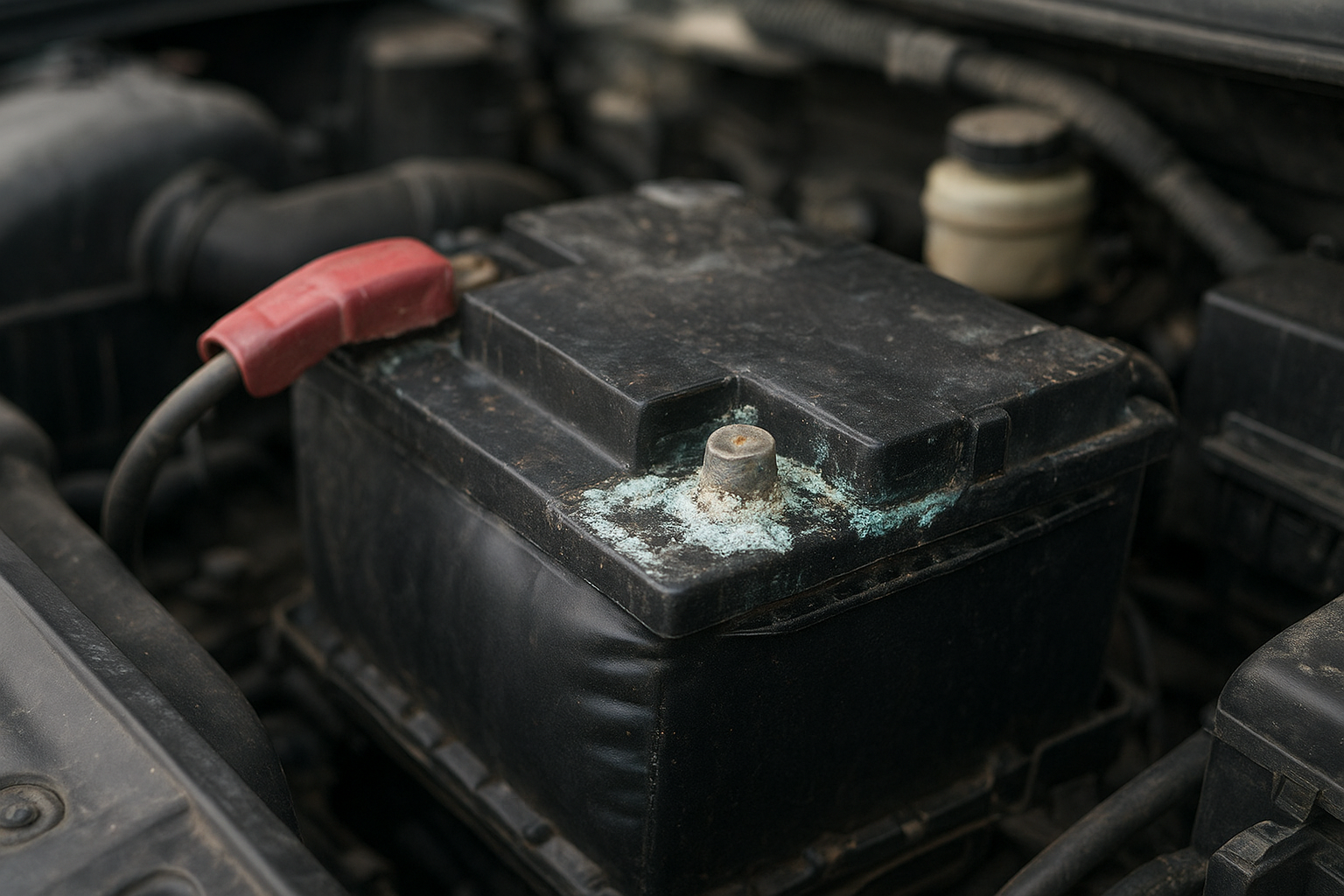
Pop the hood and look at the battery itself before you assume anything else is wrong. A healthy case sits flat and rectangular, but a failing one can look puffed up on the sides, almost like it’s been overinflated. You might also spot white or bluish-green crust around the terminals, or catch a sulfur smell like rotten eggs drifting up when you lean in close. Drivers who service their own cars near Livonia often catch this during an oil change, long before the car actually fails to start.
What’s causing it
Battery swelling happens when internal cells overheat or overcharge, building up gas pressure inside a sealed case that has nowhere to go. Corrosion forms when hydrogen gas escapes around the terminals and reacts with moisture in the air. That rotten egg smell means the battery is venting sulfuric acid gas, which usually signals a battery on its way out or a charging system pushing too much voltage into it.
A swollen case or sulfur smell means the battery is failing internally, not just running low.
What to do about it
Don’t touch corroded terminals with bare hands. Have a technician inspect and replace the battery before it leaks or fails completely on the road.
5. Your battery is three or more years old and struggling with Detroit weather
What it looks like
Most batteries give some warning before they die, but age changes the math. If your battery is pushing three, four, or five years old, you’ll notice slower starts on cold mornings, weaker cranks after sitting overnight, or a car that struggles every time the temperature drops below freezing near Lake St. Clair. Summer heat wears batteries down just as fast, so a battery that limped through a Detroit July often can’t handle the first hard freeze of November.
What’s causing it
Batteries lose capacity over time as the lead plates inside corrode and the chemical reaction that stores power weakens. Metro Detroit’s swings between humid summers and brutal winters accelerate that wear compared to milder climates. Once a battery passes the three-year mark, its reserve capacity often drops below what’s needed to reliably start the engine in extreme temperatures, even if it still works fine most days.
An aging battery that struggled through summer heat rarely survives a hard Detroit freeze without warning.
What to do about it
Check the manufacture date stamped on the case. If it’s three years or older, get it load tested before winter hits, not after you’re stranded on I-94.
When in doubt, get it tested before you’re stranded
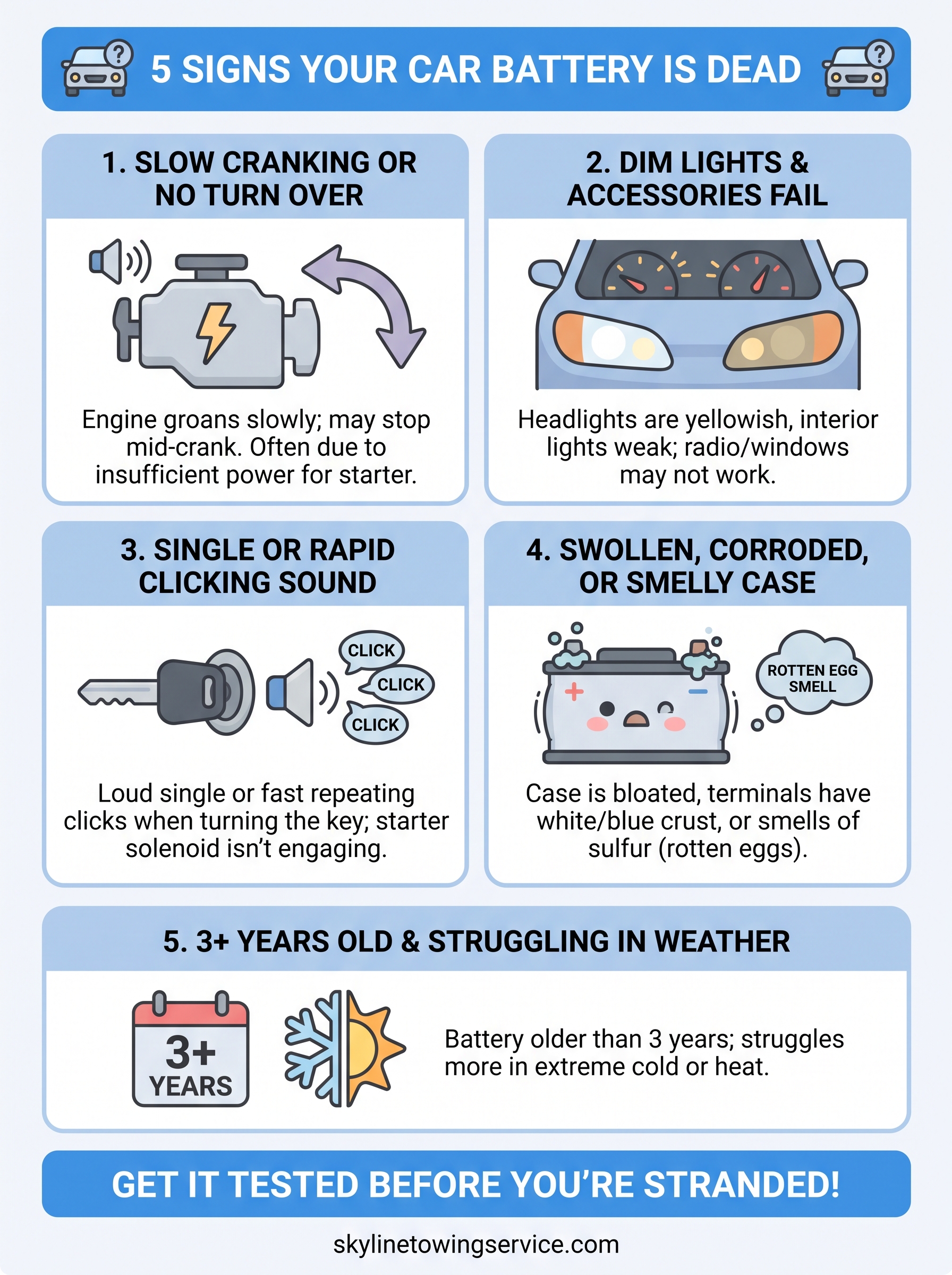
Guessing at a battery problem costs you time and risk, especially when you’re parked somewhere exposed like a lot off Telegraph Road or a shoulder on I-75. Slow cranks, dim lights, clicking sounds, a swollen case, or an aging battery are the five signs that tell you it’s time to act, not wait. Catching even one of these early usually means the difference between a quick jump and a full breakdown during rush hour.
Detroit weather doesn’t give weak batteries much room to hide, and neither should you. If your car is showing any of these symptoms, get it tested before the next cold front or heat wave pushes it over the edge. And if you’re already stuck, whether it’s a dead battery in Taylor or a no-start outside a Dearborn strip mall, call Skyline Towing for a fast jump, battery test, or replacement so you’re back on the road instead of stranded on it.