
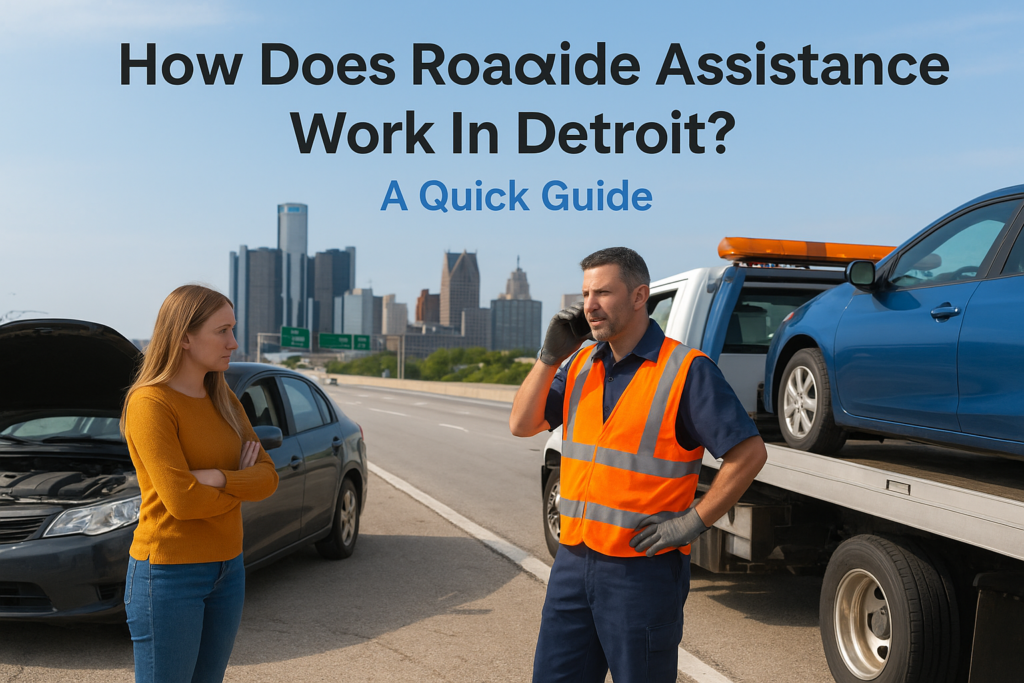
You’re on I-94 near Dearborn at 11 PM with a dead battery, or stuck on the shoulder of the Southfield Freeway with a blown tire in January. You pull out your phone and start searching how does roadside assistance work, because right now, you need answers fast.
Roadside assistance is pretty straightforward: you call, a professional shows up, and they get you moving again. But the details matter, especially in Metro Detroit, where brutal winters, pothole-ravaged roads, and heavy freeway traffic create breakdowns that don’t always fit a neat script. The type of coverage you have, who you call, and how quickly help arrives can vary a lot depending on the provider.
At Skyline Towing, headquartered at 6450 E Hancock St, Detroit, MI 48207, we handle roadside calls across Detroit, Dearborn Heights, Southfield, Taylor, Livonia, and the surrounding metro area 24 hours a day, 7 days a week. This guide breaks down exactly what roadside assistance covers, how the process works from the moment you call to the moment you’re back on the road, and what your options are for getting coverage, whether through insurance, a membership plan, or paying per service.
What roadside assistance covers in Detroit
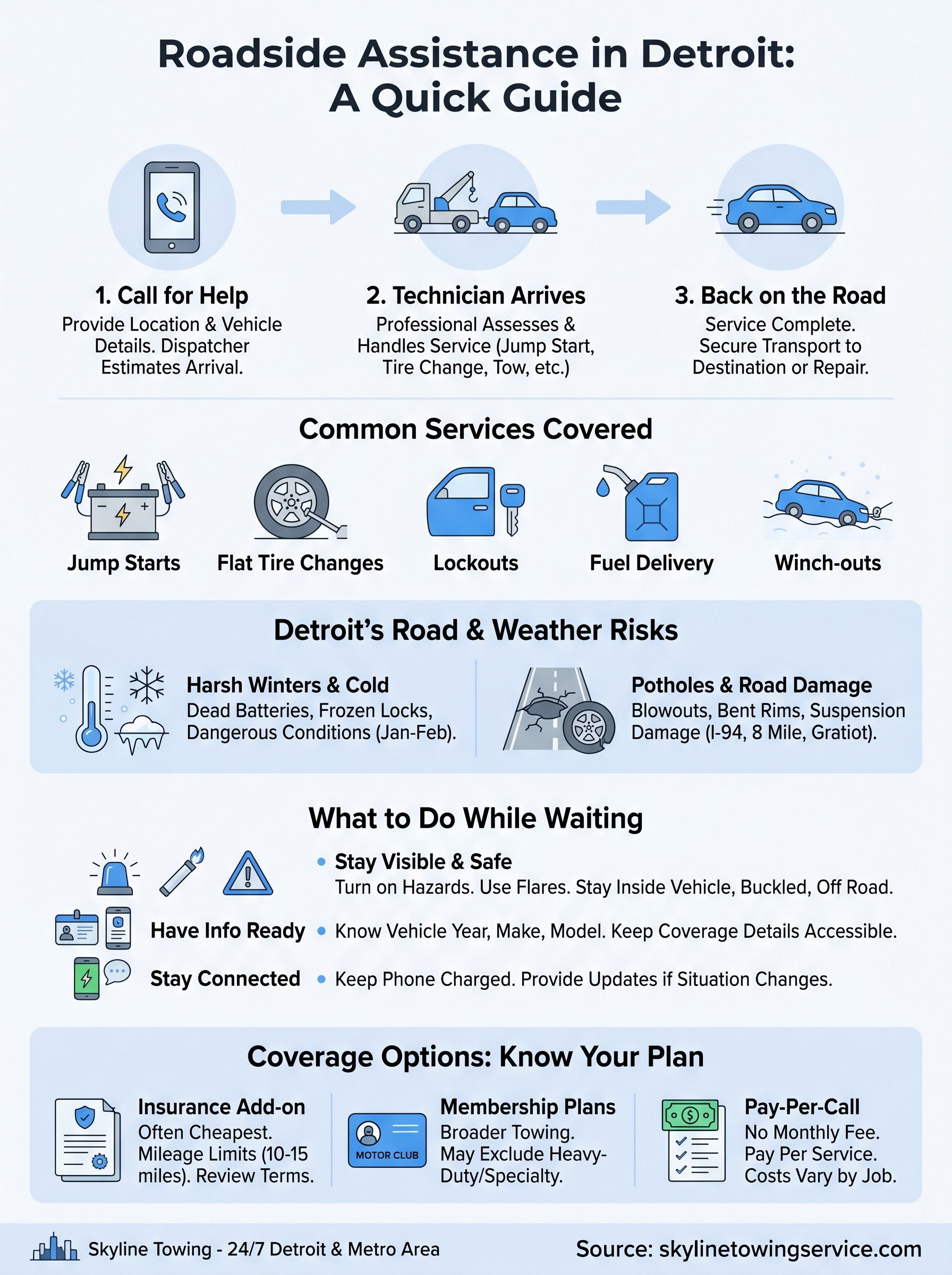
When people search how does roadside assistance work, the first thing they want to know is what services are actually included. Standard roadside assistance covers the most common breakdown scenarios: dead batteries, flat tires, lockouts, fuel delivery, and towing. In Detroit, where harsh winters and pothole-damaged roads add extra stress to your vehicle, knowing exactly what’s available before something goes wrong saves you a lot of panic in the moment.
If your provider only covers light-duty towing, you could end up stranded with a larger vehicle or a complex breakdown that falls completely outside your plan.
Common services you can request
Most calls to Skyline Towing cover a handful of predictable breakdown scenarios. Whether you’re stuck with a dead battery on a cold February morning in Southfield or locked out of your car in a Livonia parking lot, the process starts the same way: you call, describe the situation, and a truck is dispatched to your location.
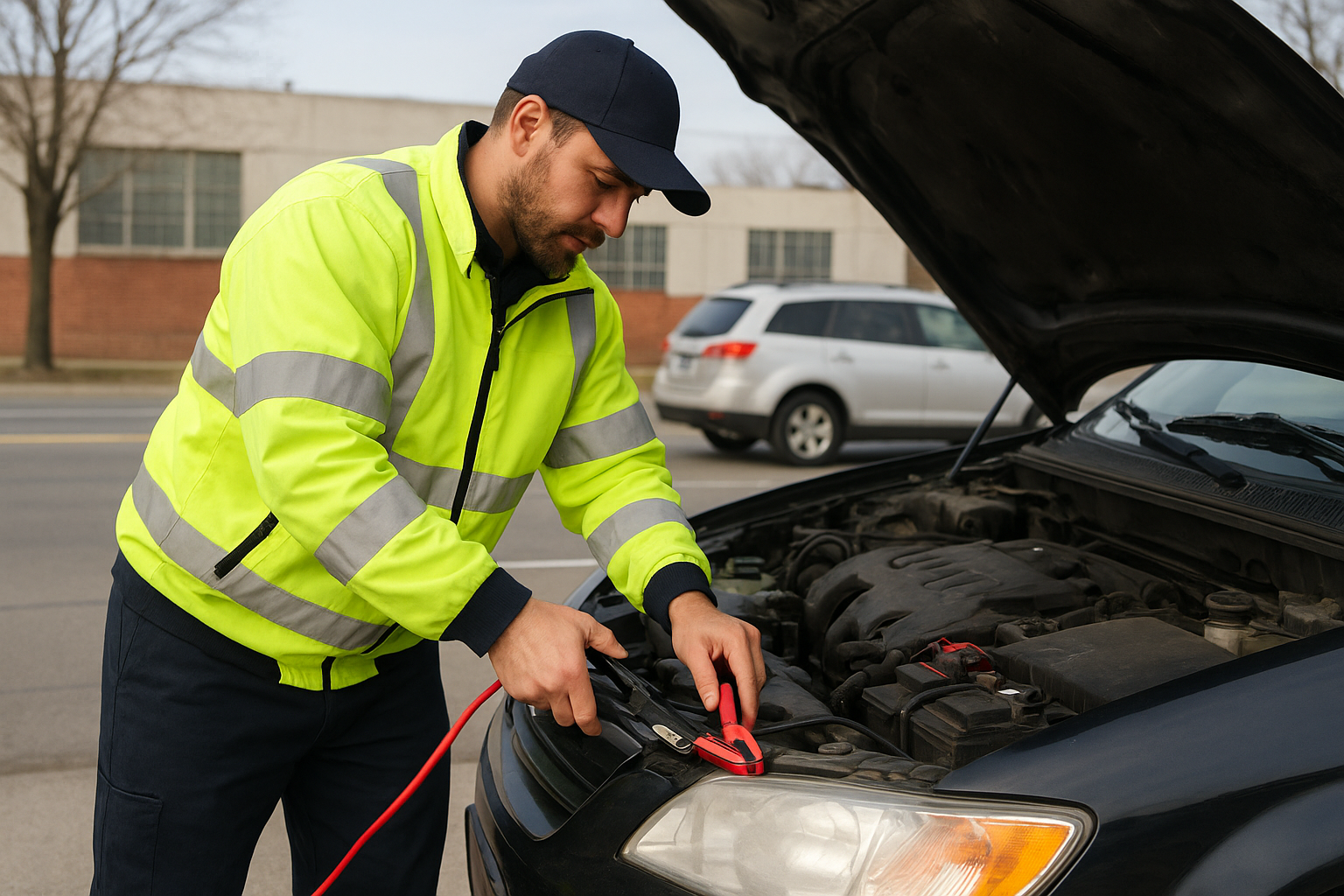
- Jump starts: Battery failures are among the most frequent winter calls across metro Detroit.
- Flat tire changes: We mount your spare on-site or provide mobile tire replacement if you don’t have one.
- Lockouts: We get you back in without damaging the door or the lock mechanism.
- Fuel delivery: Running out of gas on I-75 near Taylor or on the Lodge Freeway happens more than most people expect.
- Winch-outs: Getting stuck in snow, mud, or a ditch on a Metro Detroit back road is a real scenario, especially December through March.
Heavy-duty and specialty situations
Not every roadside situation involves a standard passenger car. Skyline also handles heavy-duty towing for commercial trucks, box trucks, and larger vehicles, which is a service many basic plans simply don’t include. If you need dealer transport across metro Detroit, a salvage auction vehicle moved, or accident recovery on I-94, those jobs require equipment and experience that go beyond what standard coverage typically offers. Knowing your plan’s limits before a breakdown happens keeps you from facing unexpected out-of-pocket costs when you’re already stressed on the side of the road.
Why roadside help matters on Metro Detroit roads
Detroit roads are genuinely hard on vehicles. Potholes on 8 Mile, Gratiot Avenue, and Michigan Avenue regularly cause blowouts, bent rims, and suspension damage that leave drivers stranded without warning. Add Michigan winters that drop temperatures into the single digits and you have conditions that kill batteries, freeze door locks, and turn a minor inconvenience into a serious safety situation. Understanding how does roadside assistance work in this specific environment helps you prepare for the breakdowns most likely to happen here.
Local road and weather conditions create real risk
Metro Detroit’s freeze-thaw cycle destroys road surfaces faster than most cities in the country, and that damage translates directly into roadside emergencies. A pothole on I-96 near Livonia can shred a tire at highway speed with no warning. Cold snaps in January and February are especially hard on older batteries, and a battery that tested fine in October can fail completely by December.
Knowing your roadside options before something breaks means you spend less time stranded on a dark shoulder and more time getting home.
Freeway shoulders on I-94, I-75, and the Lodge Freeway are not safe places to wait for extended periods, especially after dark. Having a reliable local provider who knows metro Detroit roads and can reach you quickly makes a real difference when conditions outside are dangerous.
How roadside assistance works step by step
Understanding how does roadside assistance work from start to finish helps you stay calm when something goes wrong. The process itself is straightforward, and knowing each step in advance means you’re not guessing while standing on the shoulder of I-75 or waiting in a Southfield parking lot at midnight.
Making the call
When you contact Skyline Towing at 6450 E Hancock St, Detroit, MI 48207, the dispatcher asks for your location, the type of vehicle you’re driving, and a description of the problem. Give the most specific location you can, such as a cross street, exit number, or nearby landmark, because Detroit freeways and surface roads make pinpointing your exact position harder than it sounds after dark or in heavy rain.
The faster you confirm your exact location, the faster a truck reaches you.
Your dispatcher provides an estimated arrival time and stays available if your situation changes before the truck gets there.
When the truck arrives
The technician assesses the situation on the spot and handles the service directly, whether that’s a jump start, tire swap, lockout, or tow. If a tow is needed, you choose your destination and the driver secures your vehicle before leaving.
Most calls wrap up in a single visit, and you’re back on the road or safely at a repair shop without needing to contact anyone else.
What to do while you wait for the truck
Once you’ve made the call and confirmed your location, the waiting period is where most people make avoidable mistakes. Staying safe on the side of a Detroit road, especially on a busy freeway like I-94 or the Lodge, requires basic situational awareness and a few deliberate steps.
Stay visible and stay safe
Turn on your hazard lights immediately after pulling over, even if the car is already stopped. If you have road flares or reflective triangles, place them behind your vehicle to warn approaching traffic. On Metro Detroit freeways, fast-moving cars close the distance quickly, so every second of added visibility matters.
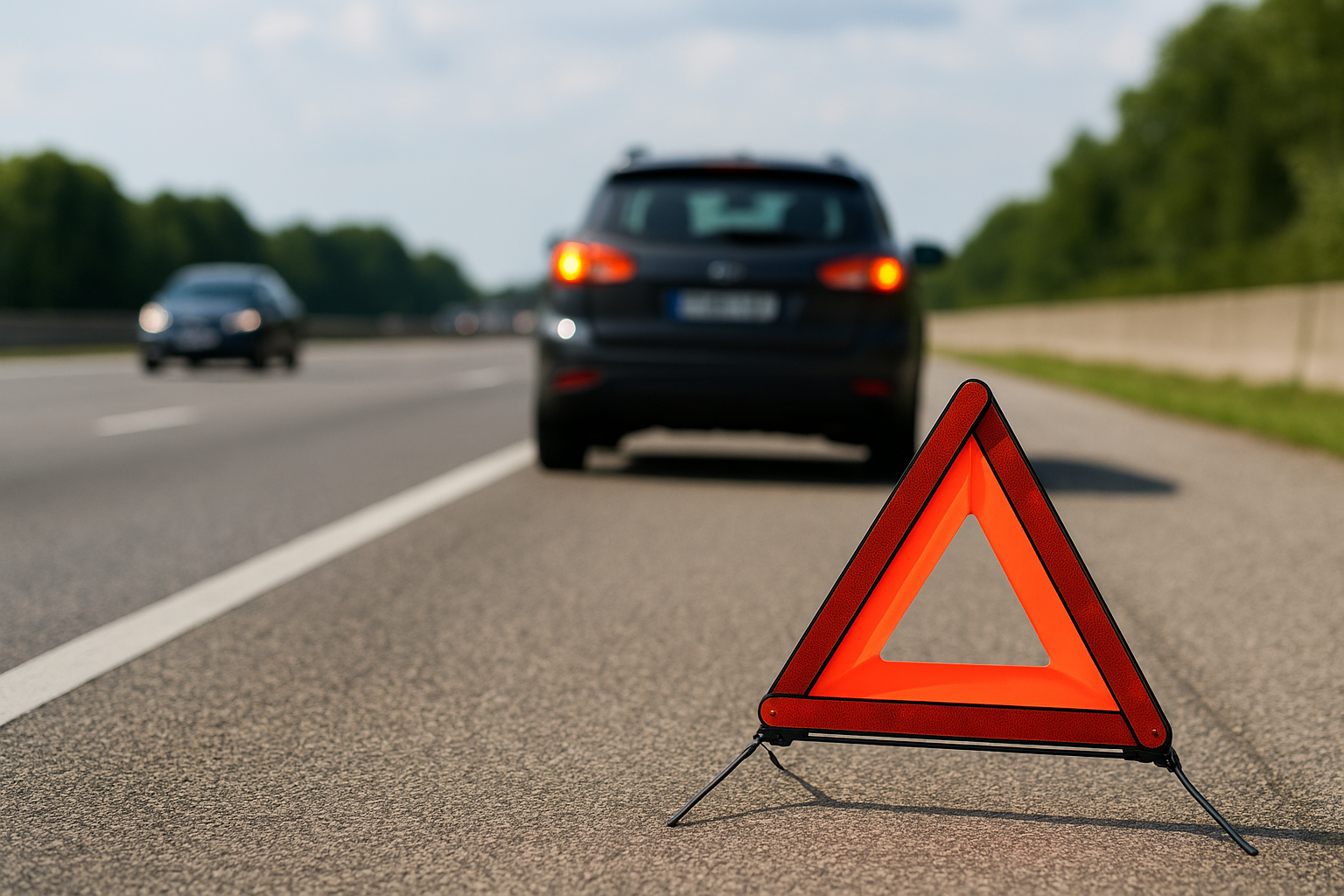
If you’re on a freeway shoulder after dark, stay inside your vehicle with your seatbelt buckled until the truck arrives.
Keep your information ready
Understanding how does roadside assistance work also means knowing your role in the process. When the technician pulls up, having your vehicle year, make, and model ready speeds up the job considerably. If you have insurance or membership details, keep them accessible on your phone so you’re not digging through a folder of emails in January wind.
Stay off the road surface itself and avoid standing between your vehicle and moving traffic. Keep the dispatcher’s number saved and your phone charged so you can provide updates if your location or situation changes before help arrives.
Coverage, costs, and common limits to know
Understanding how does roadside assistance work from a cost perspective keeps you from getting hit with surprise bills after an already stressful breakdown. Coverage options fall into three main categories: insurance add-ons, standalone membership plans, and direct pay-per-call services like calling Skyline Towing directly at 6450 E Hancock St, Detroit, MI 48207.
What your plan may and may not cover
Insurance-based roadside add-ons are often the cheapest option upfront, but they frequently come with mileage limits on towing, typically capping out at 10 to 15 miles before extra charges apply. If you break down on I-94 near Taylor and need to reach a shop in Detroit, that limit can run out fast. Membership plans through motor clubs tend to offer more generous towing distances but may exclude heavy-duty vehicles or specialty situations like winch-outs.
Read your coverage terms before you need them, not while you’re standing on a freeway shoulder.
Pay-per-call service gives you no monthly fee and no plan to manage, which works well if breakdowns are rare for you. The trade-off is that per-incident costs vary by job type, so a longer tow or a complex recovery will cost more than a simple jump start. Knowing your options in advance means you choose the right fit for how often you actually drive and what you drive.
When you need help fast
Now that you know how does roadside assistance work from coverage types to what happens when the truck arrives, the most important step is having a reliable number saved before something breaks. Metro Detroit roads don’t give you much warning when a tire blows on I-75 or a battery dies in a Dearborn Heights parking lot at midnight.
Skyline Towing operates 24/7 across Detroit, Dearborn, Southfield, Taylor, Livonia, and the surrounding metro area, dispatching from our headquarters at 6450 E Hancock St, Detroit, MI 48207. Whether you need a jump start, a tow after an accident on I-94, or a lockout resolved in the cold, we send a technician who knows these roads and gets to you fast.
Your best move is saving the number before you need it, not after you’re already stuck. Contact Skyline Towing for 24/7 roadside assistance in Metro Detroit and get back on the road without waiting on hold or dealing with a slow dispatch chain.