
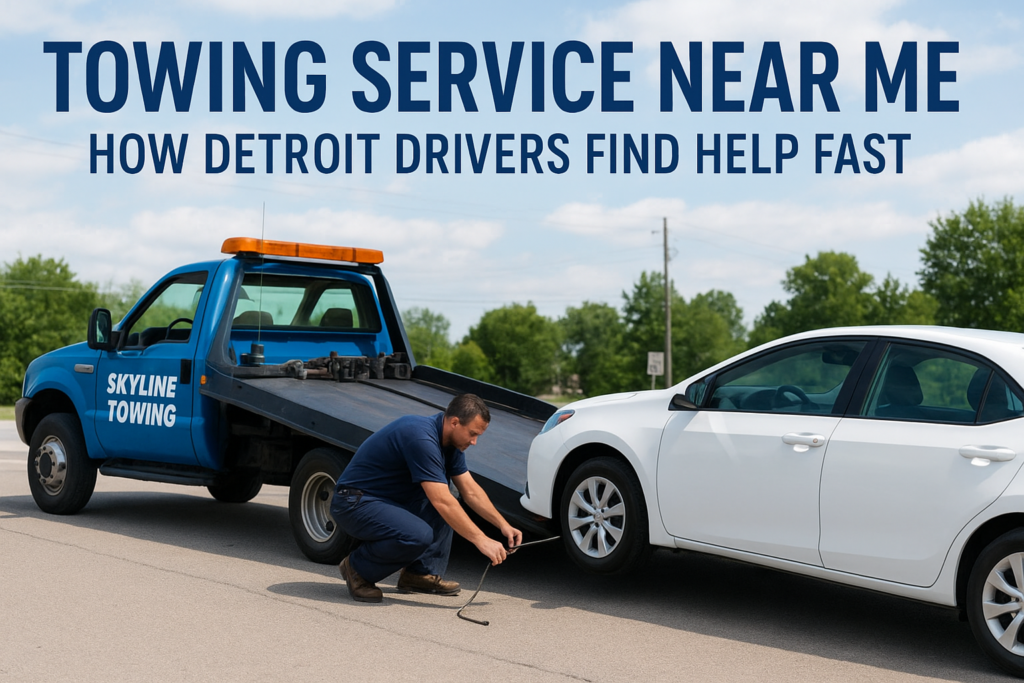
Your car dies on I-75 near the Ambassador Bridge during rush hour, or you’re stuck in a Southfield parking lot with a dead battery and a meeting in twenty minutes. Typing towing service near me into your phone feels like the only move, but the results page doesn’t tell you who actually shows up fast, who answers at 2 a.m., or who’s going to hit you with hidden fees once the truck arrives.
We’ve hooked up thousands of vehicles across Detroit, Dearborn, Taylor, and Livonia, and we know what separates a real roadside rescue from a frustrating wait on the shoulder. This article breaks down exactly how to find reliable help quickly, what questions to ask before a truck ever leaves the yard, and which red flags mean you should hang up and call someone else.
You’ll get a practical rundown of what to look for, from response times to service coverage across the metro area, plus tips specific to Michigan weather and traffic patterns that out-of-state advice never accounts for. If you’re reading this in an emergency, Skyline Towing is based at 6450 E Hancock St in Detroit and dispatches 24/7 across the region, so help is closer than you think.
1. Skyline Towing
How it works
Skyline Towing dispatches straight from our yard at 6450 E Hancock St in Detroit, and our trucks cover Detroit, Dearborn, Dearborn Heights, Southfield, Taylor, Livonia, and the towns in between around the clock. You call or submit a request online, tell us where you are and what happened, whether it’s a dead battery in a Costco lot or an accident recovery off I-94, and dispatch sends the closest available truck instead of just the next one in line. GPS tracking means our team knows exactly who’s ten minutes out and who’s stuck across town, so you’re not waiting behind someone else’s job.
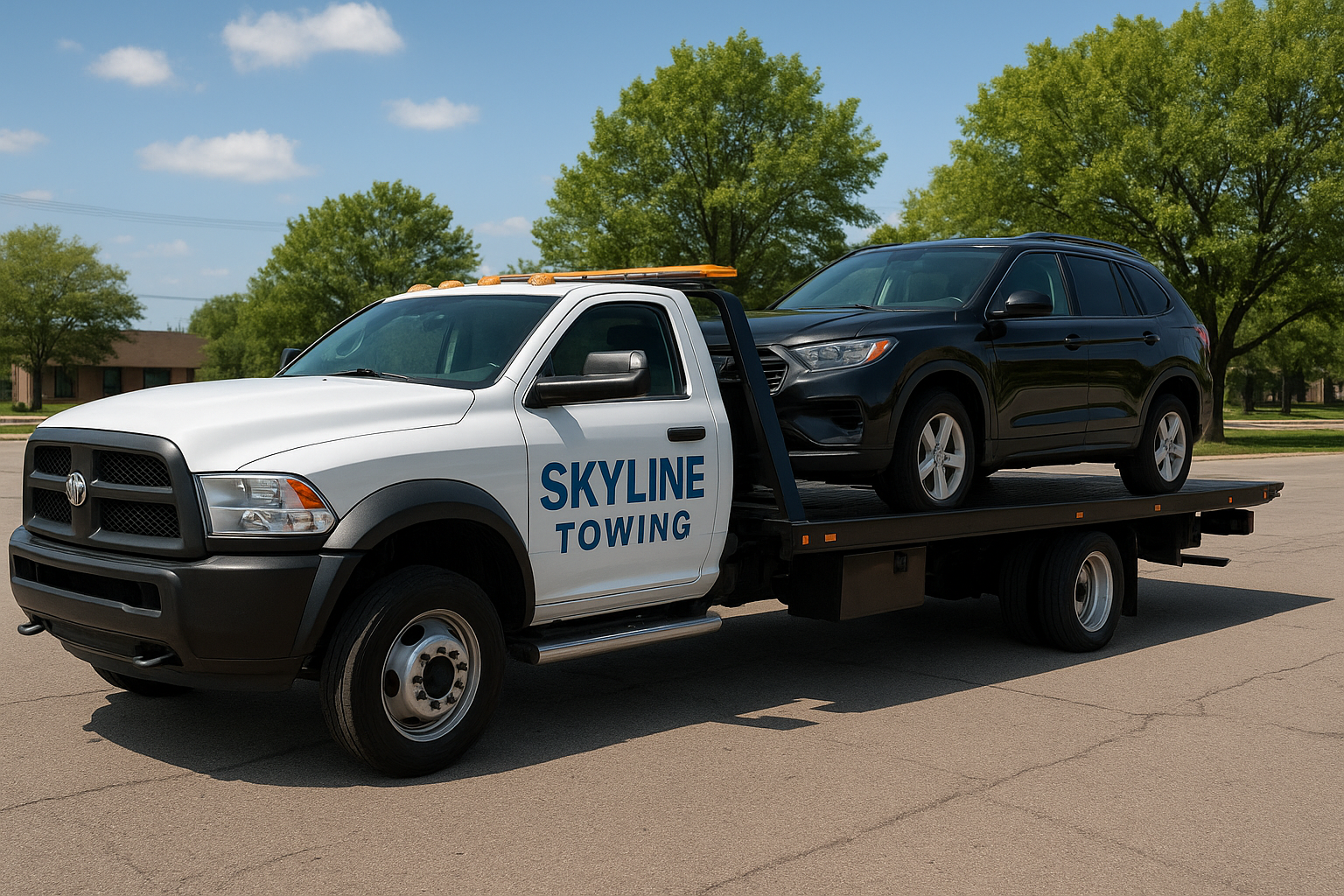
The closest truck to you, not the closest truck to the yard, is what actually gets you moving faster.
Who it’s for
Drivers searching for a towing service near me who want one number that handles everything usually end up calling us. We cover jump starts, lockouts, mobile tire changes, winch outs after you slide off Telegraph Road in the snow, private property towing, dealer and salvage auction transport, and heavy duty towing for box trucks and RVs. If your situation doesn’t fit neatly into one category, or you’re not even sure what’s wrong with the car, we’re built for that kind of call.
Response time
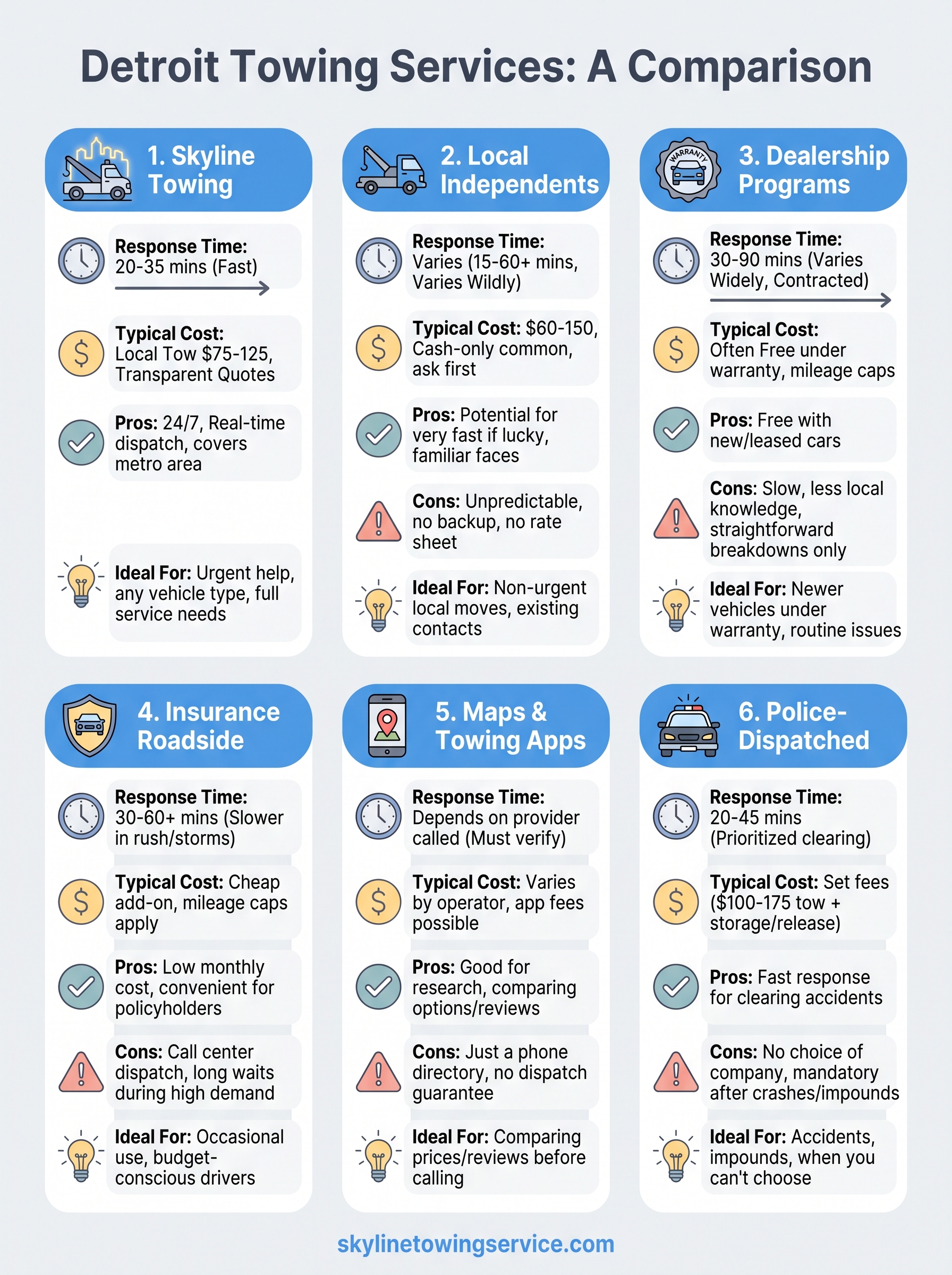
Response times run 20 to 35 minutes across most of metro Detroit, and often faster inside city limits near our Hancock Street base. Rush hour on I-75 or a January whiteout changes the math some, but our dispatchers give you a real estimate up front instead of a vague "we’ll get there when we can." We’d rather tell you 40 minutes and hit it than promise 15 and leave you standing on the shoulder.
Typical cost
Pricing depends on distance, vehicle size, and the type of job, but here’s what most Detroit customers pay:
- Local tow (under 10 miles): $75 to $125
- Jump start or lockout: $50 to $85
- Tire change or swap: $60 to $100
- Heavy duty or long-distance tow: quoted before dispatch
We quote the price before the truck rolls, not after it’s hooked up, so there’s no surprise number waiting for you at the end.
2. Local independent tow operators
How it works
Outside of larger companies, plenty of one-truck or two-truck operations run across Wayne and Oakland counties, often working out of a garage in Hamtramck or a side lot in Redford. You find them through a towing service near me search or word of mouth, and calls usually go straight to the owner’s cell phone instead of a dispatch center. Scheduling depends entirely on whether that one driver is free, which means timing can swing wildly depending on what else is on their plate that day.
A single-truck operator can be your fastest option or your longest wait, depending purely on luck.
Who it’s for
These operators suit drivers who already have a trusted local contact and don’t mind a slower response in exchange for a familiar face. They work well for non-urgent moves, like relocating a car from a driveway in Livonia to a repair shop, rather than emergencies where every minute matters.
Response time
Response windows range from 15 minutes to over an hour, since there’s no backup truck if the operator is already on a job in Taylor or stuck in traffic near the Southfield Freeway. You’re at the mercy of one person’s schedule, not a dispatch network.
Typical cost
Rates vary more than with larger companies:
- Local tow: $60 to $150
- Cash-only discounts are common
- No published rate sheet, so always ask before the hook goes on
Pricing can be lower, but it’s rarely guaranteed in writing.
3. Dealership and manufacturer roadside programs
How it works
Most new vehicles come with a manufacturer roadside program bundled into the warranty, whether it’s GM’s OnStar, Ford’s Roadside Assistance, or something similar from Toyota or Honda. You call a 1-800 number or use an in-car app, and the manufacturer’s call center dispatches a contracted tow company in your area, which may or may not be based anywhere near Detroit. The dealership itself usually isn’t the one sending a truck; they’re just the reason you have the coverage in the first place.
Who it’s for
Leased and newer vehicles under warranty are the best fit here, especially if you’re already paying for the coverage through your loan or lease terms. Owners searching for a towing service near me while under warranty should check this option first since it’s often free, though it works better for straightforward breakdowns than complicated recoveries off the Lodge Freeway.
Response time
Wait times swing widely because the manufacturer is contracting out to whichever local company answers the call that day. In Detroit, that can mean 30 minutes or it can mean 90, since the dispatched truck has no relationship with your specific location or urgency.
A program built for the whole country rarely moves as fast as a company that knows your neighborhood.
Typical cost
Coverage is typically included for a set number of miles or incidents per year:
- Covered tows: often free up to a mileage cap
- Beyond the cap: $3 to $5 per mile out of pocket
- Non-covered services: billed separately
4. Auto insurance roadside assistance
How it works
Many Michigan drivers already pay for roadside coverage through their auto insurance without realizing it, tucked into a policy from State Farm, Progressive, or a smaller regional carrier. You call the number on your insurance card or open the carrier’s app, punch in your location, and the insurer routes the request to a contracted towing company, similar to how manufacturer programs operate. Insurance-based dispatch works through a call center that has no idea whether you’re stuck on the Southfield Freeway or a side street in Hamtramck, so details matter when you describe where you are.
Who it’s for
Drivers who added roadside coverage as a cheap add-on, usually a few dollars a month, get the most value here, especially for occasional breakdowns rather than frequent tows. If you’re searching towing service near me because your policy already covers it, this option makes sense before paying out of pocket somewhere else.
Response time
Expect 30 to 60 minutes in most cases, sometimes longer during storms or rush hour when every contracted truck in the metro area is already booked.
Insurance roadside coverage saves you money, but it rarely saves you time when the whole city needs a tow at once.
Typical cost
Coverage terms vary by insurer and policy tier:
- Covered tows: usually free up to a distance limit
- Extra mileage: billed at a per-mile rate
- Annual incident caps often apply, sometimes as low as two or three uses
5. Maps and towing apps
How it works
Apps like Google Maps show a list of nearby tow companies when you search towing service near me, pulling from reviews and business listings rather than any live dispatch system. Tapping a result usually just calls the business directly, so you’re back to a regular phone conversation, not an automated booking. Some standalone towing apps promise instant quotes and GPS-tracked trucks, but coverage in Detroit is spotty since fewer contracted drivers operate here compared to bigger metro markets.
Who it’s for
Drivers comparing options before committing to one company benefit most from this route, especially when you want to check reviews or prices across a few businesses at once. It suits research more than emergencies, since you’re still making a phone call either way once you pick someone.
An app can point you toward a phone number, but it can’t guarantee anyone actually answers.
Response time
Response time depends entirely on who you end up calling, not the app itself. Searching near the Lodge Freeway or downtown Detroit might surface five options, but half of them could be closed, unlisted, or outside their real service area. You still have to call and ask directly how fast someone can reach you.
Typical cost
Apps don’t set pricing, so costs mirror whatever company you contact:
- Listed businesses: pricing varies by operator
- Third-party towing apps: service fees sometimes added on top
- No guaranteed rate without a direct call
Treat apps as a starting point, not a booking confirmation.
6. Police-dispatched towing
How it works
When a crash blocks a lane on I-94 or a vehicle sits abandoned on Woodward Avenue, Detroit police often call in a rotation tow company rather than letting you pick one yourself. Officers work off a list of contracted operators who take turns getting calls, so you don’t get to choose who shows up, and you usually don’t get advance notice of the price. This happens most after accidents, DUI stops, or when a car gets flagged for parking enforcement violations in a restricted zone.
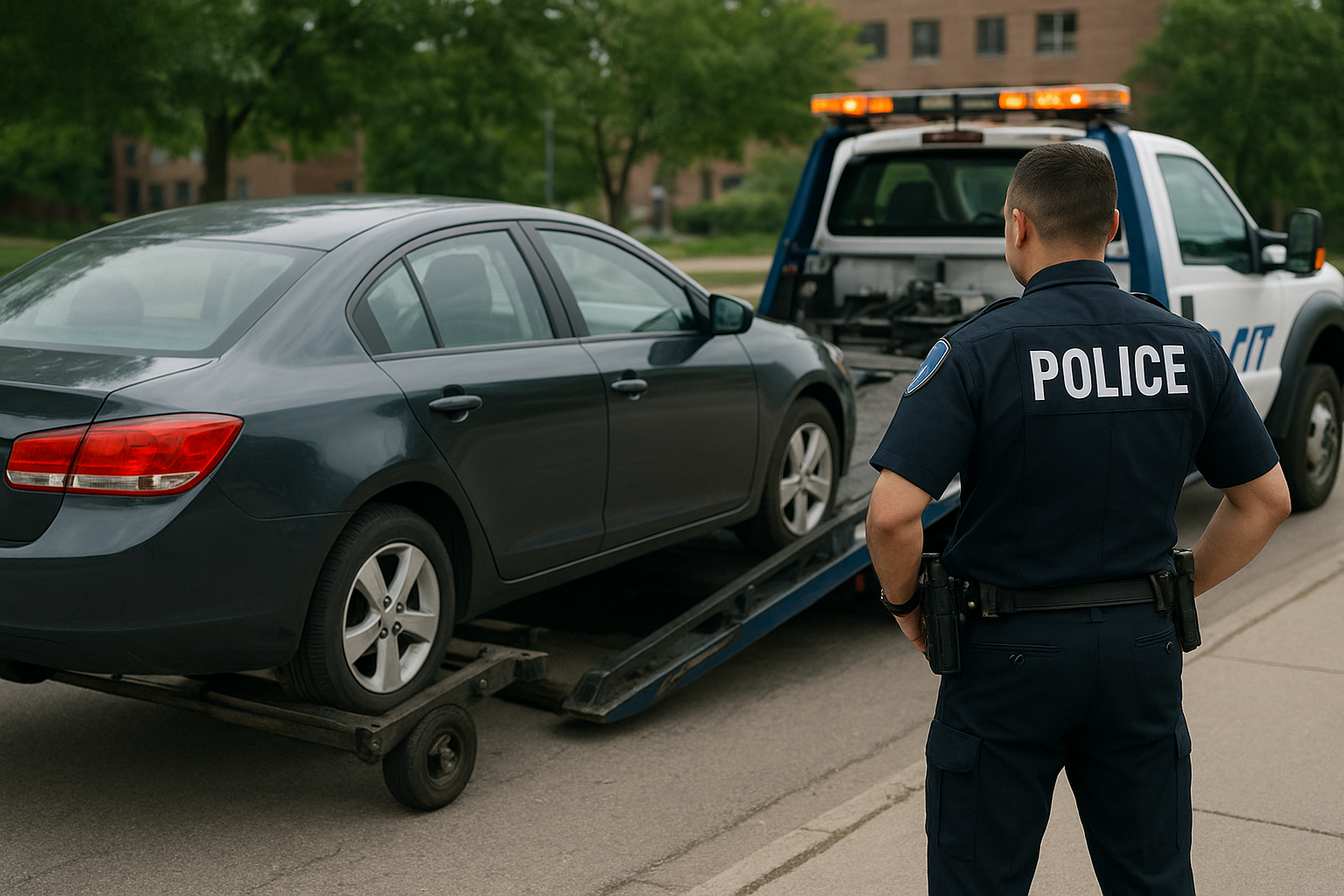
When police call the tow, you lose the choice of company but not the right to ask questions before signing anything.
Who it’s for
This applies to drivers who didn’t request a tow at all, whether that’s after a collision on the Lodge Freeway or a vehicle impounded from private property. You don’t search towing service near me in this scenario; the situation picks the company for you.
Response time
Police-dispatched trucks typically arrive in 20 to 45 minutes, since clearing the roadway is the priority and officers push for quick turnaround. Overnight and weekend calls can run longer if the rotation list is short on available drivers.
Typical cost
Expect these standard charges:
- Tow fee: $100 to $175, set by municipal contract
- Storage: $40 to $75 per day if the vehicle isn’t claimed fast
- Release paperwork: sometimes requires proof of ownership and payment on the spot
Ask for an itemized receipt before you leave the impound lot.
Getting back on Detroit’s roads faster
Six options exist for a reason, but they’re not equal when your car dies on the Southfield Freeway at midnight or you’re staring at a flat in a Dearborn parking lot. Dealership programs and insurance coverage work fine for routine breakdowns when you’ve got time to wait. Apps help you compare, but they don’t dispatch anyone. Police-rotation tows handle themselves. None of that matters when you need a truck now.
For everything else, a local dispatch team that knows Woodward from the Lodge and answers at 3 a.m. beats a call center guessing at your location every time. Skyline Towing runs from 6450 E Hancock St in Detroit, covers the whole metro area, and quotes real prices before the truck rolls. Save the number now, before you need it. When you’re ready, contact Skyline Towing and get a driver headed your way tonight.