
You’re stuck on the shoulder of I-94 near Dearborn at 11 p.m. in January, and your engine won’t turn over. You pull up your insurance app or dig through your glove box for that motor club card, and now you’re wondering: what does roadside assistance cover, exactly? It’s a fair question, and one that matters a lot more when you’re actually on the side of the road than when you’re signing up for a plan. Not all coverage is the same, and the details can surprise you.
At Skyline Towing, we handle roadside calls across Detroit, Southfield, Taylor, Livonia, and the surrounding metro area every single day. We see firsthand what people expect their plans to cover, and where those plans fall short. A driver on Telegraph Road might assume their flat tire service includes a replacement tire. Someone locked out on Michigan Avenue might not realize their plan limits them to one lockout per year. These gaps show up constantly, and they usually show up at the worst possible time. Because we’re the ones actually responding to these calls, we know exactly where confusion tends to hit.
This article breaks down the services that roadside assistance typically includes, towing, jump starts, lockouts, fuel delivery, tire changes, and more, with real examples from metro Detroit roads and situations. We’ll also cover common limitations people overlook and help you figure out whether your current coverage actually matches your needs. If you drive in this area, this is worth five minutes of your time.
What roadside assistance usually covers
Most plans share a core set of services whether your coverage comes through your auto insurance add-on, a motor club membership, or a credit card benefit. When people ask what does roadside assistance cover, the answer typically starts with the same handful of situations. That said, the specific limits and conditions vary significantly between providers, so knowing what each service actually includes is worth your time before you need it.
Towing
Towing is the most common reason people call for roadside help, and it’s almost always included in some form. Your plan will typically pay for a tow to the nearest qualified repair shop, but many plans cap the distance, often at 5, 10, or 15 miles. If you’re on I-75 near Taylor and your transmission goes out, a short tow might be fully covered, but getting your vehicle to a specific shop in Livonia or Dearborn could push you past your mileage limit and cost you out of pocket.
The distance cap on towing is one of the most overlooked details in roadside assistance plans, and it catches people off guard regularly.
Other services typically included
Beyond towing, most standard plans cover a range of common breakdown situations. Here’s what you can generally expect:
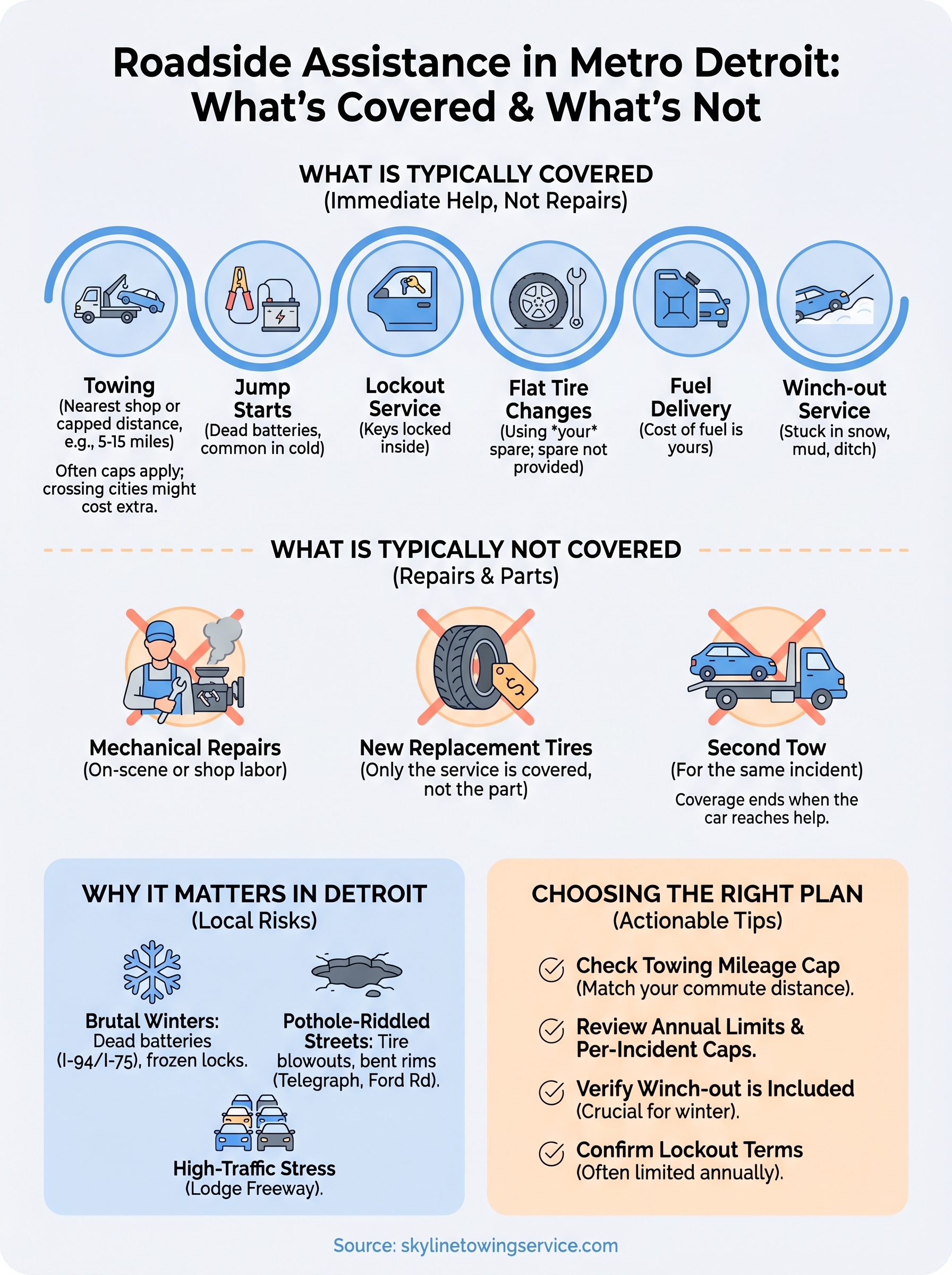
- Jump starts for dead batteries
- Lockout service if you’ve locked your keys inside the vehicle
- Flat tire changes using your spare (the spare itself is not provided)
- Fuel delivery when you run out of gas (you pay for the fuel cost)
- Winch-out service if your vehicle is stuck in mud, snow, or a ditch
Each of these services usually comes with its own per-incident limit or annual usage cap, so reading the fine print on your specific plan matters before you assume you’re fully covered.
What roadside assistance usually does not cover
Knowing what does roadside assistance cover is only half the picture. The other half is understanding where your coverage stops. Most plans are built around getting you out of an immediate jam, not handling anything that requires a mechanic or replacement parts. Many drivers discover these gaps only when they’re already stranded, which is the worst time to find out.
Repairs and parts
Your roadside plan will not pay for any mechanical repairs done on the scene or at a shop. If a technician shows up and determines your alternator is dead, they can tow the car, but the repair bill is entirely yours.
The same applies to replacement tires. If you have a flat and no spare, your plan will cover the tow to a nearby shop, but it won’t pay for the new tire itself.
Coverage ends at the moment your car reaches help. What happens after that is a separate conversation.
Other common exclusions
Plans also typically exclude certain situations that fall outside standard breakdown scenarios. Reading the full terms of your specific plan is the only way to know exactly where your coverage ends.
- Vehicles over a certain weight limit
- A second tow for the same breakdown incident
- Off-road or private property locations
- Pre-existing mechanical conditions
Why roadside assistance matters in Metro Detroit
Detroit driving puts real stress on your vehicle in ways that warmer-climate drivers rarely experience. Between brutal winters, pothole-riddled streets, and high-traffic corridors like I-94 and the Lodge Freeway, the odds of needing roadside help at some point are genuinely high. Knowing what does roadside assistance cover before something goes wrong matters more here than almost anywhere else.
Metro Detroit’s combination of extreme cold and deteriorating road surfaces creates more frequent breakdown situations than most drivers expect.
Winter weather and dead batteries
Cold temperatures kill batteries without warning, and Detroit winters make this a near-annual problem for local drivers. When temps drop on I-75 or along the Southfield Freeway, even a relatively new battery can fail to start. The most common cold-weather roadside calls across metro Detroit include:
- Dead battery jump starts on freezing mornings
- Keys locked inside while the car runs to warm up
- Vehicles stuck in snow or icy parking lots
Potholes and tire damage
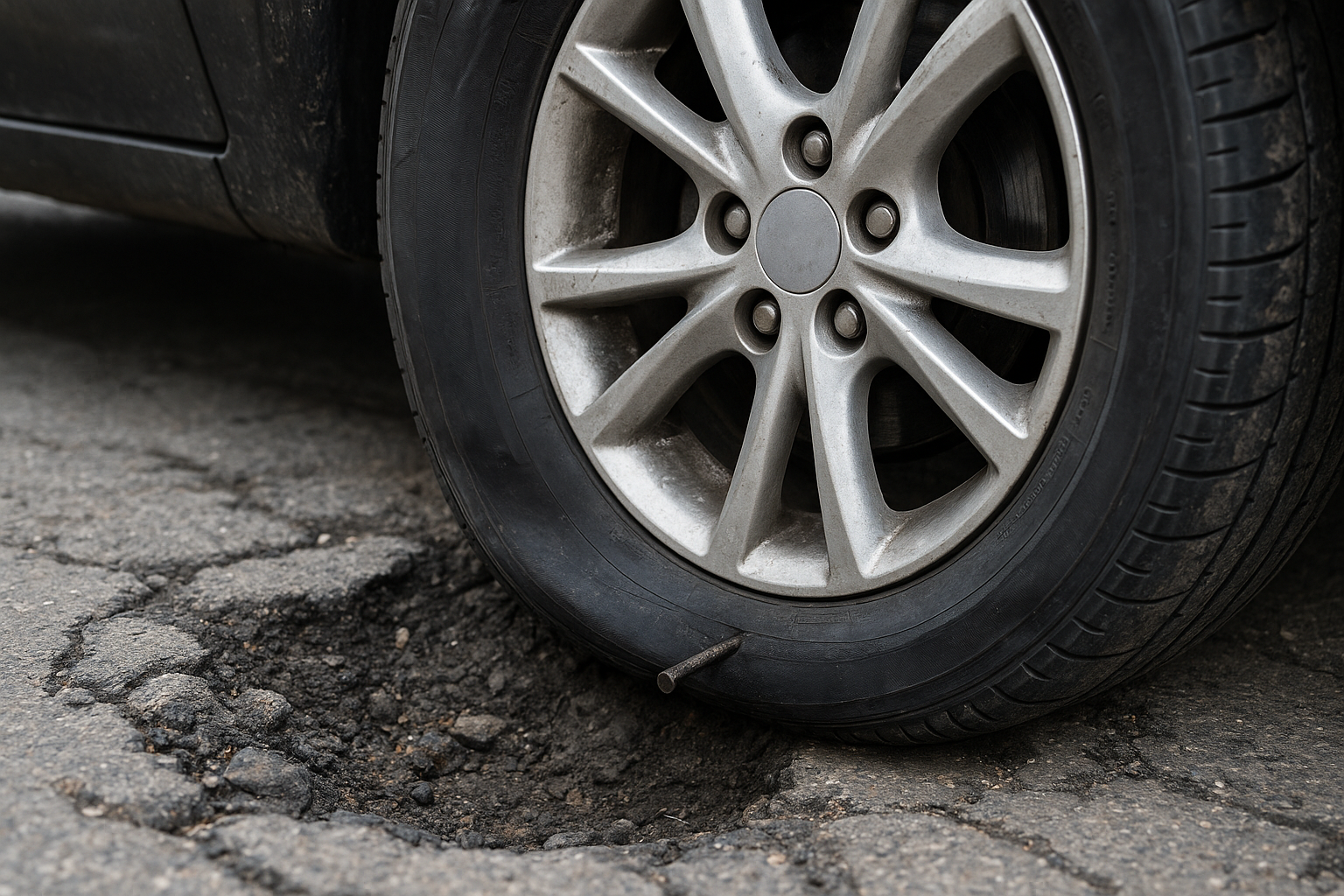
Michigan roads are notoriously rough, and the freeze-thaw cycle tears up pavement on roads like Telegraph, Ford Road, and Outer Drive every single spring. Blowouts and bent rims happen here at a noticeably higher rate than in most other metro areas, making tire-related roadside calls a regular occurrence. Having flat tire service built into your plan is not optional if you drive these roads on a daily basis.
How roadside assistance works in real life
Understanding what does roadside assistance cover on paper is one thing, but knowing how the process actually plays out helps you avoid surprises when you’re stuck. Most plans follow a similar sequence: you call a dispatch number or use an app, describe your situation and location, and wait for a technician to arrive. Response times vary depending on your location and how busy crews are, and in metro Detroit during a snowstorm, that wait can stretch well beyond the estimated window.
What happens when the driver arrives
The technician will assess your situation on the spot and handle whatever service falls within your plan’s scope. If you have a dead battery, they attempt a jump start. If your tire is flat and you have a spare, they’ll swap it out. Everything they do on-scene is covered up to your plan’s limits.
The technician’s job is to get you moving or get your vehicle to a shop. Anything beyond that falls outside the roadside call.
What gets documented
Every service call generates a record of what was performed, and that record matters. Plans with annual usage limits track each incident, so using your one allowed tow in January could leave you uncovered later in the year.
When the technician closes out the call, ask for a copy of the service report. That document helps if your provider disputes coverage, and it gives you a clear record of what was actually done.
How to choose the right plan for Detroit driving
Choosing a plan means matching your actual driving habits to what a policy realistically delivers. If you commute daily on I-96 or regularly drive stretches of Telegraph Road, you need a plan that covers more than one incident per year and offers a towing radius that gets your vehicle somewhere useful, not just to the nearest gas station.
The cheapest roadside plan often looks fine until the moment you actually need it.
Match your coverage to local conditions
Metro Detroit’s roads and weather create specific, predictable risks that matter when answering what does roadside assistance cover for your situation. Cold winters mean battery failures are common, so confirm your plan includes unlimited jump starts or at least a reasonable annual limit. Potholes on roads like Ford Road and Outer Drive mean tire incidents happen year-round, so verify your flat tire service works even when you have no spare on hand.
Before you commit to any plan, check three things: the towing mileage cap, the number of covered incidents per year, and whether winch-out service is included. If you park in a lot or garage in Detroit, also confirm whether lockout coverage applies to situations where keys are left inside a running vehicle, because that scenario comes up constantly during cold months.
When you need help, here’s what to do
If you find yourself stranded on I-94 or stuck in a Southfield parking lot, stay calm and stay safe by getting off the road and turning on your hazard lights first. Then pull up your roadside assistance plan and call the dispatch number, or use the app if your provider has one. Give your exact location clearly, including the nearest cross street or highway exit, so the crew can reach you without delay.
Once help arrives, confirm what service they’re authorized to perform under your plan before they start. Ask for a copy of the service report when the call closes. Understanding what does roadside assistance cover before something happens is always better than sorting it out roadside. If you need a reliable crew that knows metro Detroit roads and responds fast, contact Skyline Towing and we’ll get you taken care of.