
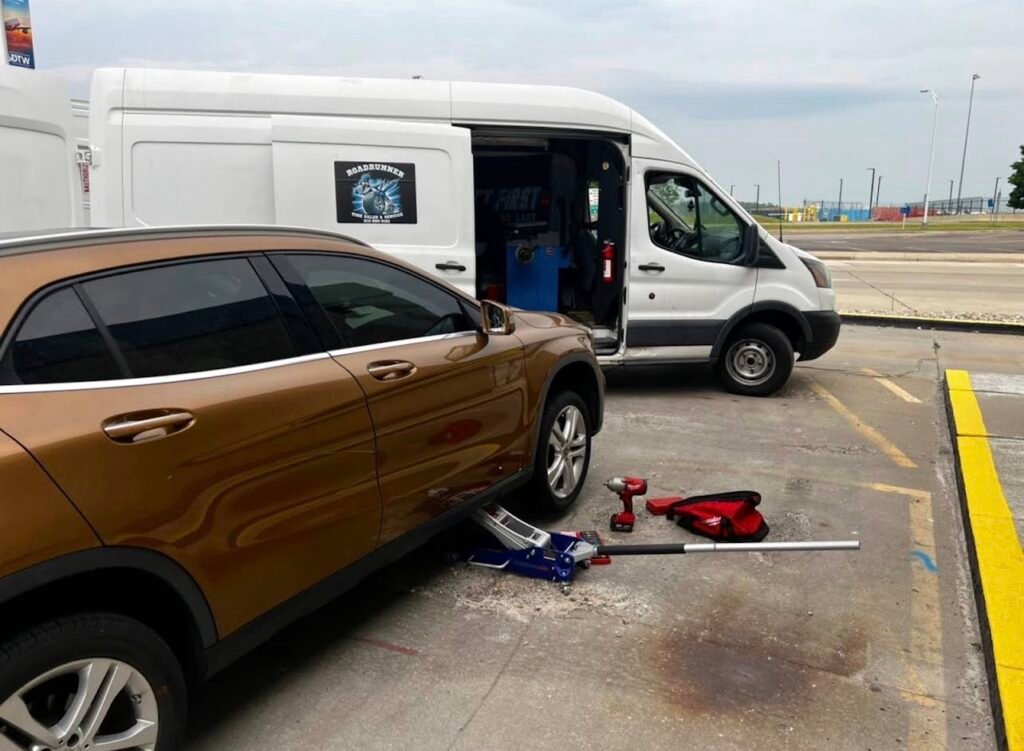
A flat tire on I-94 during rush hour or along Michigan Avenue in Dearborn isn’t just an inconvenience, it can put you in a genuinely dangerous spot. When you’re stuck on the shoulder with cars blowing past at 70 mph, you need roadside assistance for flat tire situations that actually shows up fast and gets the job done. Not a phone tree. Not a two-hour wait. Real help from someone nearby who knows these roads.
Most drivers don’t think about flat tire service until they’re standing outside their car in the rain, scrolling their phone for options. The costs, the coverage details, what’s actually included, it all becomes urgent information at the worst possible time. Some services swap on your spare for free under a membership plan. Others charge a flat rate per call. The differences matter, especially when you’re paying out of pocket.
At Skyline Towing, we handle flat tire calls across Detroit, Southfield, Livonia, Taylor, and the surrounding metro area every single day. We know what drivers here deal with, pothole-shredded sidewalls on Telegraph, blowouts on the Southfield Freeway, and lug nuts rusted tight from Michigan salt. This article breaks down exactly what roadside assistance for a flat tire includes, what you should expect to pay, and how to make the right call when you’re stranded. We wrote it because we answer these questions on the phone dozens of times a week.
Why flat tire roadside assistance matters in Detroit
Detroit drivers deal with road conditions that chew through tires faster than almost anywhere else in the country. Michigan’s freeze-thaw cycles crack and buckle asphalt every winter, leaving behind potholes that can blow a sidewall in a single hit. When that happens on I-75 or the Lodge Freeway at highway speed, a flat tire stops being a minor inconvenience and becomes a real safety emergency. Knowing you have reliable roadside assistance for flat tire situations already lined up changes everything about how that moment plays out.
Detroit Roads Create a Higher Risk of Blowouts
Metro Detroit’s road network is tough on tires year-round, not just in winter. Telegraph Road, Gratiot Avenue, and Michigan Avenue are all known for rough patches, sunken manholes, and crumbling pavement edges that catch tires off guard. Even newer highway sections like parts of I-696 in Southfield can have debris, construction scraps, or sharp edge joints that slice through rubber without warning.
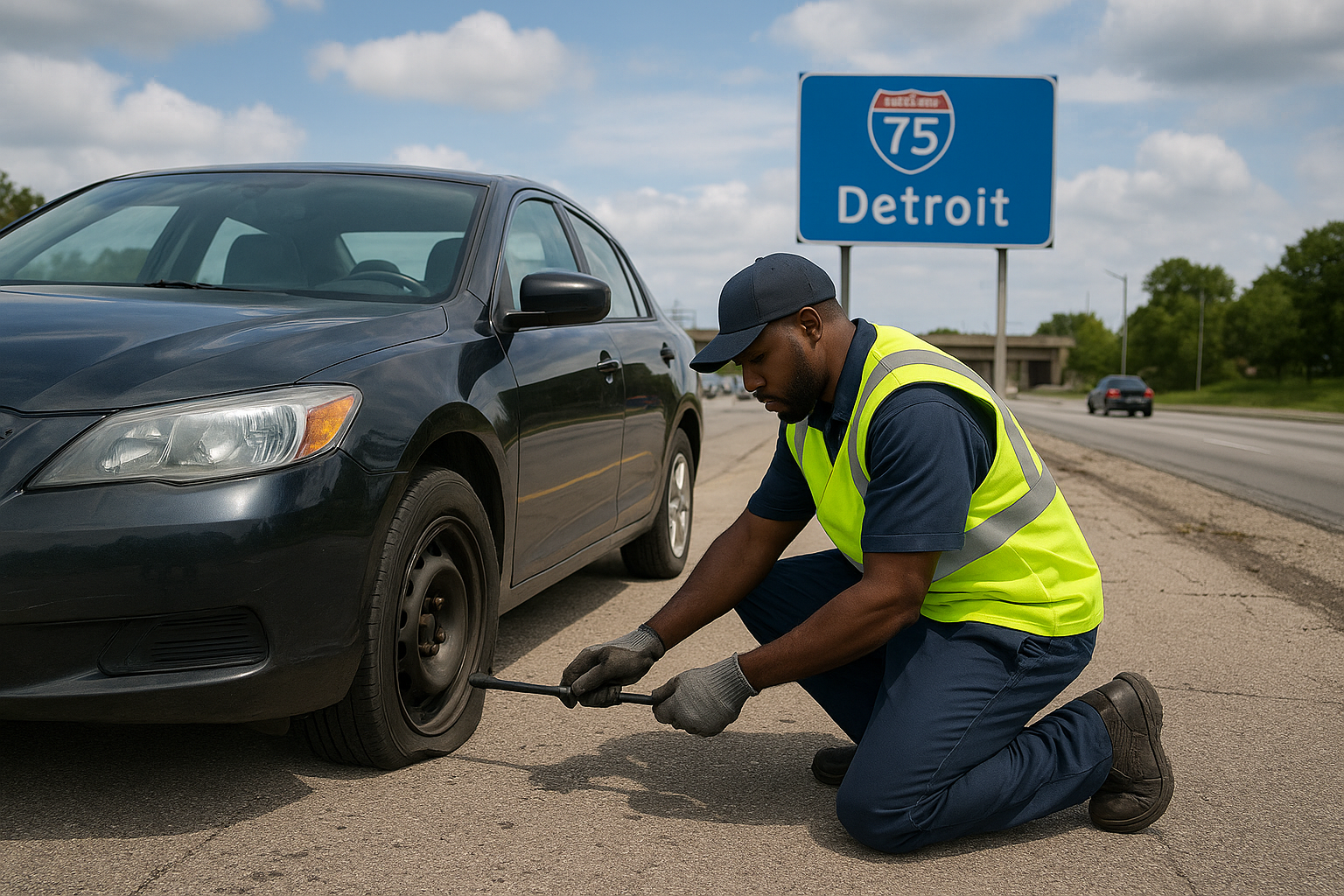
If you drive Metro Detroit roads regularly, a flat tire is not a matter of if. It is a matter of when.
The danger gets serious fast once you factor in traffic density and road geometry. A flat on the shoulder of I-94 near the interchange at I-75 puts you inches from traffic moving at 65 to 70 mph. Getting out to change a tire yourself in that spot carries real risk, and that is before you account for low visibility at night or during a heavy rain event.
Michigan Weather Makes Every Flat More Dangerous
Winter in Detroit does not just wreck roads. It makes flat tires significantly more dangerous to handle on your own. Black ice on the Southfield Freeway or snow piling up on the shoulder of I-275 means the standard thinking of "just change it yourself" does not hold up. Cold temperatures also make tire irons harder to grip, reduce the stability of a floor jack, and can freeze lug nuts solid after years of road salt exposure.
Summer brings its own problems. High heat softens asphalt and raises tire pressure, which increases the risk of a blowout on long stretches like the Chrysler Freeway or out on I-94 toward Ann Arbor. Drivers heading to Belle Isle, Comerica Park, or cutting through industrial areas near Dearborn run these roads regularly, often on tires they have not inspected in months.
Why Local Service Beats a National Hotline
When you call a national membership hotline after a flat tire, you often reach a dispatch center that has no idea where Greenfield Road meets Eight Mile or how backed up the Lodge gets on a Friday afternoon. Local providers know the exact intersections, the fastest response routes, and the neighborhoods where parking restrictions or tight access can slow things down. That local knowledge directly affects how fast help actually reaches you.
Skyline Towing operates entirely within Metro Detroit, which means drivers are not navigating the area for the first time when your call comes in. They already know the roads, the active construction zones, and the quickest way to reach you whether you are stuck on a side street in Livonia or pulled over near the McNamara Terminal at DTW. Response time and familiarity with local conditions are two things a national phone bank simply cannot replicate.
What flat tire roadside assistance includes
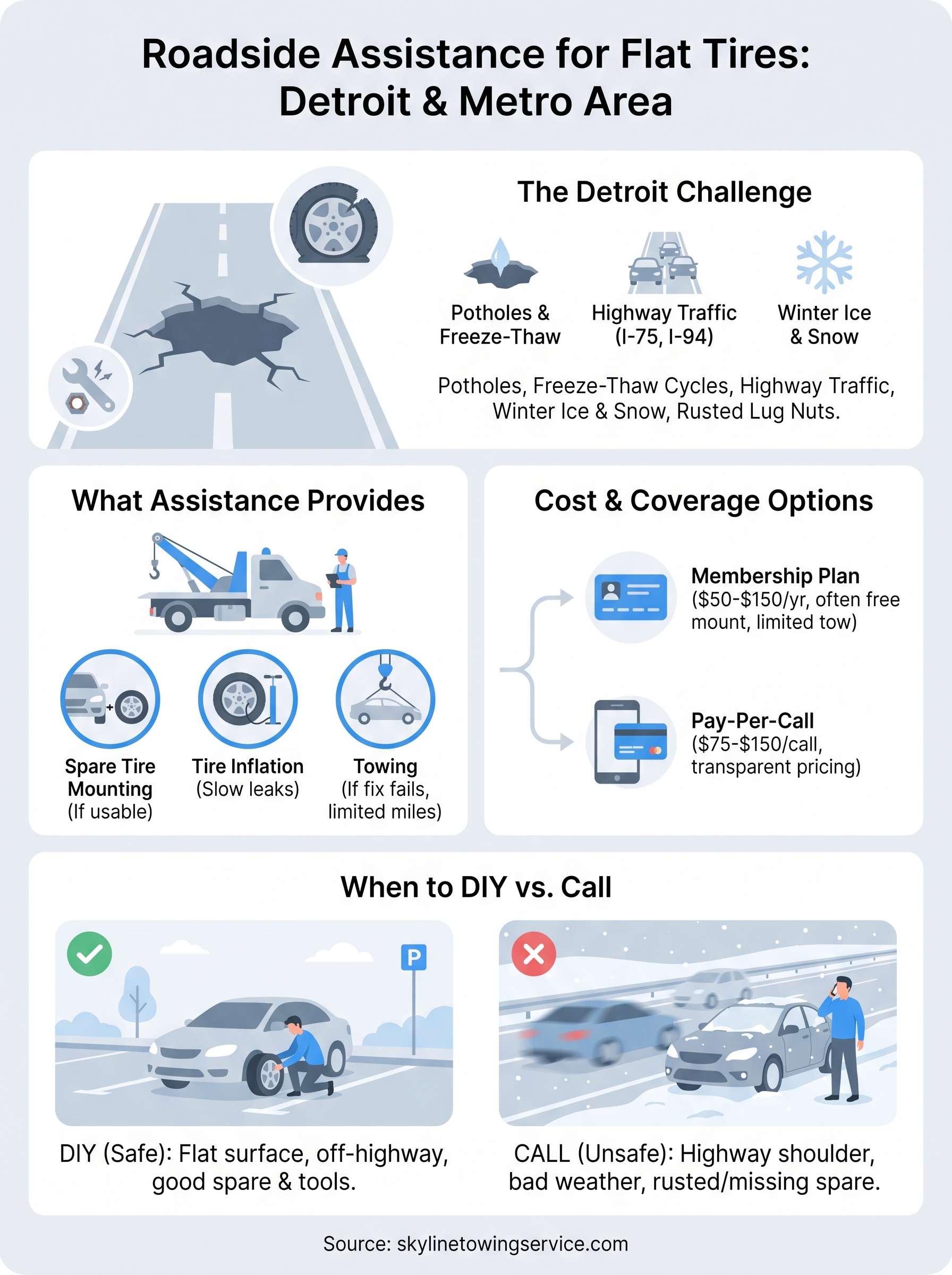
When you call for roadside assistance for a flat tire, the specific services you receive depend on your provider, your plan, and the condition of your vehicle. Most services cover at least three core scenarios: mounting your spare, inflating a tire with slow air loss, or towing your car when neither of those options hold up. Knowing what is actually included before you need it keeps you from being caught off guard on the shoulder of I-75 or any other Metro Detroit road.
Spare Tire Mounting
The most common service a roadside technician provides is mounting your spare tire. They remove the flat, install the spare, and tighten the lug nuts to the correct torque, typically getting you back on the road within 15 to 30 minutes. Your spare needs to be in usable condition for this to work, meaning it should hold air and show no visible damage before the technician arrives.
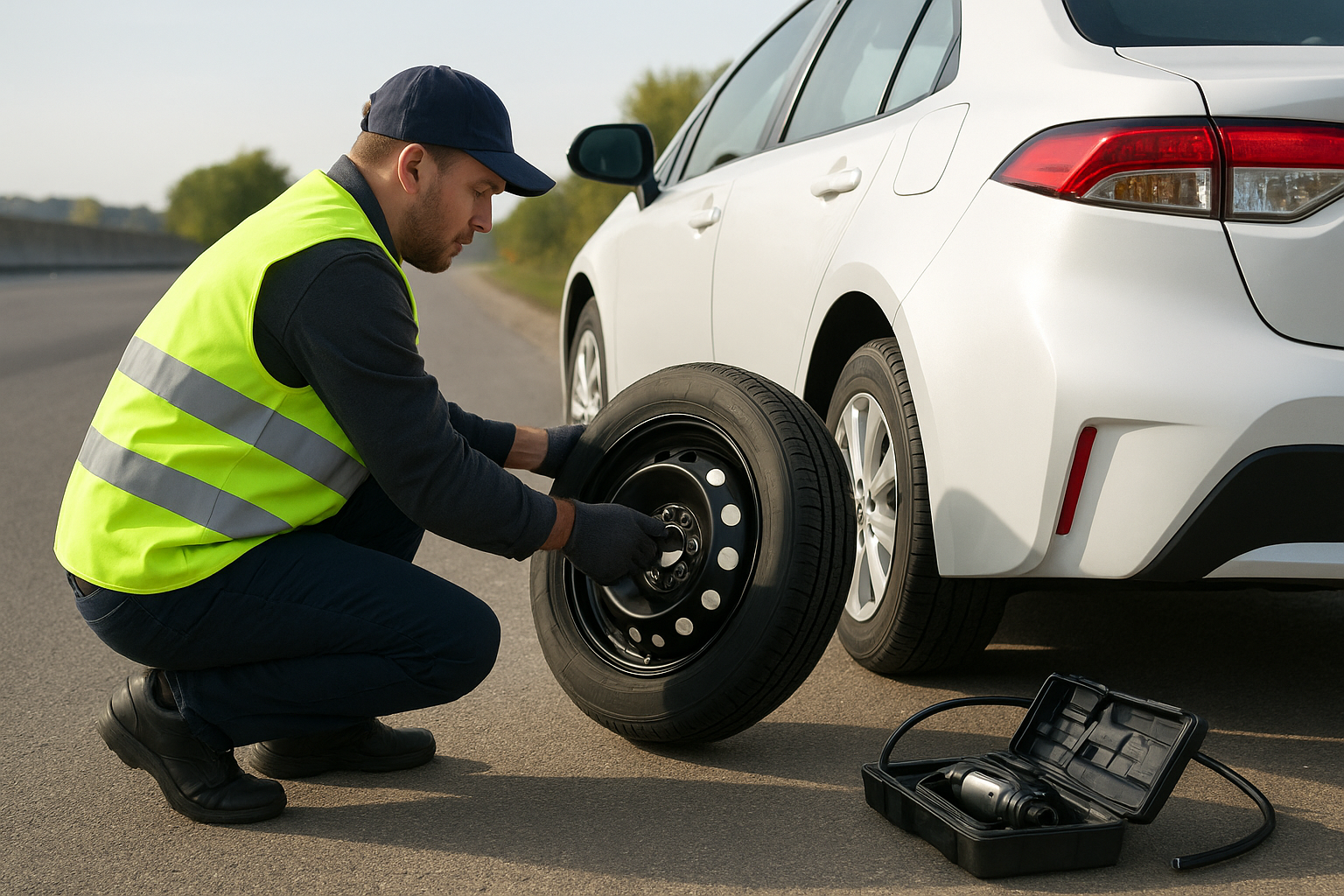
Many Metro Detroit drivers find out at the worst moment that their spare is flat, rusted to the undercarriage, or simply not there. Compact "donut" spares carry speed and mileage restrictions, so even after a successful swap, you need to head straight to a tire shop. Your technician will tell you whether driving on it is safe given your specific situation and how far you are from the nearest service location.
Tire Inflation
Some tires go flat from a slow leak rather than a blowout, and in those cases, inflation alone can get you moving again. Roadside technicians carry portable compressors and can refill your tire on the spot, buying you enough time to drive to a shop and get the source of the leak repaired properly.
Inflation only buys time. If the tire loses pressure again within a few minutes of being filled, you need a different solution and your technician will tell you that directly.
Not every flat is a write-off, and a quick inflation check takes only a few minutes. It is always worth letting the technician assess the situation before assuming a tow is necessary.
Towing When the Tire Cannot Be Fixed on the Spot
If your spare is unusable and inflation will not hold, towing is the next step and it is standard coverage within most roadside assistance plans. Your car gets moved to a tire shop instead of sitting exposed on the shoulder.
- Tow distance limits vary by plan, often capped at 5 to 15 miles
- Out-of-network or pay-per-use calls charge by the mile beyond any included distance
- Confirming your coverage limit before an emergency saves you from unexpected costs at the worst time
How the service works from call to rollout
Understanding the full process from the moment you call for roadside assistance for a flat tire to the moment a technician arrives helps you stay calm and prepared. The steps are straightforward, but knowing them in advance means you spend less time stressed on the shoulder of a busy Detroit road and more time focused on staying safe while you wait.
What Happens When You Call
When you call Skyline Towing, the first thing dispatch needs from you is your exact location and a brief description of the problem. On Metro Detroit roads, that means naming the specific street, the nearest cross street or exit, and which direction you are facing. If you are on I-94 near the Dearborn interchange or pulled over on Telegraph Road, saying that out loud to the dispatcher takes seconds and cuts your wait time significantly.
The more specific you are about your location, the faster a technician can reach you, especially during evening rush hour or after a snowstorm when GPS routing gets complicated.
Once dispatch confirms your location and vehicle type, they give you a direct ETA right away. Skyline covers all of Metro Detroit, so a technician already familiar with local roads heads your way without needing to look up the area from scratch.
What the Technician Does on Arrival
When the technician arrives, the first step is a quick visual assessment of the flat tire and your spare. They check whether your spare is inflated and usable, whether the flat shows obvious road damage or sidewall failure, and whether inflation is a realistic option. That assessment takes only a few minutes and determines exactly what path the job takes.
From there, the technician either mounts your spare, inflates the damaged tire if it holds air safely, or loads your vehicle for a tow if neither option is workable. All equipment comes with the truck, so you do not need to have your own tools ready. Once the work is complete, the technician confirms your tire pressure, checks that the spare is seated correctly, and tells you directly whether the vehicle is safe to drive and how far.
Costs, coverage, and ways to pay
What you pay for roadside assistance for a flat tire depends on how you access the service. Two main paths exist: a prepaid membership or subscription plan that bundles coverage for an annual or monthly fee, or a direct pay-per-call arrangement where you pay only when something goes wrong. Neither option is automatically better. The right one depends on how often you drive, what roads you travel, and whether you want predictable costs.
What you pay under a membership plan
Membership-based roadside coverage typically runs between $50 and $150 per year, depending on the provider and the level of service included. Most plans cover spare tire mounting at no additional charge per call, though towing distance limits often cap out at 5 to 15 miles before per-mile fees kick in. If your car needs to go farther than your plan covers, you pay the difference out of pocket.
Read the towing distance limit in your plan before you need it, not while you are standing on the shoulder of I-75 trying to figure out if your shop is covered.
Some auto insurance policies include roadside coverage as an optional add-on, usually for $10 to $20 per year. That sounds like a deal, but filing a roadside claim can sometimes affect your insurance record depending on your carrier. Checking with your insurer directly before adding coverage is worth the five-minute call.
What you pay without a plan
Direct pay-per-call pricing typically runs between $75 and $150 for a flat tire service call in the Metro Detroit area, depending on location, time of day, and what the job requires. A straightforward spare mount on a side street in Livonia costs less than a call in the middle of a snowstorm on I-275 at 11 PM. Pricing transparency matters, and any reputable provider gives you a clear number before the technician rolls out.
Ways to pay on the spot
Most providers, including Skyline Towing, accept credit cards, debit cards, and digital payment options directly at the scene. Cash is typically accepted as well. Confirming payment options when you call dispatch is a simple step that eliminates any last-minute friction when the job is done and you are ready to get moving again.
When to DIY and when to call for help
Changing a flat tire yourself is something plenty of drivers can handle under the right conditions. The decision comes down to where you are, what tools you have, and whether your physical situation allows you to work safely. Getting that assessment right in the first 60 seconds after a flat can save you time or keep you out of a genuinely dangerous situation.
When changing it yourself makes sense
A DIY tire change works well when you are parked in a safe, flat location, away from active traffic. A side street in Livonia, a parking lot in Southfield, or a rest area off I-94 all give you the space and stability to work without serious risk. You also need a usable spare, a lug wrench, and a functioning jack before you get started.
If you have all three and the light is good, changing the tire yourself takes roughly 20 to 30 minutes and gets you back on the road without waiting for anyone. Knowing where your spare, jack, and lug wrench are stored in your vehicle before an emergency happens is a basic prep step worth doing today.
When calling is the right move
Some situations make a DIY tire change unsafe or simply not possible, and that is exactly when roadside assistance for flat tire calls becomes the right answer. If you are on the shoulder of I-75, the Lodge Freeway, or any Metro Detroit highway with traffic passing close at speed, do not attempt to change the tire yourself. The risk of being struck by a passing vehicle is real, and no tire change is worth that.
If you are on a highway shoulder and unsure whether it is safe to exit your vehicle, stay inside with your seatbelt on and call for help immediately.
Calling also makes sense when your spare is flat or missing, when lug nuts are rusted solid from years of Michigan road salt, or when the weather makes working outside dangerous. A blizzard on I-275 or an ice-covered shoulder on the Southfield Freeway are not conditions for a DIY fix. A technician arrives with the right tools, the right experience, and the ability to handle whatever the situation actually requires without putting you at additional risk.
Get back on the road safely
A flat tire on Metro Detroit roads rarely happens at a convenient time or place. Knowing your options before it happens means you spend less time stranded and more time making smart decisions about your safety. Whether that means mounting your spare in a parking lot or calling for roadside assistance for a flat tire on the shoulder of I-75, the right call depends on your specific situation, and now you have the information to make it confidently.
Every flat tire situation is different, but the response does not have to be stressful. Skyline Towing serves Detroit, Dearborn, Southfield, Livonia, Taylor, and the surrounding metro area 24 hours a day, with technicians who know these roads and respond fast. Save the number before you need it, check your spare today, and know that help is genuinely close by when something goes wrong. Call Skyline Towing for fast flat tire help the next time you need it.