
If you own or manage property in Detroit, Dearborn, Southfield, or anywhere across metro Detroit, dealing with unauthorized vehicles is a frustrating reality. Someone parks in your lot without permission, blocks a fire lane, or takes up a reserved space, and suddenly you’re the one stuck figuring out what to do. Understanding private property towing laws is essential before you have a vehicle removed, because getting it wrong can expose you to legal liability.
Michigan has specific rules about how, when, and under what conditions a vehicle can be towed from private property. These rules cover everything from required signage and notification to maximum towing fees and vehicle storage. Property owners, business operators, and even tenants need to know where they stand, and so do drivers who’ve had their car towed.
At Skyline Towing Service, headquartered at 6450 E Hancock St, Detroit, MI 48207, we handle private property towing across the metro Detroit area every day. We’ve built our process around Michigan’s legal requirements so that property owners stay protected and drivers are treated fairly. This article breaks down the current laws, your rights, and the procedures that apply when a vehicle gets towed from private property in Detroit.
Why private property towing laws matter in Detroit
Detroit’s parking situation creates constant friction. Between apartment complexes in Midtown, strip malls along Michigan Avenue, and commercial lots near I-75 and I-94, unauthorized parking is something property owners deal with every single day. Residents lose reserved spaces, businesses lose paying customers, and loading zones get blocked during peak hours.
Ignoring private property towing laws in Michigan doesn’t just create inconvenience. It creates legal exposure that can cost you far more than the tow itself.
The local context adds real pressure
Detroit has high vehicle density in its commercial corridors and dense residential neighborhoods. Areas like Corktown, Eastern Market, and the neighborhoods surrounding Wayne State University see regular parking violations. If you manage property in any of these areas, you need a clear, legal process in place before you call a tow truck.
Michigan law places specific obligations on both property owners and towing companies. If either side skips a required step, the tow can be ruled unlawful, and the vehicle owner may be entitled to compensation. That risk is avoidable if you understand what the rules actually require before any vehicle gets moved.
Why Detroit drivers also need to understand the law
Understanding these rules isn’t only useful for property owners. If your car gets towed from private property, knowing your rights under Michigan statute helps you recover your vehicle faster and challenge any fees that exceed the legal limit. Unlawful towing complaints are more common than most people realize, and many stem from property owners or towing operators who failed to meet basic legal requirements. Whether you’re on the giving or receiving end of a tow, the law applies to you.
What Michigan law requires before a tow
Michigan’s private property towing laws set clear requirements that property owners and towing companies must follow before removing any vehicle. Under MCL 257.252a through 257.252l, a vehicle can only be towed from private property if specific conditions are met beforehand.
Required signage
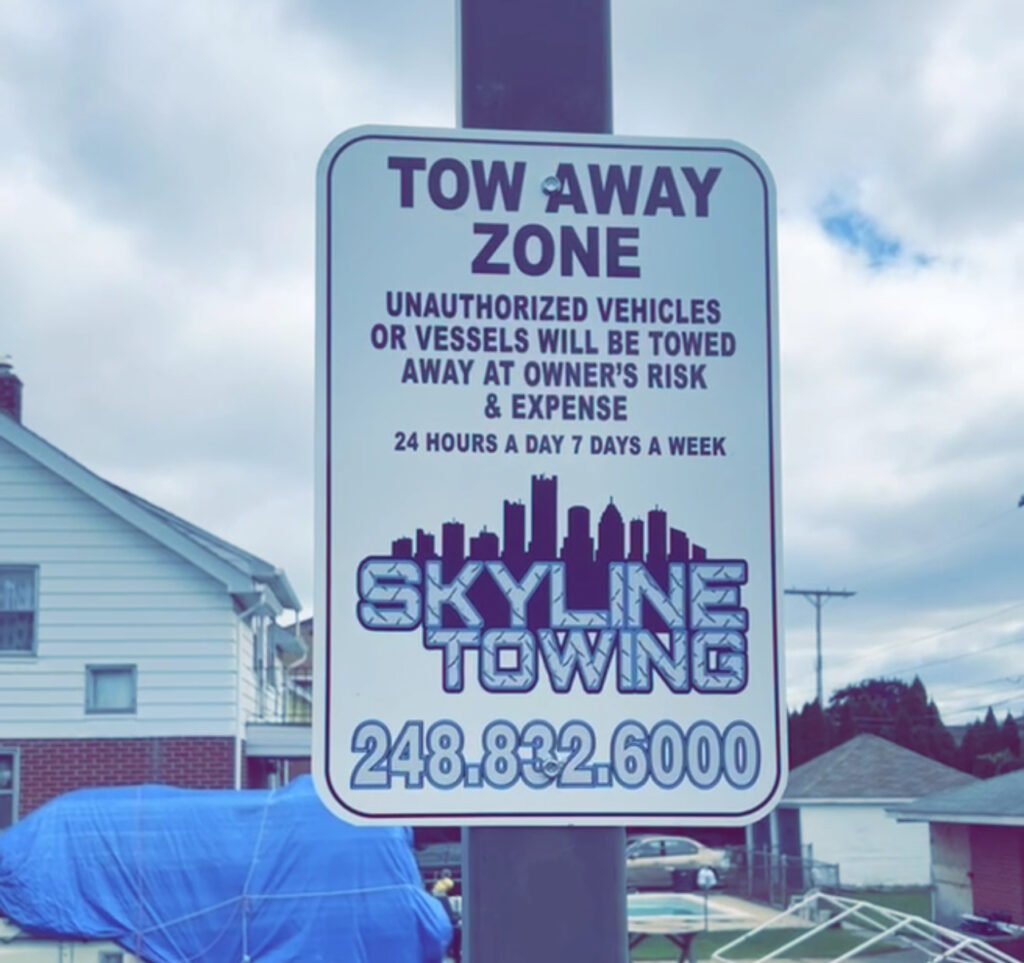
Visible signs must be posted at each entrance to the property before any tow takes place. Michigan law requires those signs to state that unauthorized vehicles will be towed at the owner’s expense, and they must include a contact number for vehicle recovery. Signs must meet minimum size requirements and be placed where drivers can reasonably see them before they park.
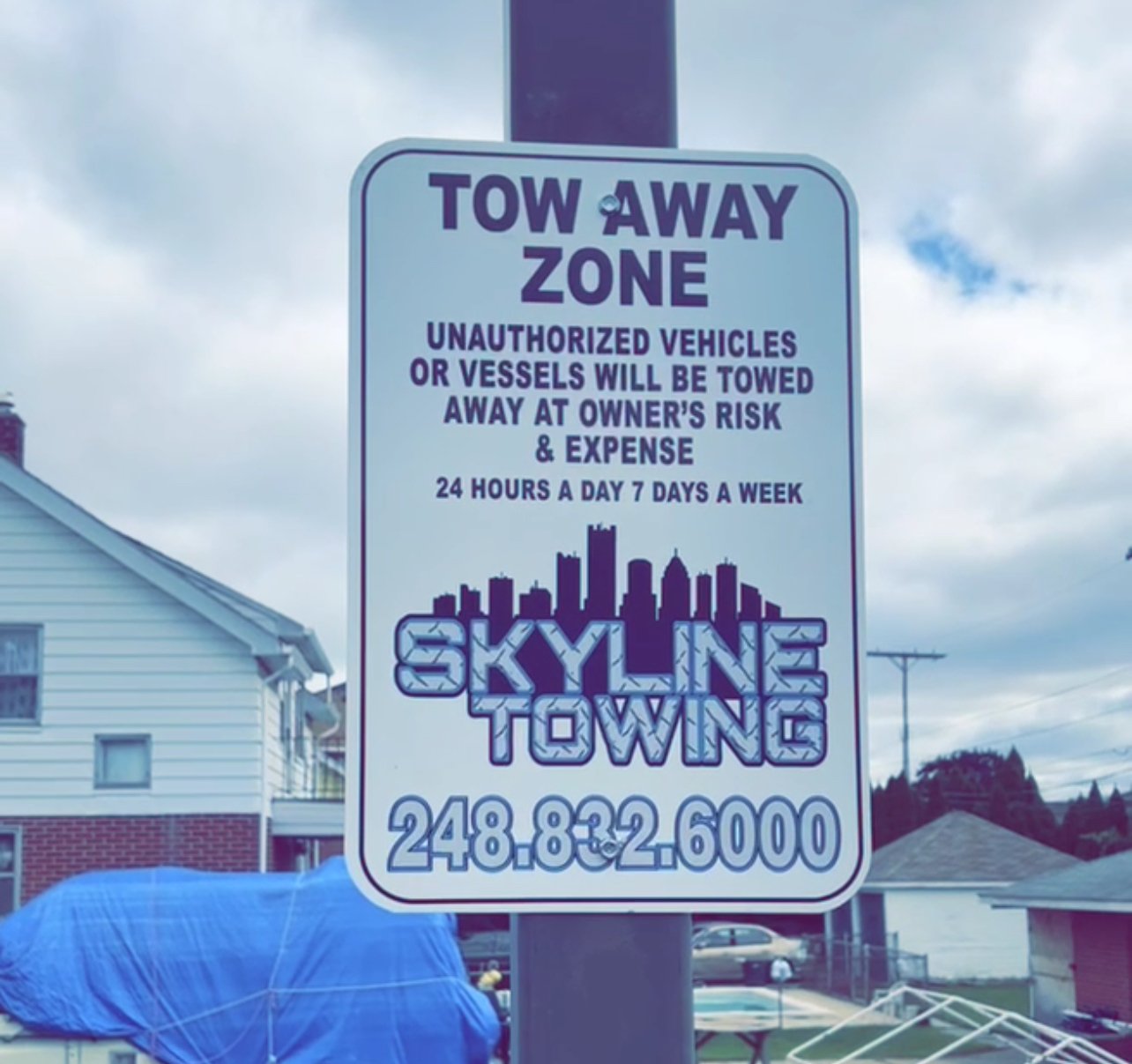
If your signage does not meet Michigan’s legal standards, the tow can be challenged as unlawful, and you could face liability.
Notification requirements
After a vehicle gets towed, the towing company must notify local law enforcement within one hour of the removal. This step protects drivers from filing unnecessary missing vehicle reports. The storage facility must also remain accessible during reasonable business hours so the vehicle owner can recover their property without being forced to wait until the next business day.
How to tow a vehicle from private property in Detroit
Following Michigan’s private property towing laws correctly protects you from legal liability after the tow is complete. Before you call anyone, confirm that your signs are properly posted and that the vehicle clearly violates the restrictions shown on those signs.
Work with a licensed towing company
You must use a licensed and insured towing company that complies with Michigan state law. The towing company carries legal responsibility for notifying local law enforcement within one hour of the vehicle’s removal, so work with an operator who handles that step automatically and keeps written records on file.
When choosing a towing company, verify that they:
- Hold a valid Michigan towing license
- Notify law enforcement as required by state law
- Provide written documentation for every tow they complete
Document everything before the tow
Photographing the vehicle before the tow starts protects you if the driver later disputes the removal. Capture the license plate, the posted signs, and the vehicle’s exact location in the same frame when possible. This record is your strongest defense if someone files a formal complaint after the vehicle is moved.
Your photos do not need to be elaborate, but they must clearly show the vehicle was parked in violation of your posted restrictions.
What to do if your car gets towed from private property
Finding your car gone is stressful, but Michigan’s private property towing laws give you specific protections. Your first step is to call the Detroit Police Department non-emergency line to confirm your vehicle was towed and not stolen. Law enforcement must be notified within one hour of the tow, so they should already have the information on file.
Locate your vehicle and get it released
Once you confirm the tow, contact the towing company listed on the signage at the property where you parked. Michigan law requires the storage facility to provide reasonable access to your vehicle during business hours. Bring your ID, vehicle registration, and payment when you go to pick it up.
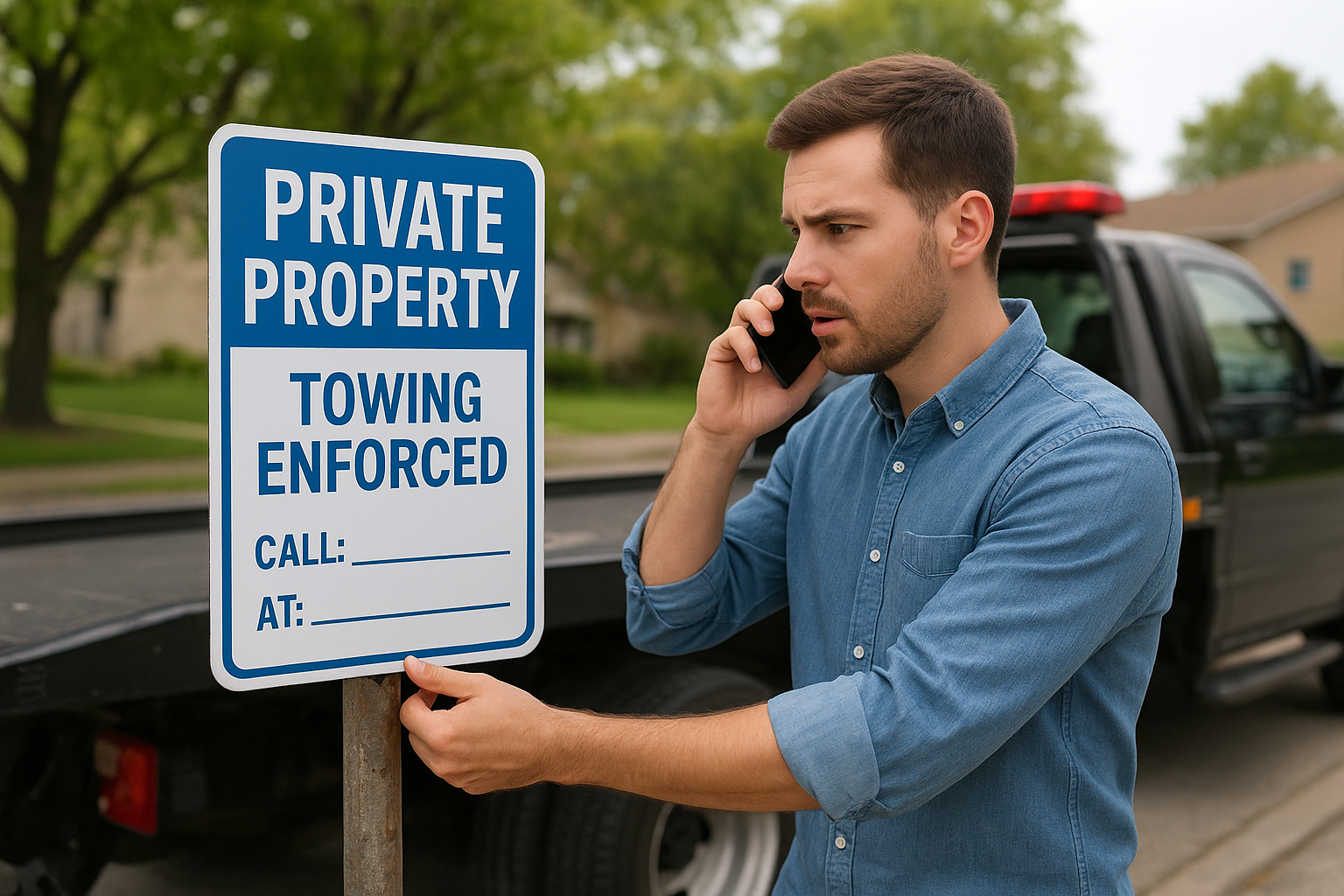
If the storage facility denies you reasonable access or charges fees that exceed Michigan’s legal limits, you have grounds to file a formal complaint.
What you can dispute
Unlawful or missing signage at the property and fees above the state-regulated maximum are both valid grounds for a dispute. You can file a complaint with the Michigan Department of State or take the matter to small claims court if the towing operator refuses to address it directly.
Detroit notes from 6450 E Hancock St, Detroit MI 48207
Our team at Skyline Towing operates out of 6450 E Hancock St, Detroit MI 48207, right in the heart of metro Detroit. From that location, we respond to private property towing calls across Detroit, Dearborn, Southfield, Livonia, and Taylor every day of the week.
What we see in metro Detroit
Unauthorized parking complaints are most common near commercial corridors and apartment complexes in Midtown, Eastern Market, and along Michigan Avenue. Property managers in these areas deal with repeat violators regularly, especially during large events or game days near downtown Detroit.
Knowing local streets, peak parking hours, and neighborhood patterns gives us a real advantage when a property owner needs a fast, legally compliant tow.
How we handle private property towing laws locally
When you call us, we verify your signage meets Michigan’s legal requirements before any vehicle moves. Our drivers document every tow with photos and timestamps and notify law enforcement within the required one-hour window. That step keeps every removal legally clean and protects you from challenges later.
We serve the entire metro Detroit area from our Detroit headquarters, and our process follows state law on every single call.
Quick wrap-up
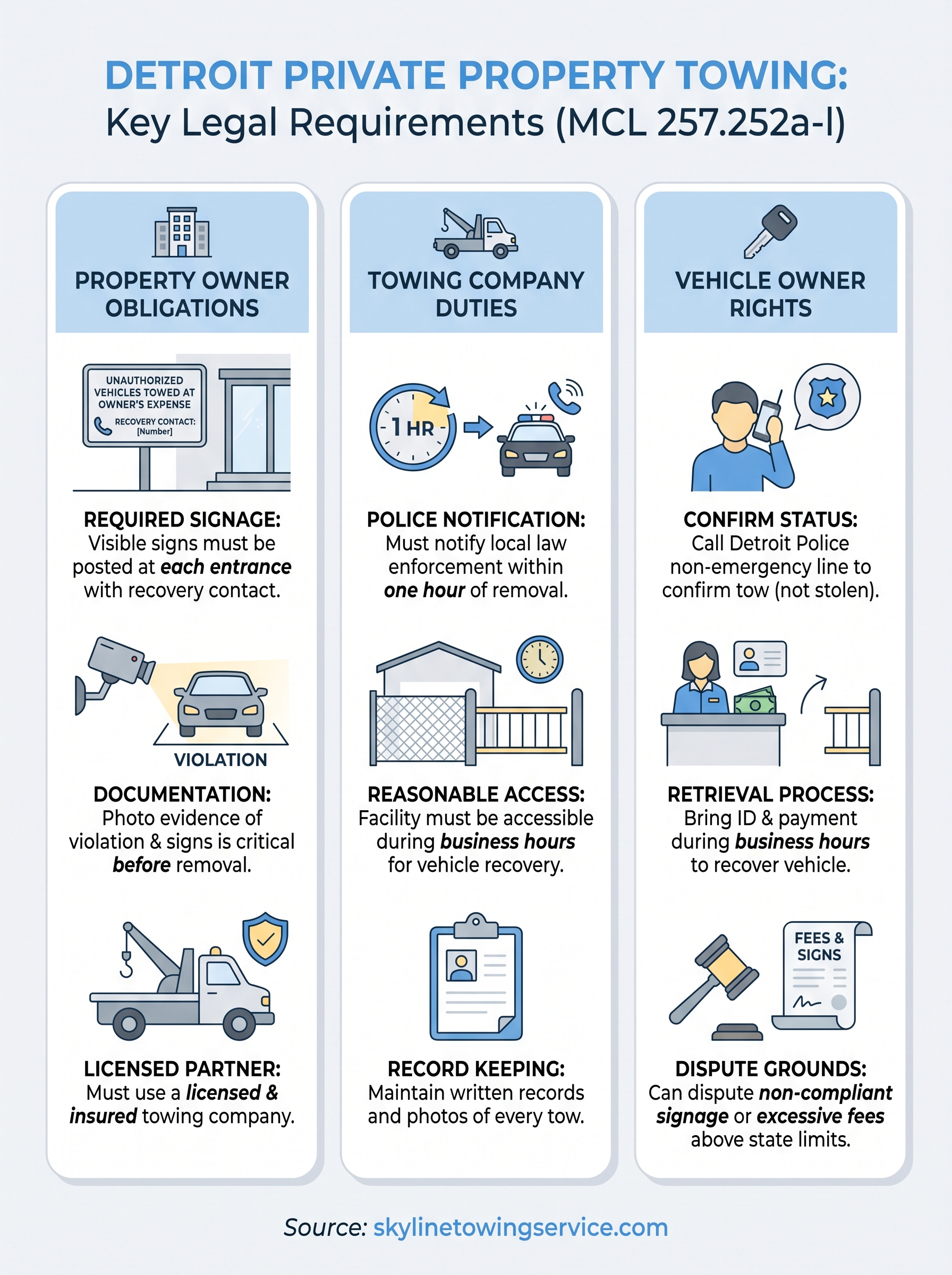
Private property towing laws in Michigan are specific, and they apply equally to property owners and vehicle owners. Property owners must post compliant signage before any vehicle is removed. Towing companies must notify law enforcement within one hour of the tow. Drivers have the right to recover their vehicle during reasonable business hours and dispute any fees that exceed the legal maximum.
Following these rules protects you from complaints, legal challenges, and unnecessary costs. Skipping any required step can turn a straightforward tow into a liability you did not expect.
Skyline Towing Service handles private property towing across metro Detroit every day from our headquarters at 6450 E Hancock St, Detroit MI 48207. Our team follows Michigan law on every call, documents every removal, and handles the law enforcement notification for you automatically. If you need a licensed, reliable towing partner, contact Skyline Towing Service before your next unauthorized parking situation gets out of hand.