
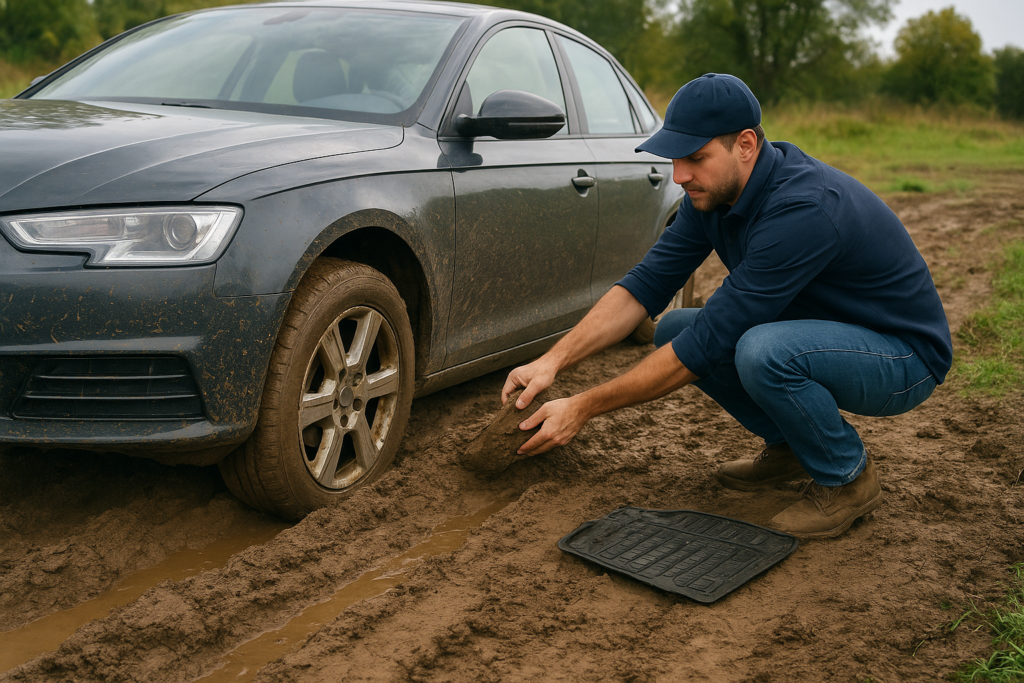
Spring thaw turns the shoulders along Outer Drive into soup. A hard rain after a dry stretch does the same to gravel lots off Fort Street or the soft edges of parking areas near Belle Isle. One wrong turn onto softened ground and your tires spin, dig deeper, and suddenly you’re going nowhere fast. If you’re searching how to get car unstuck from mud right now, you probably already know the feeling: wheels spinning, mud flying, and that sinking sense that you’re just making it worse.
The good news is that most mud situations don’t need a tow truck. With the right technique and a little patience, you can often drive yourself out using traction tools you likely have in your trunk already, or items you can grab from a nearby gas station in a pinch. It comes down to reducing wheel spin, adding grip, and rocking the car free without burying it further.
Below, we’ll walk through the exact steps our drivers use on real Metro Detroit calls, from Southfield driveways to muddy lots in Taylor, plus when to stop digging and call for backup. And if you do get stuck deeper than a DIY fix can handle, Skyline Towing at 6450 E Hancock St in Detroit is a phone call away, 24/7.
Before you gun the engine: what to check first
Before you touch the gas pedal, take thirty seconds to actually look at your situation. Gunning the engine the second you feel the tires slip is the single biggest mistake drivers make when trying to free a stuck car, and it’s why so many calls we get from spots like the gravel lots off Fort Street or soft shoulders on Outer Drive start with someone who’s already buried their vehicle up to the axle. Slow down first. Get out. Walk around the car.
The first thirty seconds you spend assessing the mud save you the next thirty minutes of digging yourself deeper.
Check the depth and your drivetrain
Crouch down and look at how deep each tire has sunk. If the mud is only covering the tread, you’re in decent shape. If it’s up past the wheel well or touching the frame, spinning the tires now will only pack mud higher and make recovering the car harder later. While you’re down there, remember what kind of drivetrain you’re working with, because front-wheel drive, rear-wheel drive, and all-wheel drive vehicles each respond differently to throttle and steering input once you start trying to move.
Run through this quick checklist
- Turn off traction control (it can fight you by cutting power exactly when you need a steady spin).
- Check for a low-range or 4WD setting if your vehicle has one.
- Look under the car for anything hanging low that could catch, like a splash guard or exhaust component.
- Note which direction has firmer ground, since that’s the way you’ll want to steer once you start moving.
- Grab your phone. If you’re anywhere near Livonia, Taylor, or Southfield and this looks bigger than a DIY job, save yourself time and line up a winch-out before you make things worse.
Once you’ve got a clear read on the mud and your car, you’re ready to start working the problem instead of fighting it.
Step 1. Stop spinning the wheels and size up the mud
Ease off the gas the moment you feel the tires slip. Continued spinning turns loose dirt into a slick, greasy channel that only grips the tire less each second, and it heats up your transmission for nothing. Get out of the car and walk a full circle around it before you decide anything else.
Every extra second of wheel spin digs your car deeper into the mud you’re trying to escape.
Read the mud like a map
Look for standing water, a shiny surface, or a spot where the ground gives under your boot. That’s your softest patch, and it’s usually where the tires first broke through. Note the firmest ground nearby, often a few feet to one side, since that’s your exit line once you start moving again.
Match your plan to your vehicle
A front-wheel drive sedan stuck in mud on Belle Isle’s soft shoulders needs a different approach than a pickup buried in a Taylor gravel lot. Front-drive cars pull from the front axle, so clearing mud ahead of those tires matters most. Trucks and SUVs with rear or all-wheel drive need traction under every tire that’s spinning.
Step 2. Clear the tires and pack in traction material
Get down on your knees and dig the mud away from the front and back of each tire, not just underneath it. Digging out a stuck car means creating a ramp, not a hole, so shape a shallow slope that lets the tire climb rather than fight its way straight up. A garden trowel works, but a tire iron, a stick, or even a hubcap will do the job when you’re stuck without proper tools on a muddy stretch near Dearborn Heights.
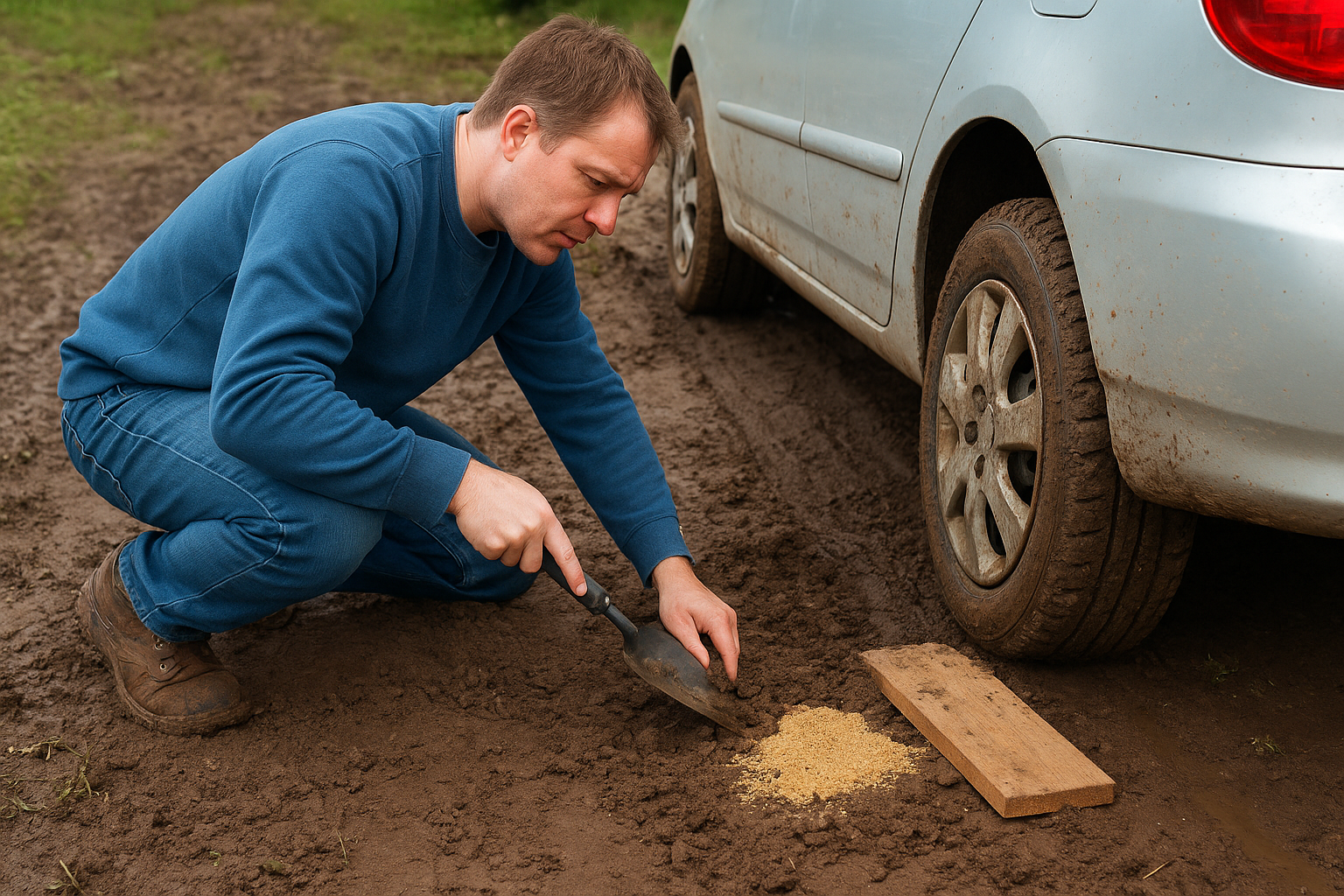
A few inches of cleared mud and the right material under the tire beats ten minutes of spinning every time.
Pack material under and ahead of the tires
Once the path is clear, pack in whatever gives your tires something to bite:
- Kitty litter or sand from your trunk kit
- Floor mats, wedged tread-side up
- Sticks, gravel, or scrap wood from the roadside
- A traction mat if you keep one for Michigan winters (the same one that helps when you need to get a car unstuck from snow)
Press each piece down firmly so it doesn’t shoot out the second you apply gas.
Step 3. Ease it out with low gear, steady gas, and a gentle rock
With the tires cleared and packed, get back behind the wheel and shift into second gear or low range if you have it. Low gear gives you more control over wheel speed than first, which tends to spin too fast on loose ground. Ease onto the gas slowly rather than stomping it. Steady pressure lets the tread grip the material you just packed in instead of blowing it out behind the tire.
Smooth, steady gas beats a heavy foot every time you’re trying to get a car unstuck from mud.
Rock between drive and reverse
If the car doesn’t move on the first try, shift between drive and reverse in short bursts, using the momentum from each direction to widen the path. This rocking technique works especially well on the soft shoulders around Outer Drive, where a few inches of rock can find firmer ground underneath. Stop the second you feel the tires digging deeper instead of climbing, and repack the ruts before trying again.
Step 4. Hook up a tow strap or call for a winch-out
Sometimes rocking and packing just isn’t enough, especially if the mud’s deep enough to touch the frame near Dearborn or you’re solo with no second vehicle to pull you free, which is when finding a tow truck nearby beats another hour of digging. That’s when a tow strap becomes your best tool, provided you have a second vehicle with solid footing nearby and a strap rated for your car’s weight.
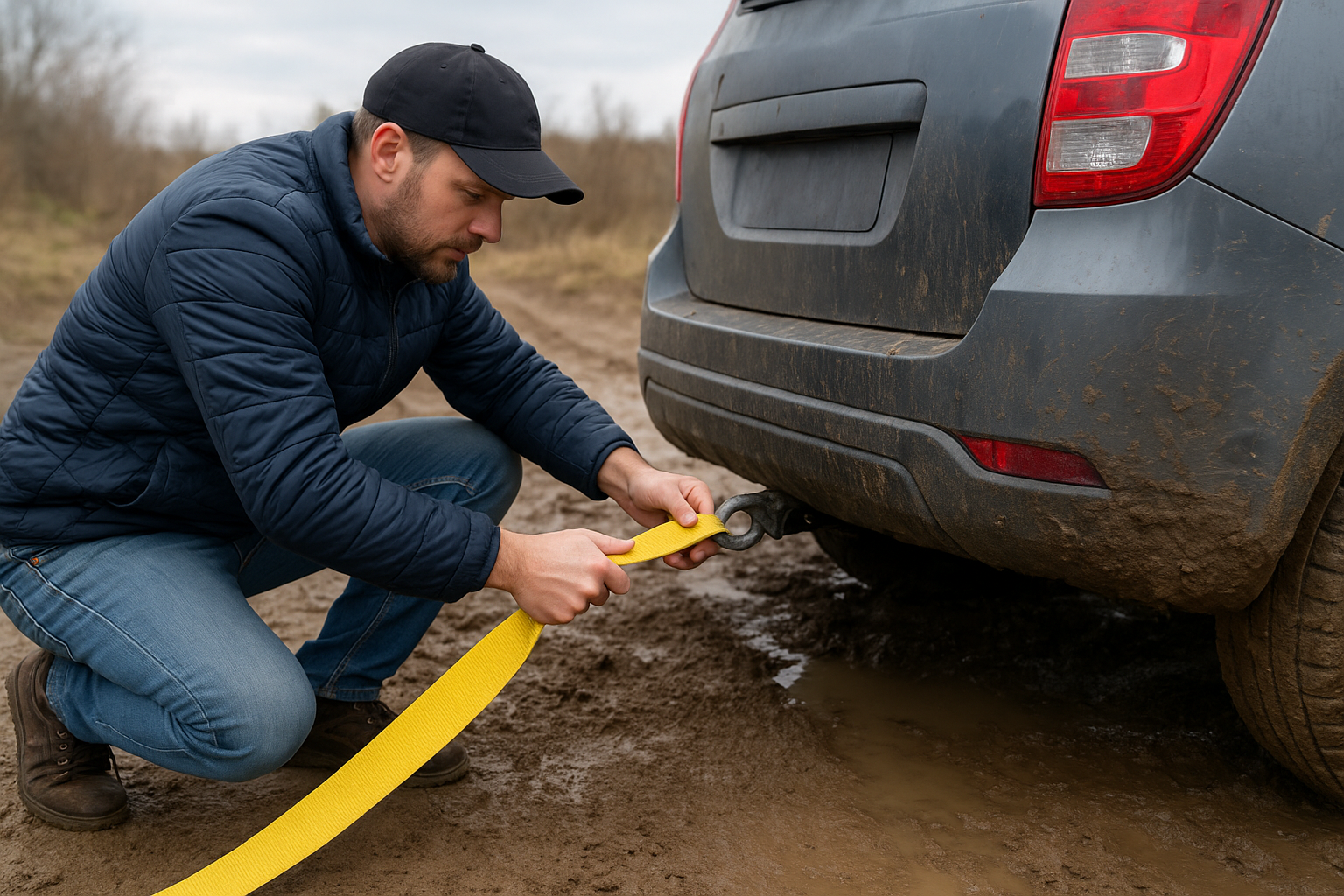
A tow strap done right pulls you out in seconds; done wrong, it snaps a bumper or sends someone to the ER.
Rig the strap the safe way
- Attach only to factory-rated tow hooks or frame points, never a bumper or axle.
- Keep everyone clear of the strap’s path while it’s under tension.
- Have the pulling vehicle ease forward slowly, not jerk.
- Steer toward the firm ground you scouted earlier.
When it’s time to call us instead
If there’s no safe attachment point, no second vehicle, or the car’s sunk past the frame, stop and call Skyline Towing. Our crews run winch-out recovery all over Southfield, Taylor, and Detroit daily, and we’d rather pull you out clean than have you damage the car trying it yourself.
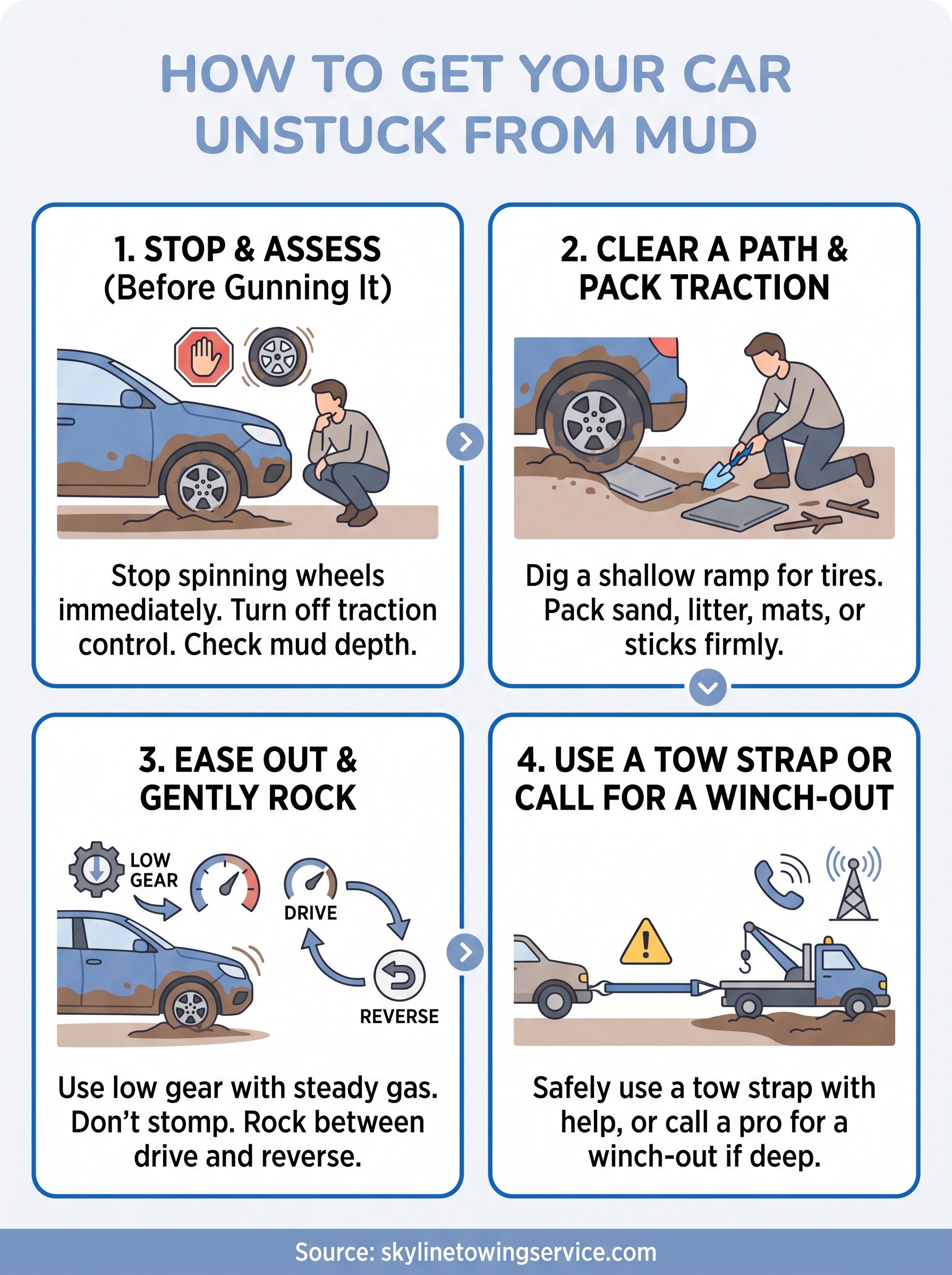
Getting back on solid ground
Most mud situations come down to the same fix: stop spinning, clear a path, pack in traction, and ease out with steady gas instead of a heavy foot. Follow those steps in order and you’ll drive yourself out of the soft shoulders on Outer Drive or a soaked lot off Fort Street more often than not. Know your limits too. Once mud reaches the frame or you’re rocking a car with no second vehicle around, you’re better off stopping before you cause real damage.
Detroit weather doesn’t give you much warning before gravel turns to mud, so keep a shovel, some sand, and a rated tow strap in your trunk from spring through fall. When the mud wins anyway, Skyline Towing is running winch-out recovery across Detroit, Dearborn, Southfield, and Taylor around the clock. Book a winch-out with Skyline Towing before you dig yourself in deeper.