
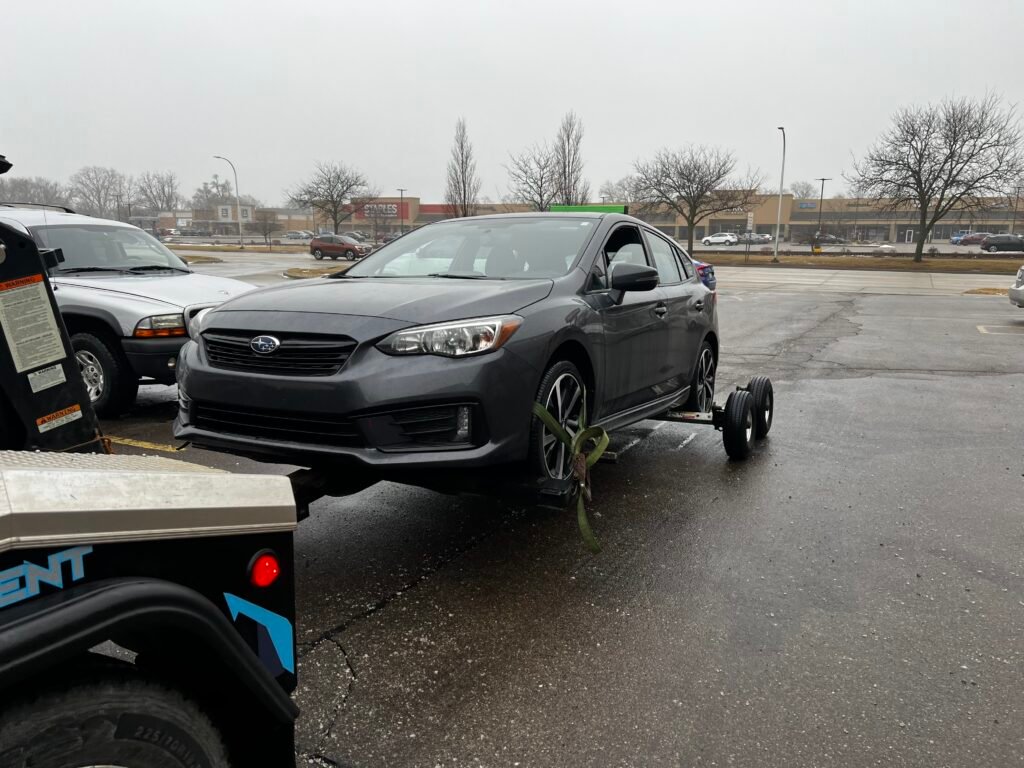
You hit a pothole on Gratiot or caught one of those axle-breakers on I-94 near the Ambassador Bridge, and now your tire is losing air fast, or it’s already flat on the shoulder. A flat tire from a pothole is one of the most common roadside calls we get in Detroit, especially after a hard winter or a stretch of heavy rain that turns cracked asphalt into a minefield. You’re not imagining it either, our roads take a beating, and your tires pay the price.
Yes, can a pothole cause a flat tire is a fair question, and the answer is absolutely, especially with sharp-edged potholes that slice the sidewall or bend a rim hard enough to break the seal. What you do in the next few minutes matters, from where you pull over to whether that tire can be patched or needs full replacement.
This guide walks you through exactly what to do after a flat tire after hitting a pothole, how to tell if the damage is repairable, and how to start a claim for pothole tire damage with the city or your insurer. We’ll also cover when it’s time to call for help instead of handling it yourself.
Why potholes on Detroit roads cause flat tires
Detroit’s freeze-thaw cycle is brutal on asphalt. Water seeps into cracks, freezes overnight, expands, then thaws again the next afternoon. Do that for four or five months straight and you get the kind of deep, sharp-edged craters that show up every spring on Gratiot, Livernois, and the service drives along I-75. Detroit road conditions during late winter and early spring are some of the worst in the country, and that’s exactly when we see the biggest spike in calls for roadside help in Detroit after pothole hits.
What actually happens to your tire on impact
When your tire drops into a pothole at speed, the sidewall takes the full hit against a hard concrete edge instead of rolling over it smoothly. That impact can slice the rubber, snap the internal belts, or crack the bead where the tire seals against the rim. Any of those causes a flat tire caused by pothole damage, and none of them are things you can see just by glancing at the tire from the driver’s seat. Bent rims are just as common and often just as expensive.

A pothole doesn’t have to be huge to ruin a tire, it just has to be deep enough and sharp enough to catch the sidewall wrong.
Why it happens more here than other places
Metro Detroit’s mix of older infrastructure, heavy freight traffic, and harsh winters means the damage doesn’t stay contained to one bad patch of road. We see it on I-94 near the Ambassador Bridge, on side streets in Dearborn Heights, and on Southfield’s service roads where salt and plow damage accelerate the cracking. If your tire went flat after hitting a pothole anywhere in that stretch, you’re in good company, and it’s rarely a fluke.
Step 1. Pull over safely and assess the damage
Getting off the road matters more than checking the tire right away. If you hit a pothole flat tire moment happens on a busy stretch like Woodward or the Lodge Freeway, keep driving slowly to the nearest shoulder, parking lot, or side street exit before you stop completely. Riding on a flat for even a few hundred feet can shred the sidewall and damage the rim beyond repair, so don’t try to "limp it home" once you feel that thump-thump-thump.
Pulling over safely comes before inspecting the damage, every single time.
Once you’re stopped somewhere safe, turn on your hazards, review what to do when you get a flat tire, and do a quick visual check:
- Look for obvious sidewall bulges, tears, or a tire that’s completely separated from the rim
- Check if the wheel itself looks bent or knocked out of round
- Listen for hissing air, which usually means a slow leak instead of a blowout
- Note the time and mile marker or cross streets, you’ll want this for any pothole tire damage claim later
This quick assessment tells you whether you’re dealing with a simple flat or something more serious underneath.
Step 2. Decide between changing the tire or calling for a tow
Once you know it’s just a flat and not a bent rim or shredded sidewall, ask yourself if you actually have what it takes to change the tire safely. A spare, a working jack, and a flat stretch of ground near Southfield or Livonia make this a 15-minute job. But a narrow shoulder on I-96 during rush hour, no spare in the trunk, or a rim that looks knocked out of round changes the math fast.

If changing the tire means standing in a traffic lane, it’s not worth the risk, call for a tow instead.
Run through this quick checklist before you decide:
- Do you have a spare, jack, and lug wrench, and do you know how to use them?
- Is there enough flat, stable ground away from moving traffic?
- Is the rim visibly bent or cracked?
- Is it dark, raining, or below freezing?
If you answered no to the first two or yes to the last two, skip the DIY approach. Our 24/7 roadside assistance team handles this exact call constantly across metro Detroit, so a fast roadside tire change in Detroit or a tow truck beats risking an injury on a busy shoulder.
Step 3. Get the tire inspected, repaired, or replaced
Getting the tire off the car is only half the job. Now you need a real diagnosis, not just a plug from a gas station air pump. A tire inspected after pothole damage needs to come off the rim so a tech can check the inside for belt separation or a cracked bead, damage you can’t spot from outside.
A patch on the outside means nothing if the belts are already broken on the inside.
Here’s how the inspection usually breaks down:
- Small puncture, clean sidewall: a plug or patch from the inside often works fine
- Sidewall bulge or visible cord: the tire is done, no patch fixes that
- Bent or cracked rim: replacement rim needed regardless of tire condition
- Slow leak with no visible damage: could still be a bead seal issue from the impact
We run mobile tire sales and installation across Detroit, Dearborn, and Taylor, so you don’t need to limp into a shop on a spare that doesn’t match your other three tires, and having new tires installed where your car sits takes the shop trip out of it entirely. If the pothole cracked the rim too, get that checked before you drive on it again, a bent rim throws off your alignment fast, and any replacement tire still needs proper tire mounting and balancing.
Step 4. Report the pothole and file for reimbursement
Detroit lets you file a claim for pothole tire damage directly with the city, but the process only works if you documented everything back in Step 1. You’ll need your photos, the cross streets or mile marker, the date and time, and receipts from the tire shop or towing service showing what the repair cost.
Skip the documentation and you’re basically asking the city to take your word for it, which rarely goes well.
Start with the City of Detroit’s claims process, which handles road hazard damage separately from general complaints. Here’s the basic path:
- Report the pothole itself through the city’s 311 system or website first
- File a claim form with the Law Department, attaching photos and repair receipts
- Expect a review period, approval isn’t guaranteed even with solid documentation
- Check with your own auto insurer too, some policies cover pothole damage under comprehensive coverage with a lower deductible than you’d expect
Getting reimbursed takes patience more than paperwork skill. Have your invoice ready before you file, since incomplete claims get bounced back and restart the clock. Neither path is fast, but skipping the report means you have zero chance at recovering the cost.

Getting back on the road safely
A flat tire from a pothole is frustrating, but it’s rarely complicated once you know the steps. Pull over safely, figure out if it’s a change-it-yourself job or a tow situation, get the tire properly inspected instead of guessing, and file your paperwork while the details are still fresh. Skip any one of those steps and you either risk more damage to your car or lose your shot at getting reimbursed for a problem the city’s roads caused in the first place.
Metro Detroit’s roads aren’t getting smoother anytime soon, so knowing this process pays off more than once. When you’re stuck on the shoulder of I-94 or a side street in Dearborn Heights with a tire that won’t hold air, you don’t need to sort through a checklist alone. Book a tire change or tow with Skyline Towing out of our Detroit shop on E Hancock St, and we’ll get your tire changed, inspected, or your car towed, whatever the pothole actually calls for.

