
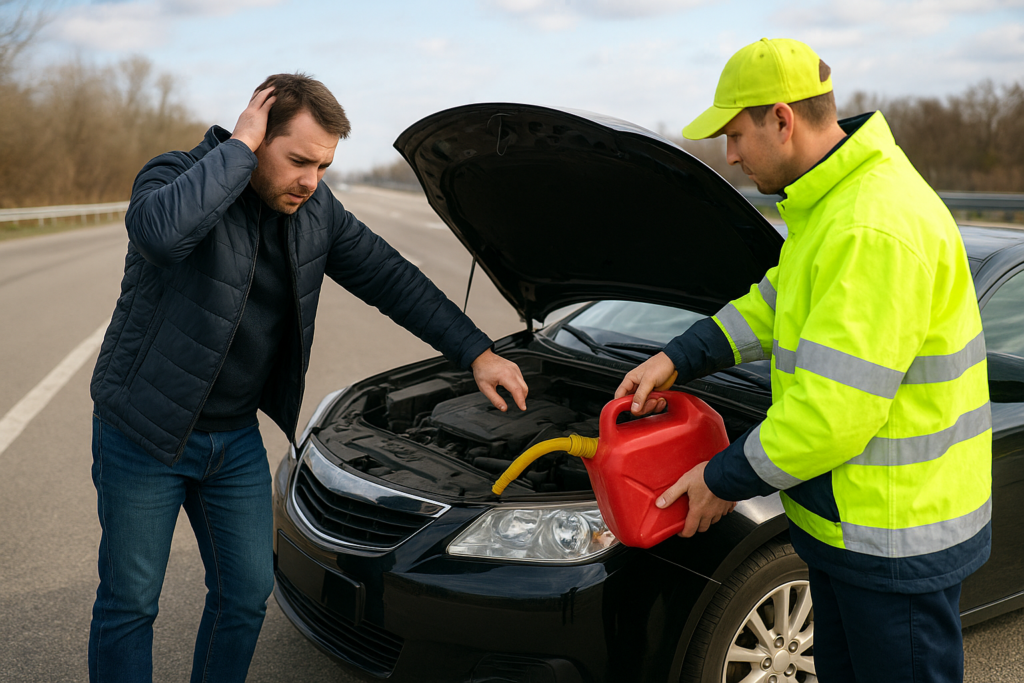
Running out of gas on I-75 near the Ambassador Bridge or stalling out on the Lodge Freeway during rush hour is stressful enough without wondering if help is even coming. So does roadside assistance bring gas? Yes, most plans do, but the details around how much fuel you get, how fast someone shows up, and what it actually costs catch a lot of Detroit drivers off guard.
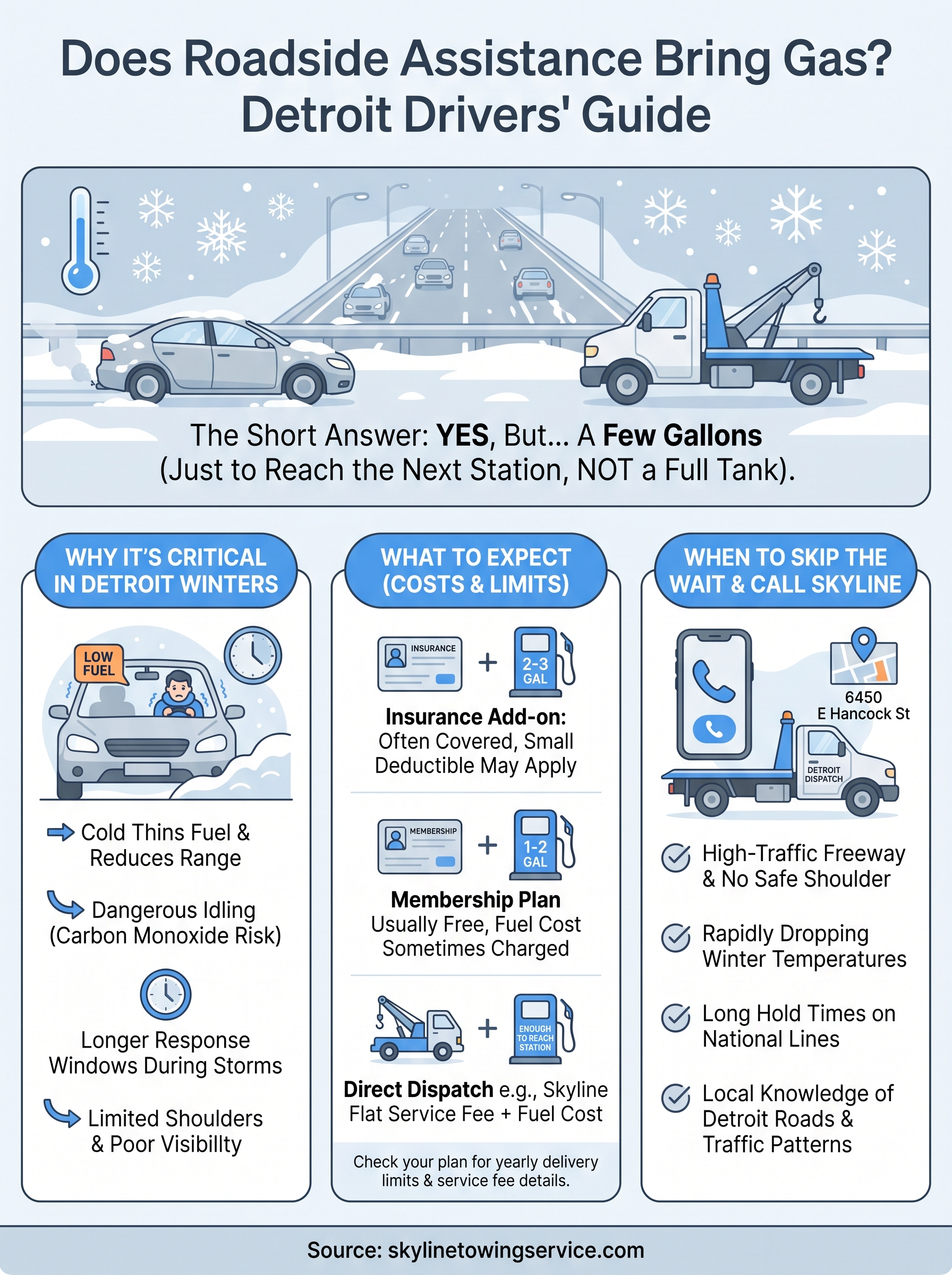
The short answer is that roadside assistance fuel delivery usually means a technician brings a few gallons, just enough to get you to the nearest station, not a full tank. What varies is the wait time, especially during a Michigan winter storm when call volumes spike, and whether your plan covers the service call fee, the gas itself, or both. Insurance add-ons, credit card perks, and dedicated towing memberships all handle this differently.
We’ve pulled dozens of stranded drivers off shoulders from Southfield to Dearborn Heights, so we know what actually happens when that call comes in. This guide breaks down what to expect from typical roadside plans, how Skyline Towing’s own fuel delivery works out of our Detroit headquarters at 6450 E Hancock St, and how to avoid getting stuck on empty again.
Why running out of gas matters more in Detroit
Stalling out with an empty tank isn’t just embarrassing here, it’s genuinely dangerous depending on where and when it happens. Detroit’s mix of long freeway stretches, exposed shoulders, and unpredictable weather turns a simple gas run into a real risk if you’re not prepared. Winter makes this worse than almost anywhere else in the country: a dead battery or empty tank on I-94 during a lake-effect snow squall can mean sitting in sub-zero windchill for 30 minutes or more before anyone even sees you.
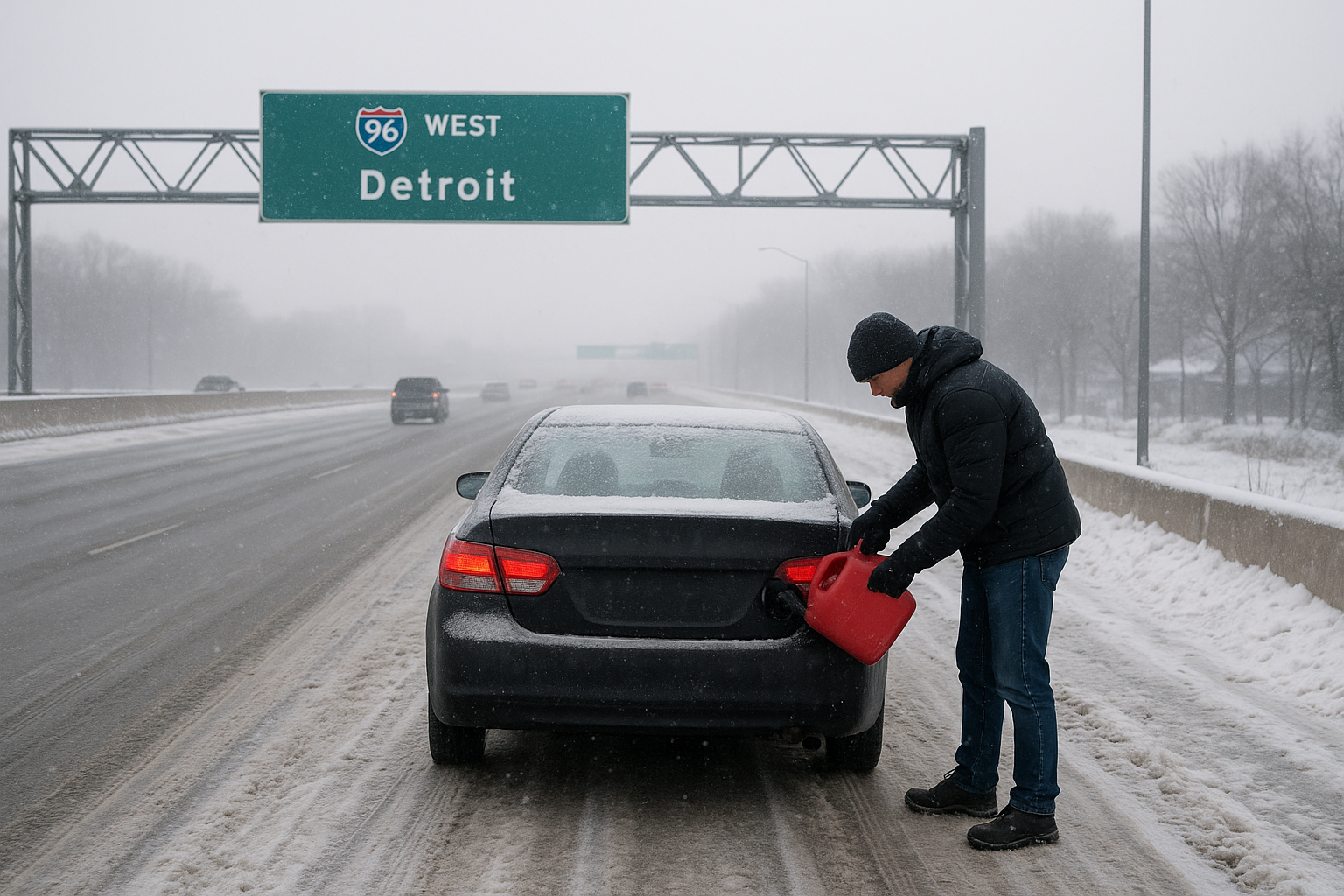
Winter changes the math completely
Gas gauges lie in cold weather, and Detroit drivers learn that the hard way every January. Cold temperatures thicken fuel and reduce range, so a tank that reads a quarter full might get you 20 fewer miles than it would in July. Add in idling for heat while you wait on the Lodge Freeway shoulder, and an empty tank can turn into a carbon monoxide risk if your exhaust gets blocked by snow.
An empty tank in a Detroit winter isn’t an inconvenience, it’s a safety call.
Traffic and road design add another layer
Roads like the Southfield Freeway, John Lodge, and I-75 through Detroit don’t leave much room for error. Narrow shoulders, fast-moving traffic, and limited lighting at night mean stalling out isn’t just about waiting, it’s about staying safe while you wait. Merging traffic near interchanges like the Ambassador Bridge approach or the Jefferson Avenue corridor makes a stopped car a hazard fast.
Here’s what tends to make Detroit gas emergencies riskier than average:
- Limited shoulder space on stretches of I-94 and I-75 through the city
- Poor visibility during snow, fog, or early winter darkness
- Longer response windows when storms spike call volume across metro Detroit
- Temperature drops that make waiting in your car uncomfortable or unsafe within minutes
Knowing this, it makes sense why so many drivers ask whether help actually brings fuel, rather than just a tow. The next section breaks down exactly how that call plays out.
How to get fuel delivery when you’re stranded
When your tank hits empty on the Chrysler Freeway or you coast into a gas station lot in Taylor with fumes only, the first move is to call for help before you panic. Most roadside plans and towing companies want the same basic information to dispatch a truck fast, so having it ready saves you time standing on a cold shoulder.
What dispatch will ask you
Before anyone rolls out, expect a quick set of questions to confirm your location and situation:
- Your exact location, cross streets, or mile marker if you’re on I-96 or I-275
- Vehicle make, model, and color for the driver to spot you
- Whether you’re in a safe spot or need to move somewhere safer first
- Your fuel type, since diesel and gas deliveries aren’t interchangeable
Why response time depends on where you are
Downtown Detroit calls usually get a faster response than someone stuck on a rural stretch near Livonia’s outer edges, simply because trucks are closer. Skyline dispatches out of our Detroit headquarters at 6450 E Hancock St, which puts us within a short run of Dearborn, Southfield, and most of the surrounding metro area.
The fastest fuel delivery starts with a clear location and an honest answer about your safety.
Once the truck arrives, the technician pours in enough gas to get you moving again, then you’re on your own to fill up properly at the nearest station.
What to expect on cost, gallons, and limits
Most drivers assume fuel delivery works like a gas station on wheels, but the reality is more limited than that. Roadside assistance plans almost never fill your tank completely, and most towing companies cap the amount they’ll pour in for safety and liability reasons. Knowing these limits ahead of time keeps you from being surprised when the technician only tops off a few gallons instead of filling you up.
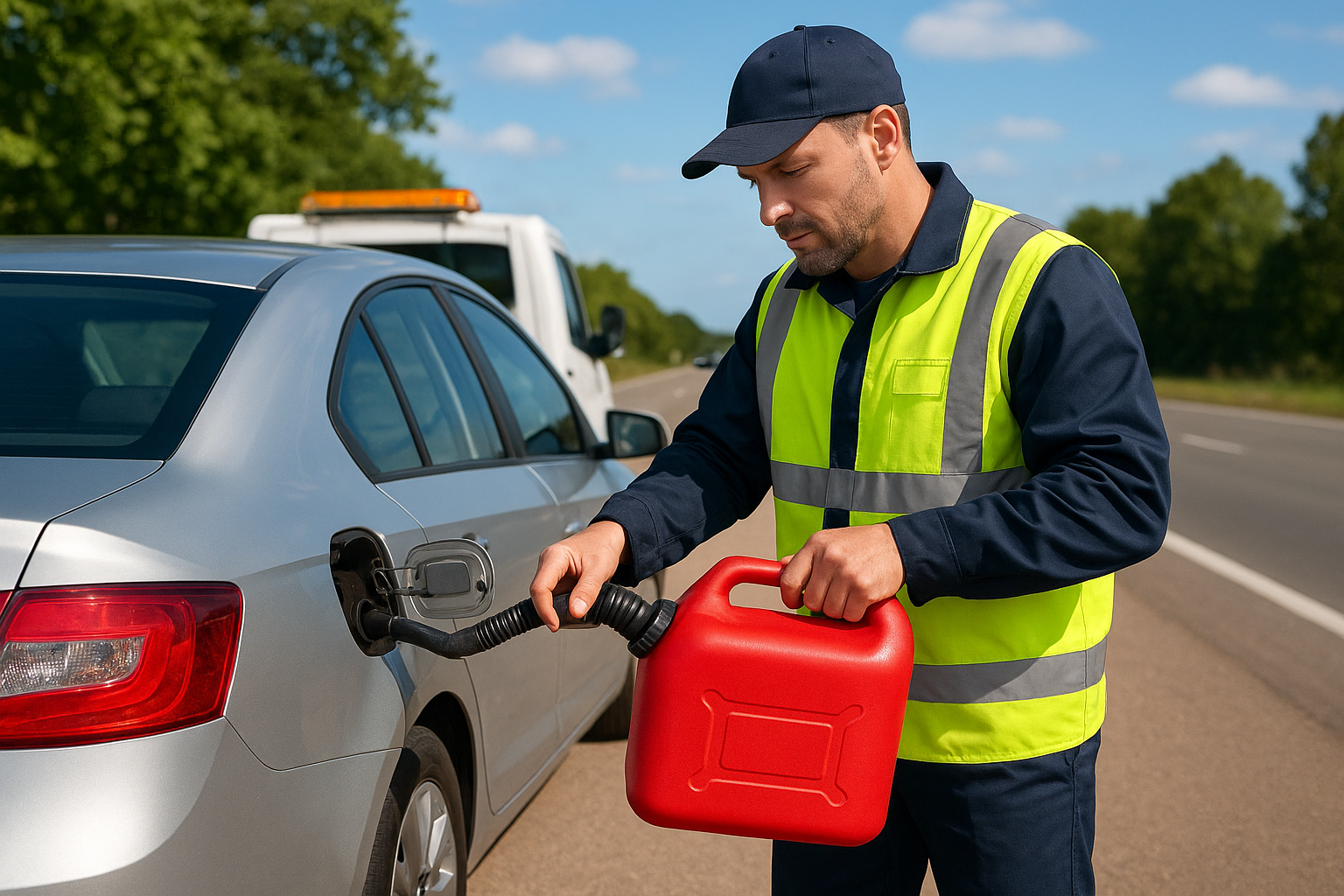
How much gas actually shows up
Typical delivery amounts and costs vary depending on whether you’re using an insurance add-on, a membership plan, or calling a local towing company directly.
| Service Type | Typical Fuel Given | Estimated Cost |
|---|---|---|
| Insurance roadside add-on | 2 to 3 gallons | Often covered, small deductible may apply |
| Membership plan (non-AAA) | 1 to 2 gallons | Usually free, gas itself sometimes charged |
| Skyline direct dispatch | Enough to reach nearest station | Flat service fee plus fuel cost |
Nobody delivers a full tank, they deliver just enough to get you moving safely.
Watch for hidden limits
Some plans cap the number of fuel deliveries per year, usually two or three, before you start paying full price. Others only cover the service call fee and expect you to pay for the gasoline itself, which catches drivers off guard near Southfield or Livonia when they assumed everything was included. Reading your plan’s fine print before winter hits saves you a frustrating surprise on the shoulder.
When to call Skyline instead of waiting it out
Sometimes waiting on an insurance app or a national membership line costs you more time than it saves, especially when you’re stuck somewhere exposed like the shoulder of I-75 near Springwells or a dark stretch of Telegraph Road after dark. Calling Skyline directly skips the hold music and connects you straight to a Detroit dispatcher who already knows the roads you’re describing.
Signs it’s time to skip the wait
A few situations mean you shouldn’t sit around hoping a national provider’s contractor shows up eventually:
- You’re on a high-traffic freeway with no safe shoulder, like the Lodge or Southfield Freeway
- Temperatures are dropping fast and idling isn’t a safe long-term option
- Your membership plan has already used its fuel delivery limit for the year
- You need a tow anyway if the engine won’t restart after fueling
When safety and speed matter more than saving a few dollars, call the local number, not the 1-800 line.
Local dispatch means local knowledge
Our trucks run out of 6450 E Hancock St in Detroit, so we’re already familiar with tricky spots like the Ambassador Bridge approach, Jefferson Avenue traffic patterns, and the narrow shoulders through Dearborn Heights. That familiarity shaves minutes off response times compared to a contractor unfamiliar with the area getting routed in from somewhere else. If you’re stranded anywhere from Taylor to Livonia and unsure whether your plan will actually get someone there quickly, calling us directly is usually the faster, safer bet.
Keep your tank and your options full
So does roadside assistance bring gas? Yes, but only a few gallons, enough to get you to the nearest station, not a full fill-up. What matters more is knowing your plan’s limits before you’re stranded on the Lodge Freeway or a dark stretch of Telegraph Road in January. Check your coverage now, note how many fuel deliveries you get per year, and keep a local number saved for when the national hold line isn’t fast enough.
Detroit winters don’t give you much room for error, and neither do narrow shoulders on I-75 or I-94. Skyline Towing dispatches straight out of our headquarters at 6450 E Hancock St, so we already know the roads you’re stuck on. Don’t gamble on an empty tank near Southfield, Dearborn, or Taylor. Save our number, or better yet, get in touch with Skyline Towing now before you’re the one waiting on the shoulder.