
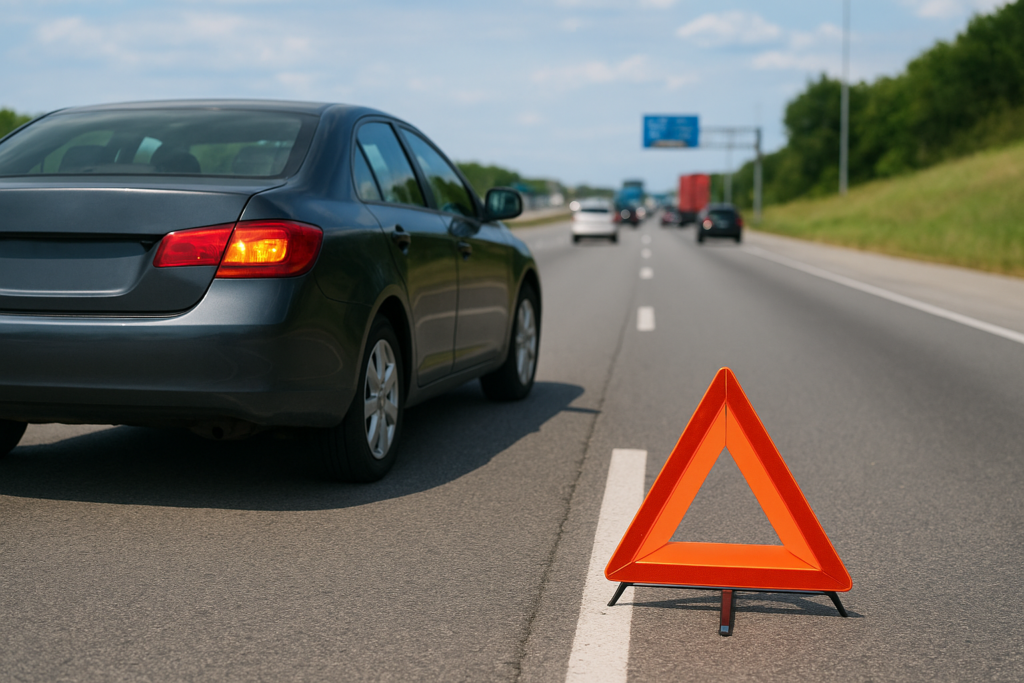
Your fuel light flickered a few miles back, and now the engine is sputtering. You just ran out of gas on the highway, and you’re sitting on the shoulder of I-94 or the Southfield Freeway watching traffic blow past at 70 mph. First thing: you’re going to be fine, but what you do in the next few minutes matters.
This happens more often than most drivers think, especially across Metro Detroit where stretches of I-96, I-75, and M-39 can put you miles from the nearest gas station. Running on empty turns dangerous fast when you’re stuck on a high-speed road with limited shoulder space and drivers who aren’t always paying attention. Knowing exactly what to do keeps a frustrating situation from becoming a serious one.
At Skyline Towing, we respond to fuel delivery and stranded vehicle calls across Detroit, Dearborn, Southfield, Taylor, Livonia, and the surrounding metro area 24 hours a day, 7 days a week from our headquarters at 6450 E Hancock St, Detroit MI 48207. We’ve helped hundreds of drivers in this exact spot, literally and figuratively. Below, we’ll walk you through the step-by-step actions to take right now, from getting yourself safe to getting fuel in your tank and back on the road.
What happens when you run out of gas on a highway
When you ran out of gas on the highway, your engine doesn’t shut off instantly. The first sign is usually a loss of power, followed by sputtering as the engine burns through the last drops of fuel in the line. Your steering and brakes still work, but they take noticeably more physical effort without the engine running. You have a short window, roughly 30 to 60 seconds, to guide your car safely before it rolls to a complete stop.
What your engine does when fuel runs dry
Most drivers expect a clean “engine off” moment, but the process is more gradual than that. Your fuel pump pulls the last gas from the very bottom of the tank, which can drag in sediment and debris that settled there over time. In some vehicles, that debris damages the fuel injectors or the pump itself, turning a simple roadside call into a costly repair bill. Older vehicles and cars that regularly run near-empty are the most vulnerable to this kind of damage.
- Engine sputters and loses power progressively
- Power steering and brakes become noticeably heavier to operate
- Fuel pump may pull in tank debris, risking internal damage
- Vehicle coasts to a stop within seconds of fuel loss
Running your tank to empty repeatedly shortens your fuel pump’s lifespan, since the pump uses fuel to stay cool during normal operation.
Why highway breakdowns hit differently
On surface streets like Gratiot Avenue or Michigan Avenue, a stalled car is a frustrating inconvenience. On I-94, I-75, or the Lodge Freeway, it becomes a genuine safety hazard. Traffic moves at 65 to 70 mph, shoulders narrow near interchanges, and drivers behind you have almost no reaction time if your car slows suddenly from highway speed to a dead stop.
Metro Detroit weather adds another layer of risk year-round. Winter ice and reduced visibility make shoulder stops especially dangerous on expressways like I-96 through Livonia or I-75 near Southfield. Even in summer, sun glare and distracted driving create serious hazards. Knowing what’s happening to your car mechanically and what’s happening around you on the road helps you respond faster and make smarter decisions.
Step 1. Get your car and passengers safe
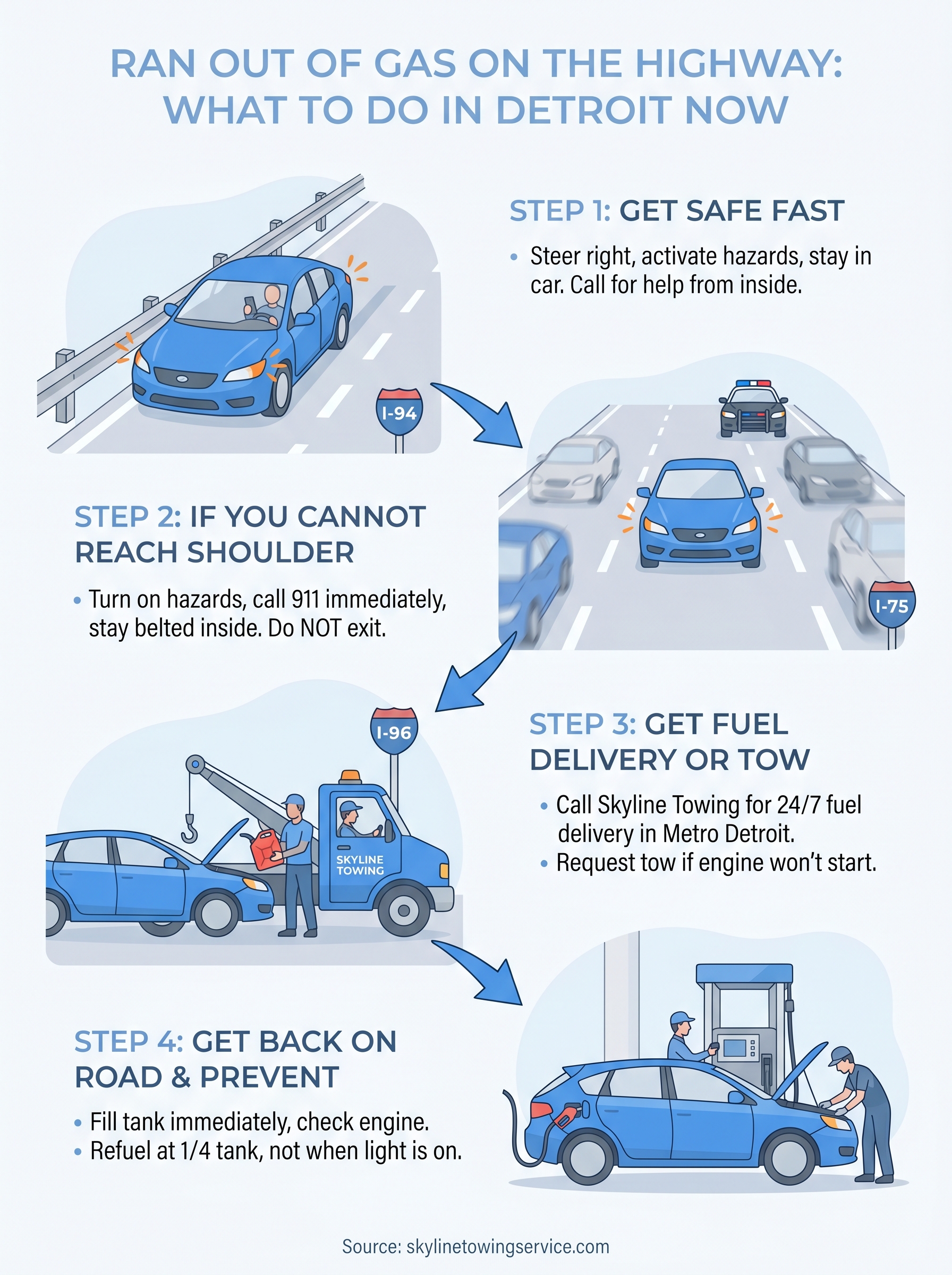
The moment you realize you’ve ran out of gas on the highway, your only priority is getting the vehicle off the travel lanes. Steer toward the right shoulder immediately while you still have momentum and some power steering response. Do not panic-brake; let the car slow naturally as you guide it as far right as possible, ideally past a guardrail or beyond an exit ramp where you gain more separation from traffic.
Turn on your hazard lights and stay in the car
Activate your hazard lights the second you sense engine trouble, not after you’ve already stopped. Flashing lights give drivers behind you critical warning time, especially on high-speed roads like I-94 or I-75 near the I-96 interchange. Once stopped, keep everyone inside the vehicle and away from the driver-side door, which faces oncoming traffic. If your car sits fully on the shoulder with adequate space, staying inside is safer than standing outside on the pavement.
- Turn hazard lights on immediately, before you stop
- Steer as far right onto the shoulder as possible
- Keep all passengers in the car with seatbelts on
- Call for help from inside the vehicle
If you carry road flares or reflective triangles, place them behind your vehicle only if you can do so without stepping into the travel lane.
Step 2. If you cannot reach the shoulder
Sometimes you ran out of gas on the highway and momentum gives out before you reach the shoulder. A broken interchange, a jersey barrier, or dense traffic can trap your car in a live travel lane. This is the most dangerous position you can be in on a freeway, and your actions in the next few seconds determine how safe you and your passengers stay.
Stay visible and signal for help
Turn your hazard lights on immediately if you haven’t already, and keep them running. From inside the car, call 911 right away. Dispatchers can alert Michigan State Police or Wayne County Sheriff units to block traffic around your disabled vehicle. Do not exit the car into active lanes under any circumstance.
If you can pop the hood or trunk remotely from inside the vehicle, do it. A raised hood signals to other drivers that your car is disabled, not simply stopped.
What to do if you’re stuck in a live lane
Keep all passengers in their seats with seatbelts buckled, even though the car has stopped moving. Instruct everyone to lean away from the side facing oncoming traffic and stay low. Do not attempt to push the vehicle without law enforcement physically blocking the lanes behind you first.
- Keep hazards on at all times
- Call 911 before calling roadside assistance
- Stay belted inside the vehicle
- Wait for law enforcement before any movement
Step 3. Get fuel delivery or a tow in Detroit
Once you’re safe and stationary, your next call determines how quickly you get moving again. If you’ve ran out of gas on the highway and your vehicle reached the shoulder without incident, fuel delivery is usually the fastest solution available in Metro Detroit.
Call Skyline Towing for Fuel Delivery
Skyline Towing dispatches fuel delivery and roadside assistance across Detroit, Dearborn, Southfield, Taylor, Livonia, and surrounding areas 24 hours a day from our base at 6450 E Hancock St, Detroit MI 48207. When you call, give the dispatcher your exact location, the nearest mile marker or exit sign, and your vehicle’s make and color. A technician will bring enough fuel to get you to the nearest gas station safely.
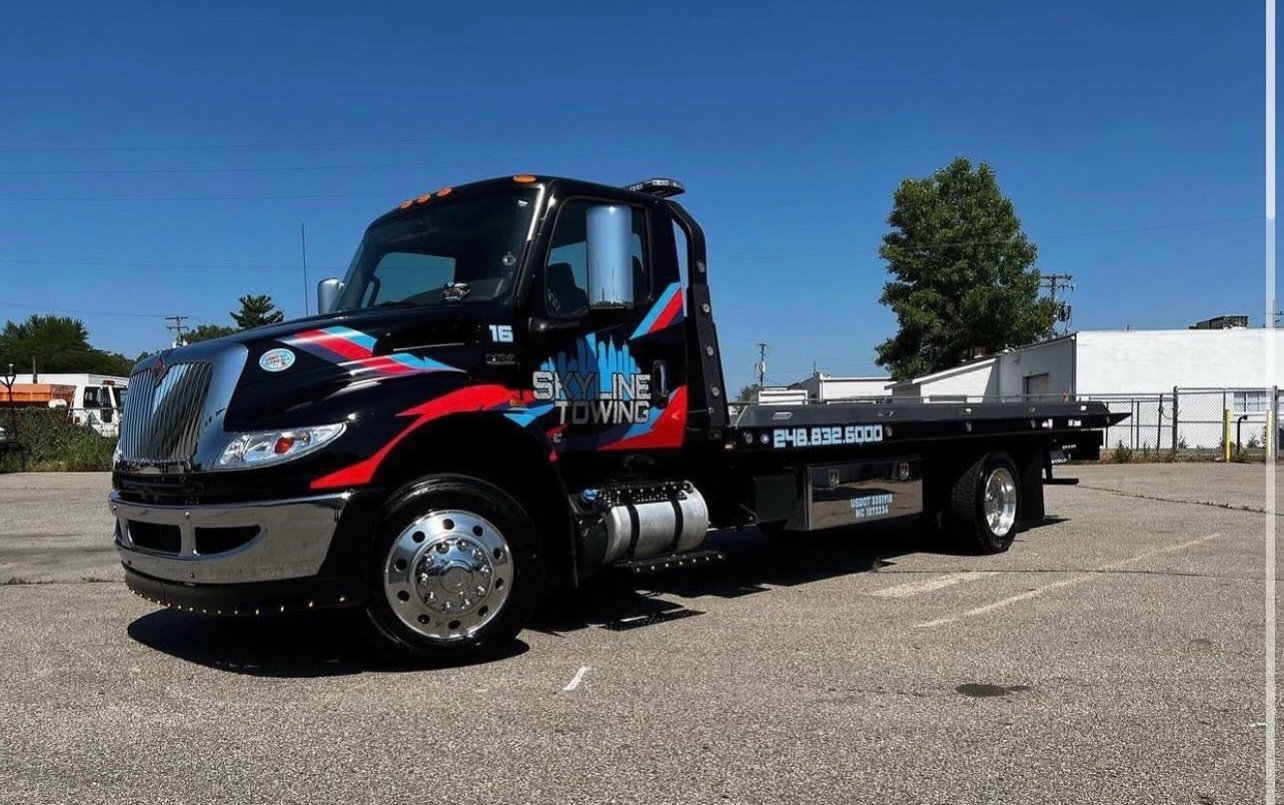
Keep your hazard lights running the entire time you wait, even if it feels unnecessary.
When a Tow Makes More Sense
Fuel delivery alone won’t help if your fuel pump took damage from running the tank completely dry, which is a real risk in older vehicles. If your engine cranks but won’t start after receiving fuel, request a tow rather than waiting for a second delivery attempt. Skyline handles both services, so one call covers either situation.
Step 4. Get back on the road and prevent repeats
Once fuel reaches your tank or your vehicle arrives at a shop, don’t just drive away and forget it happened. The minutes after a roadside stop are the right time to address what went wrong so you don’t ran out of gas on the highway a second time.
Fill Up Immediately and Inspect Your Vehicle
Do not drive more than a mile or two on the emergency fuel a technician delivers. Head directly to a gas station and fill the tank completely. If your engine hesitated, ran rough, or took multiple cranks to start after receiving fuel, tell a mechanic before you get back on the expressway, because those are signs of fuel pump stress.
A fuel pump that has overheated from running dry can fail again within days, leaving you stranded a second time.
Build Habits That Stop This From Happening Again
Small habits prevent most highway fuel emergencies entirely. Use the checklist below before any highway trip in Metro Detroit:
- Refuel when the gauge hits one quarter tank, not when the warning light activates
- Set a phone reminder if you commute regularly on I-94, I-96, or I-75
- Note gas station exits near your regular routes, especially on stretches through Livonia and Taylor where stations space out
- Keep an emergency contact number, like Skyline Towing at 6450 E Hancock St, Detroit MI 48207, saved in your phone
Quick wrap-up and next steps
Running out of gas on the highway is stressful, but it’s manageable when you know the steps. Get to the shoulder first, activate your hazard lights, stay inside the vehicle, and call for help from a safe position. If you ran out of gas on the highway and couldn’t reach the shoulder, call 911 before anything else and wait for law enforcement to arrive before anyone exits the car.
From there, a fuel delivery gets most drivers back on the road within the hour. Skyline Towing covers Metro Detroit 24 hours a day, dispatching from our headquarters at 6450 E Hancock St, Detroit MI 48207 to wherever you’re stranded on I-94, I-75, I-96, or any surrounding expressway. Save our number now so you’re not searching for help from the side of a freeway. When you need us, we’ll be there fast.