
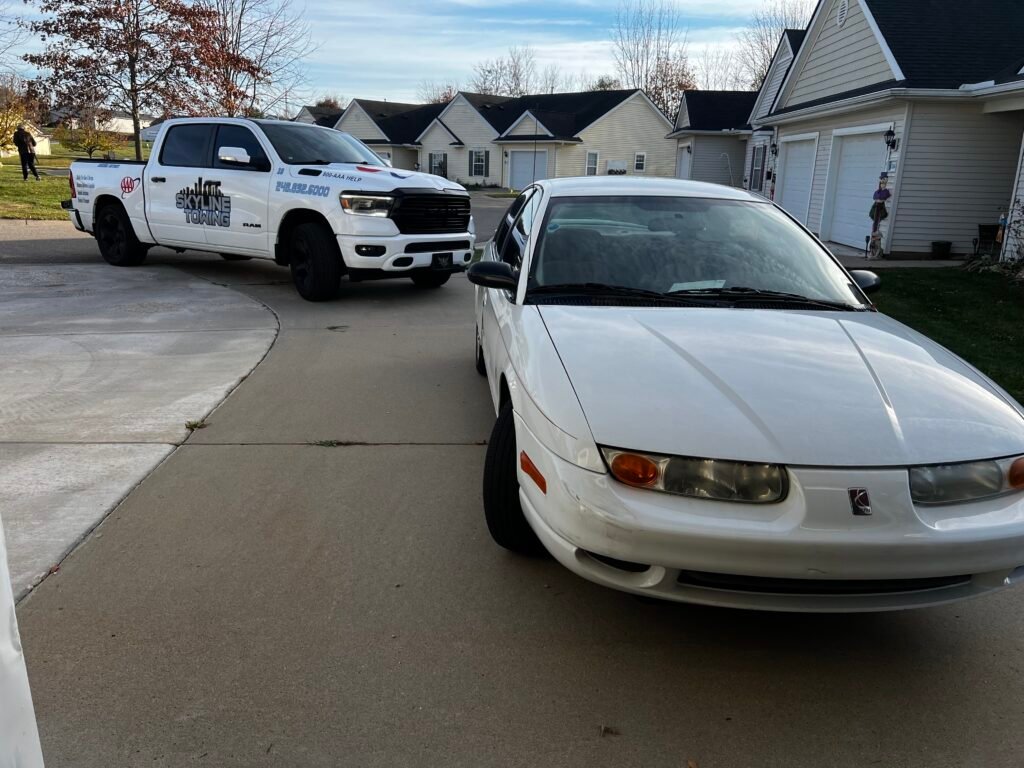
You turn the key or press the button, and nothing happens. Maybe the dome light barely flickers, or the starter clicks without catching. A dead car battery what to do moment hits fast, and it always seems to happen at the worst time, whether you’re parked at Fairlane Town Center or stuck in your driveway on a freezing January morning in Dearborn Heights.
The good news: a dead battery doesn’t always mean a replacement. Sometimes a jump-start gets you moving again in minutes. Other times, the battery needs testing to figure out if it’s actually done or just drained from a door left open overnight. Knowing the difference saves you money and frustration.
At Skyline Towing, we handle jump-starts and roadside battery calls across Detroit, Southfield, Livonia, Taylor, and the surrounding metro area 24 hours a day, 7 days a week. This guide walks you through exactly what to do when your battery dies, how to jump-start it safely, how to test whether it still has life, and how to know when it’s time for a replacement.
Before you touch the battery
When you’re facing a dead car battery, what to do next depends entirely on what’s actually causing the no-start. Before you grab jumper cables or call for help, take two minutes to assess the situation. Rushing straight into a jump-start without checking a few things first can waste your time or cause damage to your vehicle’s electronics. Knowing what you’re dealing with helps you make the right call, whether that’s a self-serve jump or a roadside assistance call.
Figure out what’s actually wrong
Not every no-start situation points to a dead battery. If your engine cranks slowly and then fires, your battery is likely weak but not fully dead. If you hear a single loud click or nothing at all when you turn the key, the starter or a loose connection might be the problem. If your lights, radio, and dash indicators all work fine but the engine won’t crank, the issue could be the ignition switch or starter motor rather than the battery itself.
A battery that produces zero response with no lights, no dash indicators, and no sounds typically points to a dead cell or a fully discharged battery rather than a starter issue.
Here’s a quick reference to help you narrow down the cause:
| Symptom | Likely cause |
|---|---|
| Slow cranking, engine barely turns over | Weak or failing battery |
| Single loud click, no crank | Starter motor or connection issue |
| Rapid clicking, no crank | Dead or very low battery |
| No sound, no lights, nothing at all | Fully dead battery or blown main fuse |
| Interior lights work fine, engine won’t crank | Starter, ignition switch, or neutral safety switch |
Safety checks you need to do first
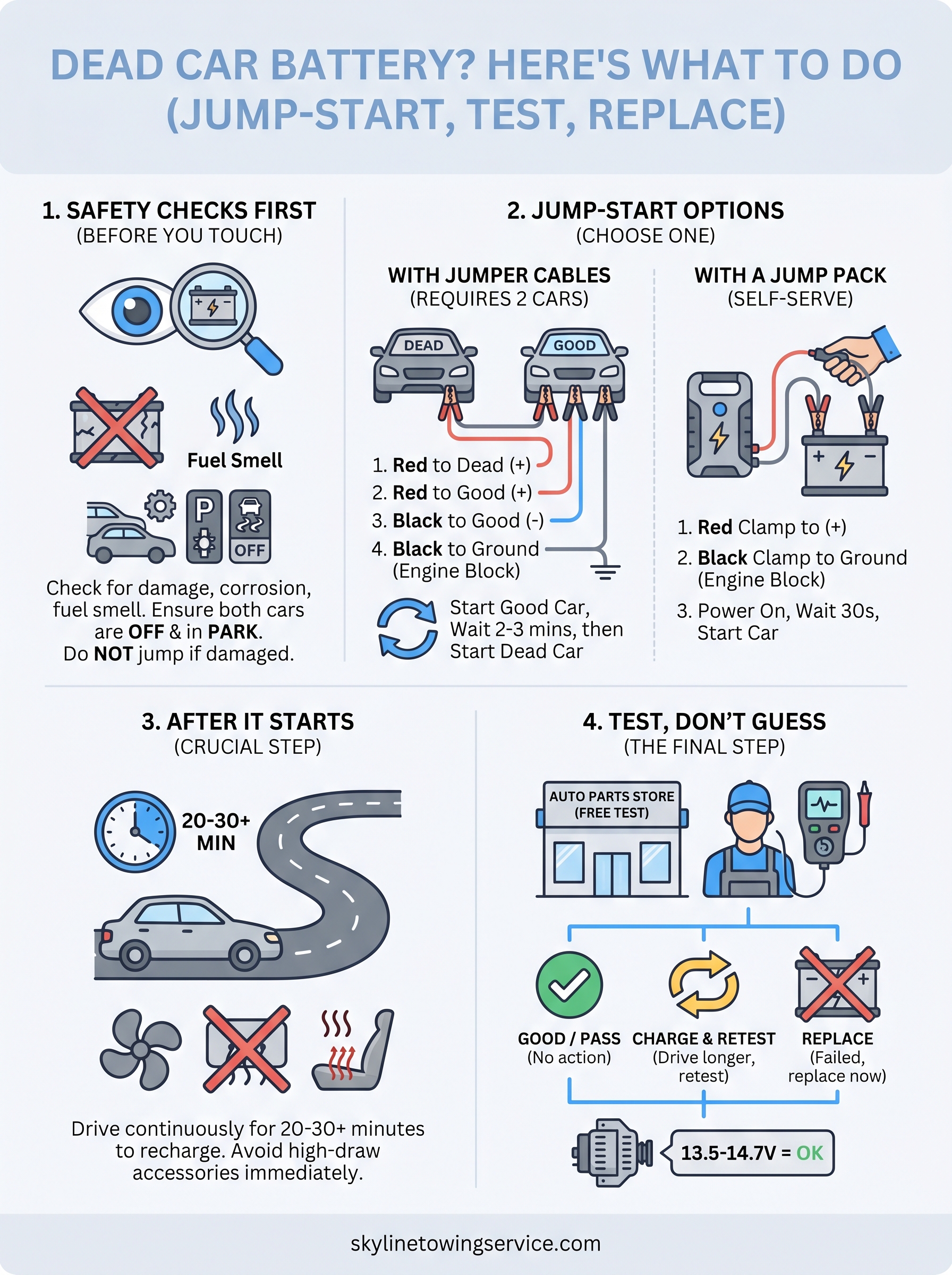
Once you’re reasonably sure the battery is the problem, inspect the battery itself before connecting anything. Open the hood and look closely at the battery casing. If you see cracks, bulging sides, or heavy corrosion built up around the terminals, do not attempt a jump-start. A cracked or swollen battery can leak sulfuric acid, and in some conditions, it can vent hydrogen gas that ignites from a spark.
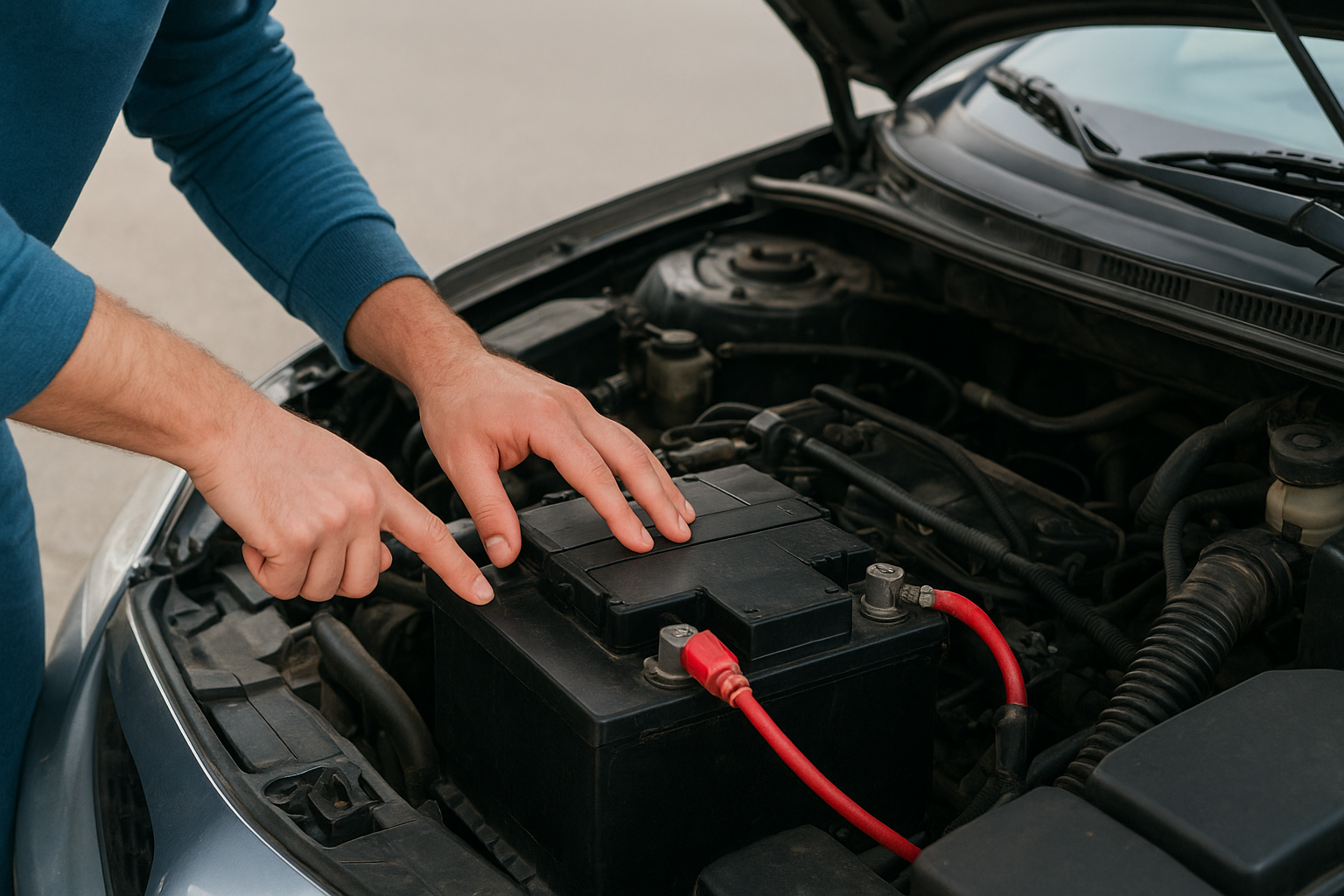
Confirm that the area around the battery is dry and clear of any fuel smells. If you’re parked on the shoulder of I-94, in a tight parking structure downtown, or in a closed garage, make sure there’s enough airflow before you connect cables. Also verify that both vehicles are fully off and in park before touching any terminals. These checks take under a minute and prevent problems that are much harder to deal with than a dead battery.
Step 1. Jump-start with jumper cables
Jumper cables are the most common tool people reach for when facing a dead car battery situation. If you know what to do, the entire process takes about 10 to 15 minutes and requires only a second vehicle with a working battery and a set of cables rated at least 4 gauge.
Position the vehicles and gather your cables
Park the working vehicle so its battery is close enough to your battery that the cables can reach both, but make sure the two vehicles are not touching each other. Turn the working vehicle off before you connect anything. You need cables that are long enough, typically 12 to 20 feet, to reach comfortably without stretching tight across both hoods.
Cables that are too thin or too short can fail to transfer enough current and may overheat during the jump attempt.
Connect the cables in the correct order
The connection sequence matters. Getting it wrong can send a voltage spike through your vehicle’s electronics and control modules, which are expensive to repair. Follow these steps exactly:
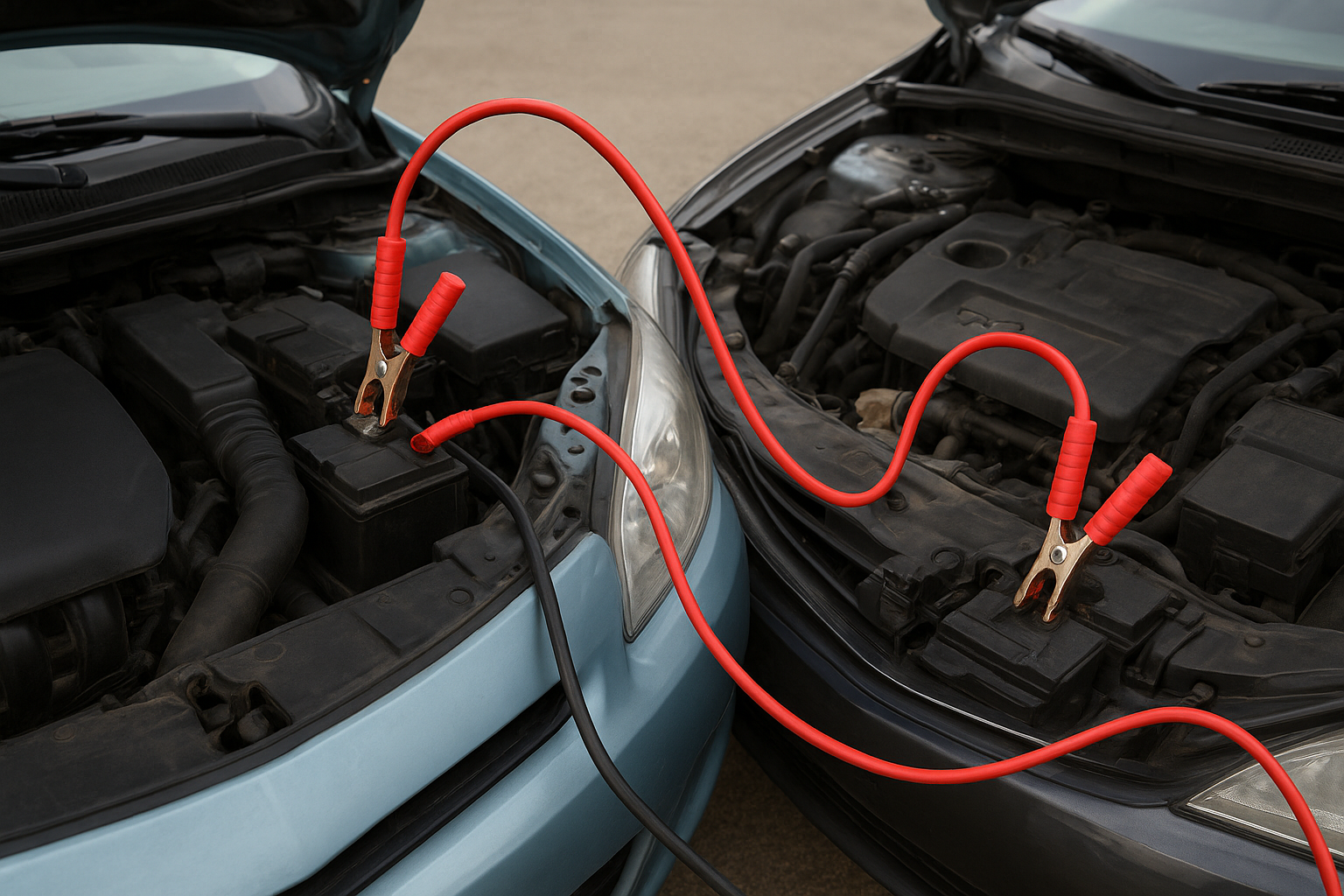
- Red cable to dead battery positive (+) terminal
- Red cable to good battery positive (+) terminal
- Black cable to good battery negative (-) terminal
- Black cable to unpainted metal ground on your engine block, not the dead battery’s negative terminal
Start the working vehicle and let it run for two to three minutes. Then attempt to start your car. If it cranks and fires, leave both vehicles running for another minute before carefully removing the cables in reverse order: black ground first, then black negative, then red positive on the good battery, and finally red positive on your battery last.
Step 2. Jump-start with a jump pack
A portable jump pack (also called a jump starter) lets you handle a dead car battery situation without a second vehicle. This is the better option when you’re parked alone in a lot off Michigan Avenue, sitting in a remote parking structure, or stuck somewhere that a second car can’t get close enough to reach. Modern lithium jump packs are compact enough to store in your glove box and powerful enough to start most gas engines multiple times on a single charge.
Choosing the right jump pack for your vehicle
Your jump pack needs to match your engine size and type. A small lithium pack rated at 400 to 600 peak amps handles most passenger cars and small SUVs without issue. Larger V8 trucks, vans, and diesel engines need packs rated at 1,000 peak amps or higher to generate enough current to turn over the engine. Check your vehicle’s owner manual for the engine displacement if you’re unsure which rating to buy.
Always store your jump pack fully charged. A lithium pack loses charge slowly over months, but a unit sitting in your trunk since last winter may not have enough power left to start your vehicle.
Connect the pack and start the engine
The connection process mirrors jumper cables but without the second car involved. Follow this order exactly:
- Red clamp to your dead battery’s positive (+) terminal
- Black clamp to an unpainted metal ground on the engine block, not the negative terminal
- Power on the jump pack and wait 30 seconds
- Start your vehicle
- Remove black clamp first, then red clamp
Once the engine fires, leave the vehicle running for at least 20 to 30 minutes to begin recharging the battery through the alternator.
Step 3. What to do after it starts
Getting the engine running is only half the job. What you do in the next 20 to 30 minutes determines whether you make it to your destination or end up stranded again on a side street in Southfield or along the Lodge Freeway. A successful jump-start doesn’t mean your battery is healthy, and it doesn’t mean the problem is solved.
Don’t shut the engine off right away
Your battery recharges through the alternator while the engine runs. After a jump-start, the battery needs time to recover enough charge to restart the vehicle on its own. Plan to drive continuously for at least 20 to 30 minutes rather than making a short trip and parking. Highway driving at a steady speed is better than stop-and-go traffic because the engine runs at a consistent RPM, which gives the alternator more output. Avoid running the heater on max, the rear defroster, and seat warmers all at once immediately after starting. Those high-draw accessories pull current away from the alternator before the battery has had a chance to recover.
If you shut the engine off within five minutes of a jump-start and the battery was fully dead, there is a strong chance the vehicle will not restart on its own.
Watch for warning signs while driving
Pay attention to your dashboard warning lights and electrical behavior as you drive. A battery warning light that stays on after startup typically points to an alternator not charging properly. Dim headlights, flickering gauges, or a radio that resets are all signs that something in the charging system is still failing. If you notice these symptoms, knowing what to do with a dead car battery situation means recognizing when driving to a shop immediately is the right call rather than waiting to see if the problem clears up on its own.
Step 4. Test the battery and charging system
A jump-start tells you the battery had enough power to start the car once. It does not tell you whether the battery will start the car tomorrow. Testing the battery and charging system after a dead car battery what to do situation is the step most people skip, and it’s the reason they end up stranded again two weeks later on a cold morning off Telegraph Road.
Get a free battery test at an auto parts store
Most AutoZone and O’Reilly Auto Parts locations will test your battery and alternator for free while you wait. You don’t need an appointment. Drive in, park near the entrance, and ask for a battery and charging system check. The technician connects a handheld tester to your battery terminals and gets results in under two minutes. The test checks cold cranking amps (CCA), state of charge, and alternator output all at once.
If your battery tests below 50% health or delivers less than its rated CCA, replace it before it fails completely, not after.
What the test results mean
The tester prints or displays a result in one of three categories that tells you exactly what action to take next:
| Result | What it means | What to do |
|---|---|---|
| Good / Pass | Battery is healthy | No action needed |
| Charge and Retest | Battery is low but not failed | Drive 30+ minutes, then retest |
| Replace | Battery has failed internally | Replace immediately |
Your alternator output should read between 13.5 and 14.7 volts at idle with the engine running. A reading below 13 volts means the alternator is not charging properly, and a new battery will still drain if you don’t fix the alternator first.
Get back on the road safely
A dead car battery what to do situation becomes manageable the moment you understand the steps involved. Jump-start the vehicle correctly, drive long enough to let the alternator do its job, and then test the battery before you assume everything is fine. Skipping the test is how people end up stranded twice in the same week.
Most battery failures in metro Detroit happen in winter, when cold temperatures drop CCA output significantly, and in summer, when heat degrades the plates inside the battery. Replacing a battery that tests at 40% health costs much less than calling for a tow from a parking garage in Dearborn at midnight.
If your vehicle won’t start and you need help right now, Skyline Towing provides 24/7 jump-starts and roadside assistance across Detroit and metro Detroit. Our team reaches you fast, whether you’re on the highway or stuck in a parking lot.