
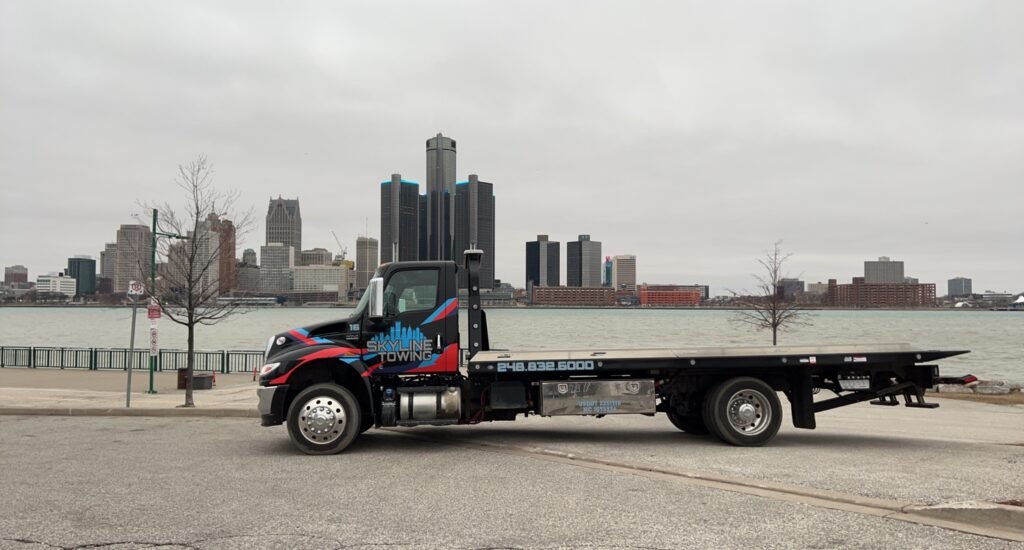
24 Hour Towing: What Detroit Drivers Need to Know

24 Hour Towing: What Detroit Drivers Need to Know

Your car dies on I-94 near the Rouge River at 2 a.m., or you slide into a snowbank on Grand River during a January whiteout. Either way, you need 24 hour towing that actually answers the phone and shows up, not a call center that puts you on hold while you’re standing on the shoulder with hazards blinking. That’s the reality for a lot of Detroit drivers, and it’s exactly what this guide addresses.

Here’s the short answer: a real 24 hour towing company runs dispatch around the clock, every day of the year, with trucks staged across the metro area so response times stay reasonable whether you’re stuck in Southfield or off I-75 in Taylor. Pricing typically depends on distance, vehicle type, and time of day, and you should know those numbers, including the towing cost per mile, before you’re ever in an emergency, not while you’re standing in the rain.

At Skyline Towing, headquartered at 6450 E Hancock St in Detroit, we’ve pulled cars out of Livonia snowbanks and jumped dead batteries in Dearborn Heights parking lots more nights than we can count. In this article, we’ll walk through what counts as true 24/7 coverage, what you should expect to pay, and how to spot a towing company that’s built for Detroit’s roads and weather instead of one just chasing calls.

Why 24 hour towing matters in Metro Detroit

Metro Detroit doesn’t run on a 9-to-5 schedule, and neither do breakdowns. Third shift workers heading home from the Ford Rouge plant, delivery drivers finishing routes near Eastern Market at midnight, and college kids driving back from Ann Arbor on US-23 all need the same thing when their car quits: a 24 hour towing company that’s actually staffed, not a voicemail promising a callback. When you’re the one stranded, "we open at 8 a.m." isn’t an answer.

Detroit weather doesn’t wait for business hours

Winters here are brutal in ways that catch even lifelong residents off guard. Black ice on the Lodge Freeway, whiteout conditions on I-696, and sub-zero mornings that kill batteries overnight all happen on their own timeline. According to the National Weather Service, Detroit averages over 40 inches of snow a season, and most of it doesn’t fall between 9 and 5. Emergency roadside assistance that only runs daytime hours leaves drivers exposed during exactly the conditions that cause the most breakdowns.

Detroit weather doesn't wait for business hours

If your towing company keeps banker’s hours, you’re gambling that your car will only break down when it’s convenient.

Metro Detroit’s roads take a toll on vehicles

Potholes on Woodward, aging pavement on I-75 through Downriver, and construction zones that shift lane patterns without warning all add up to more blowouts, alignment failures, and undercarriage damage than drivers expect. Add in the salt trucks that hit the roads every winter, and you’ve got a recipe for rusted brake lines and dead batteries showing up at the worst possible moment, usually late at night when temperatures drop hardest.

Isolation makes late-night breakdowns riskier

Standing on the shoulder of I-94 near the Rouge River at 2 a.m. is a different kind of dangerous than being stuck there at noon. Visibility is lower, traffic moves faster with fewer witnesses around, and waiting an hour for help isn’t just inconvenient, it’s a safety risk. Round-the-clock towing exists specifically for these moments, when getting a vehicle off the road quickly matters more than saving a few dollars on a daytime rate.

Situations where 24 hour coverage makes the biggest difference:

  • Overnight highway breakdowns with no safe place to wait
  • Winter storms that hit after dark and strand multiple vehicles at once
  • Lockouts in unfamiliar neighborhoods late at night
  • Accidents requiring immediate recovery to clear traffic lanes
  • Dead batteries in parking structures after businesses close

How to get a tow truck fast, day or night

Getting help quickly starts before you ever break down. Save a 24 hour towing number in your phone right now, the same way you’d save a doctor’s office or your landlord’s. Scrambling to search "tow truck near me" while your phone battery is at 8% and you’re standing in the cold is how a ten-minute wait turns into an hour.

The fastest tow truck is the one whose number you already had saved before you needed it.

Save the number before you need it

Skyline Towing dispatches from 6450 E Hancock St in Detroit, with trucks positioned across the metro area so we’re not driving across town every time someone calls from Southfield or Taylor. Store our number, bookmark our 24/7 roadside assistance page, and you skip the panic search entirely.

What to have ready when you call

When you do call, knowing what to tell the dispatcher speeds everything up. Have this ready:

  • Your exact location, including cross streets, exit numbers, or mile markers
  • Vehicle make, model, and whether it’s front, rear, or all-wheel drive
  • Whether you’re in a safe spot or need to be moved off the road first
  • Any hazards nearby, like standing water, downed lines, or debris

Dispatchers use this to send the right truck, not just the nearest one. A flatbed for a Southfield sedan is a different call than a heavy-duty rig for a Downriver box truck stuck on I-75.

What to expect when you call for towing help

Calling for 24 hour towing shouldn’t feel like a mystery. A dispatcher answers, asks a few quick questions, and gives you a realistic ETA based on where trucks are stationed that night. If you’re near I-75 in Taylor, you shouldn’t get quoted the same wait time as someone stuck on 8 Mile with no trucks nearby, because what goes into a tow truck’s arrival time changes with location. Honest dispatch means telling you 35 minutes when it’s actually 35 minutes, not padding the estimate to get you off the phone.

Getting a straight answer on price

Before a truck ever leaves the lot, you should hear real numbers on Detroit towing rates. Emergency roadside assistance pricing depends on mileage, vehicle weight, and time of day, and a company confident in its rates will tell you upfront instead of dodging the question until you’re already stranded.

A towing company that won’t quote you a price over the phone is one that doesn’t want you comparing it to anyone else.

What happens once the truck arrives

Once the driver shows up, expect a quick safety check first, hazards on, vehicle assessed, then a plan for loading or jump-starting on the spot. Skyline’s drivers explain what they’re doing and why, whether that’s winching a car out of a Livonia ditch or hooking up a flatbed for a Southfield lockout call. Standing in the cold wondering what’s happening next shouldn’t be part of the experience.

Quick rundown of a typical call:

  • Dispatcher confirms location and vehicle details
  • You get a real ETA, not a guess
  • Pricing is explained before the truck rolls
  • Driver arrives, assesses the situation, and gets to work
  • You’re briefed on next steps, whether that’s a shop, a lot, or home

Common Detroit roadside emergencies that need a tow

Detroit drivers deal with a specific mix of trouble that out-of-state visitors never see coming. Dead batteries hit hardest during cold snaps when temperatures drop below zero overnight, especially in open parking lots near downtown where cars sit exposed to wind off the river, where an overnight jump start service is usually all it takes. Flat tires show up constantly on Woodward and Gratiot, where potholes open up fast after freeze-thaw cycles and shred sidewalls without warning, which is when emergency flat tire service earns its keep. Lockouts happen everywhere, from grocery store lots in Dearborn Heights to apartment garages in Southfield, usually right when you’re already running late.

Winter-specific breakdowns

Snow and ice create their own category of calls. Cars slide into ditches along I-96, get stuck in unplowed side streets in Taylor, or stall out entirely when slush floods the engine bay. Winch outs become routine work for us between December and March.

Winter-specific breakdowns

The same pothole that flattens a tire in July can strand a car in a snowbank by January.

Accidents and heavier recoveries

Collisions on I-75 through Downriver or on the Lodge Freeway during rush hour need fast, careful accident recovery to clear lanes and prevent secondary crashes. Heavier vehicles, box trucks, work vans, and pickups sometimes need heavy duty towing equipment beyond a standard flatbed.

Common calls we handle year-round:

  • Dead batteries in cold weather
  • Flat tires from potholes
  • Lockouts at homes, lots, and garages
  • Winter ditch and snowbank recoveries
  • Accident recovery on highways
  • Heavy-duty towing for trucks and vans

Every one of these situations is exactly why round-the-clock towing service exists in the first place.

24 hour towing infographic

Keeping Detroit moving, any hour of the day

Breakdowns don’t check the clock, and neither should your towing company. Whether it’s a dead battery in a Southfield parking structure or a slide-off on I-96 during a February whiteout, 24 hour towing means someone answers the phone, tells you the truth about wait times and pricing, and gets a truck moving toward you. Detroit’s weather, potholes, and long highway stretches aren’t going anywhere, so having a number saved before you need it isn’t optional, it’s just smart.

Skyline Towing runs dispatch around the clock from 6450 E Hancock St in Detroit, with trucks staged across the metro area so help doesn’t take forever to arrive. Next time your car quits on you at 3 a.m. or you’re locked out in a Dearborn Heights lot, skip the search and save yourself the stress. Save our number, or book 24 hour towing with Skyline Towing anytime, before you’re standing on the shoulder wishing you already had.

Leave a Comment

Your email address will not be published. Required fields are marked *