
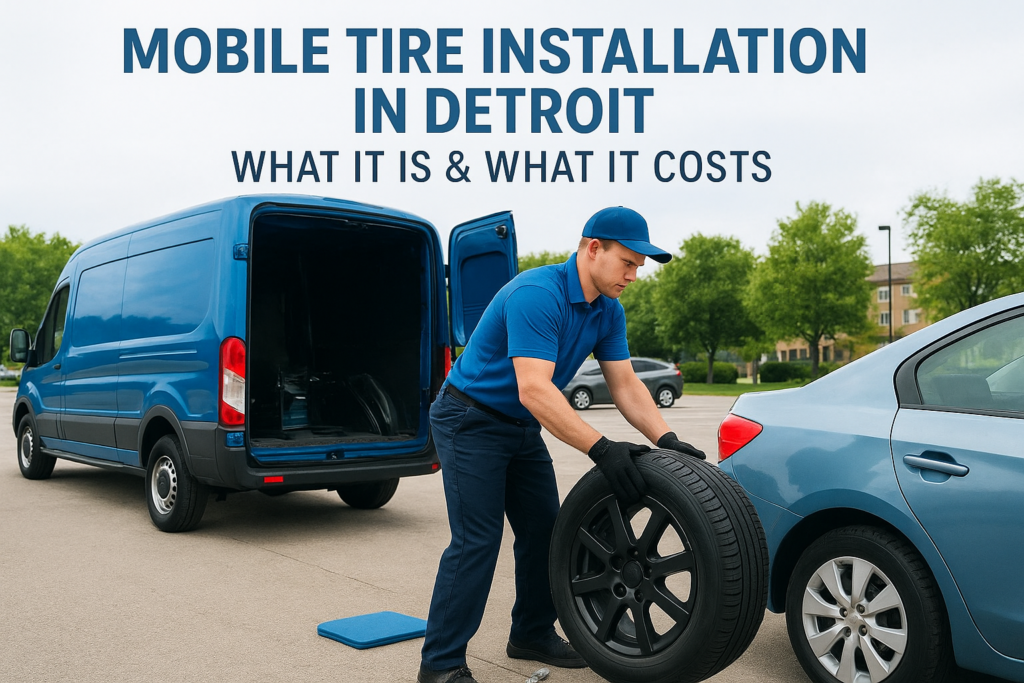
Blowing a tire in the parking lot at your job on Gratiot Ave or waking up to a flat in your driveway in Southfield is never convenient. You could jack up the car yourself in the rain, or you could book mobile tire installation and let someone else deal with the lug nuts. That’s the whole idea behind this service, and more Detroit drivers are using it every month.
Mobile tire installation means a technician brings the tires to you and mounts them on your car wherever it’s parked, whether that’s your garage in Dearborn Heights or a job site in Taylor. No towing needed, no waiting room, no rearranging your whole afternoon around a shop’s schedule. You pick your tires, pick a time, and someone shows up with a portable tire machine and gets it done, usually in under an hour.
In this article, we’ll break down exactly how the process works from booking to balancing, what it typically costs in the metro Detroit area, and when it makes more sense than driving to a shop yourself. We’ll also cover pricing factors you should know before you call anyone, based on what we see every week at Skyline Towing, headquartered at 6450 E Hancock St, Detroit MI 48207.
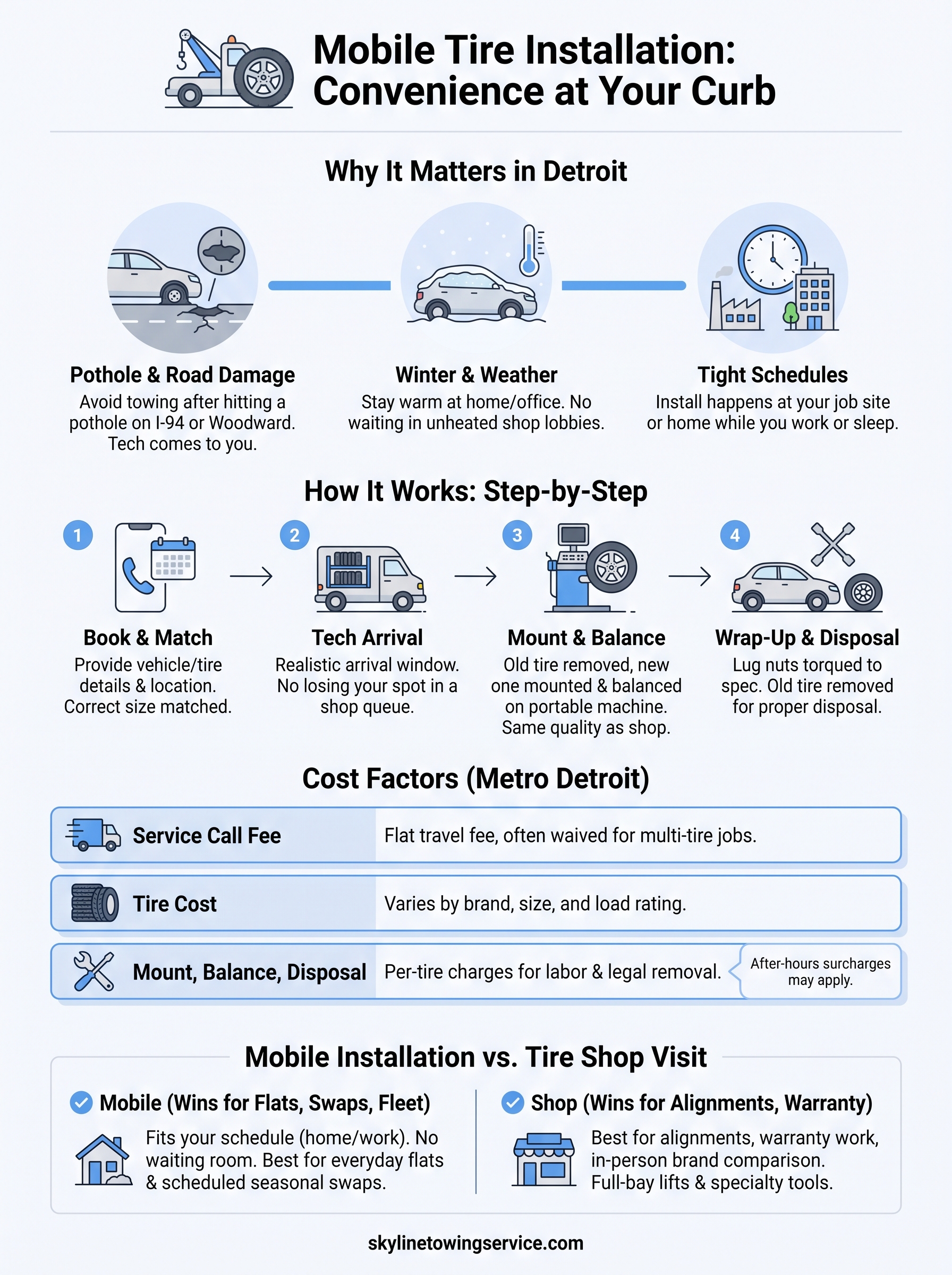
Why mobile tire installation matters in Detroit
Detroit’s roads take a toll on tires that most drivers never fully appreciate until they’re stranded on the shoulder of I-94 with a shredded sidewall. Between the freeze-thaw cycles, aggressive pothole seasons, and construction zones that seem to multiply every spring, tire damage is one of the most common roadside calls we get at Skyline Towing. Mobile tire installation exists because getting a car to a shop isn’t always realistic when the tire that’s supposed to get you there is the problem.
Potholes and pavement don’t play fair
Woodward Avenue, Gratiot, and stretches of I-75 near downtown are notorious for potholes that appear overnight after a hard freeze. A single pothole hit at highway speed can crack a rim, cause a slow leak, or blow a sidewall completely. When that happens on your commute, you’re not thinking about shop hours, you’re thinking about getting off the road safely. That’s exactly the situation mobile tire installation was built for: a technician comes to your location, whether that’s the shoulder near the Ambassador Bridge or a side street in Hamtramck, and gets you rolling again without a tow.
Michigan winters wreck tire schedules
Winter in metro Detroit isn’t gentle on tires, and it isn’t gentle on your schedule either. Road salt, ice, and sudden temperature swings between January thaws and deep freezes cause tread separation and sidewall bulges that show up with zero warning. Nobody wants to sit in an unheated shop lobby in Southfield during a February cold snap waiting for a tire swap. Mobile service lets you stay in your warm house or office while the work happens in your driveway or parking spot.
Getting your tires handled where your car already is beats losing half a day at a shop, especially in a Detroit winter.
Detroit’s work schedules don’t leave room for shop waits
A lot of our customers work shifts at plants in Dearborn, hospitals in Detroit, or offices in Southfield and Livonia where leaving mid-shift for a tire appointment just isn’t an option. Traditional tire shops run on their own clock, and that clock rarely lines up with a factory shift change or a nurse’s twelve-hour rotation. Mobile tire installation flips that arrangement. You book a window that fits your day, and the install happens at your job site, apartment complex, or home while you’re on break, at your desk, or asleep before an early shift.
Who benefits most from this setup
Some drivers get more value out of mobile installation than others, and it helps to know where you fit.
- Fleet and delivery drivers in Taylor and Livonia who can’t afford downtime during business hours
- Parents and caregivers who don’t want to load kids into a car just to sit in a shop lobby
- Older or disabled drivers who have trouble maneuvering a vehicle into a service bay
- Anyone with a flat overnight, since most shops aren’t open at 2 a.m. but a mobile crew can be
- People with damaged rims or blowouts who shouldn’t drive the car any further at all
Each of these situations shares the same problem: the car either can’t move safely or the driver can’t spare the time. Mobile tire installation solves both by removing the trip entirely, which is why it’s become a regular part of how Skyline Towing serves Detroit, Dearborn, and the surrounding suburbs.
How mobile tire installation works, step by step
Getting tires mounted at your curb isn’t complicated, but it does follow a specific sequence that keeps the job safe and fast. Skyline Towing runs this process the same way whether we’re pulling up to a driveway in Livonia or a loading dock in Taylor, so you know what to expect before the technician even shows up.
Booking and matching the right tires
Calling in starts with a few basic details: your vehicle’s year, make, and model, your tire size, and where the car is parked. If you already bought tires online or from a local supplier, we can work with what you have. If not, we help match you with the correct size and load rating so you’re not guessing at numbers on a sidewall. Tire matching matters more than people realize, since the wrong load index on a truck or minivan can cause uneven wear within a few thousand miles.
The technician’s arrival window
Once you book, dispatch gives you a realistic arrival window, usually within an hour or two depending on how busy the day is and where you’re located relative to our Detroit hub at 6450 E Hancock St. Unlike a shop appointment, you’re not losing your spot in line if traffic backs up on I-75. The technician’s arrival window is built around your schedule, not a shop’s daily queue, which is the whole point of calling for mobile service instead of driving in.
The real advantage of mobile tire installation isn’t the tires themselves, it’s getting your time back.
Mounting, balancing, and disposal
Once the technician arrives, the actual mechanical work looks a lot like what happens in a shop bay, just done curbside with a portable machine and a generator if needed.
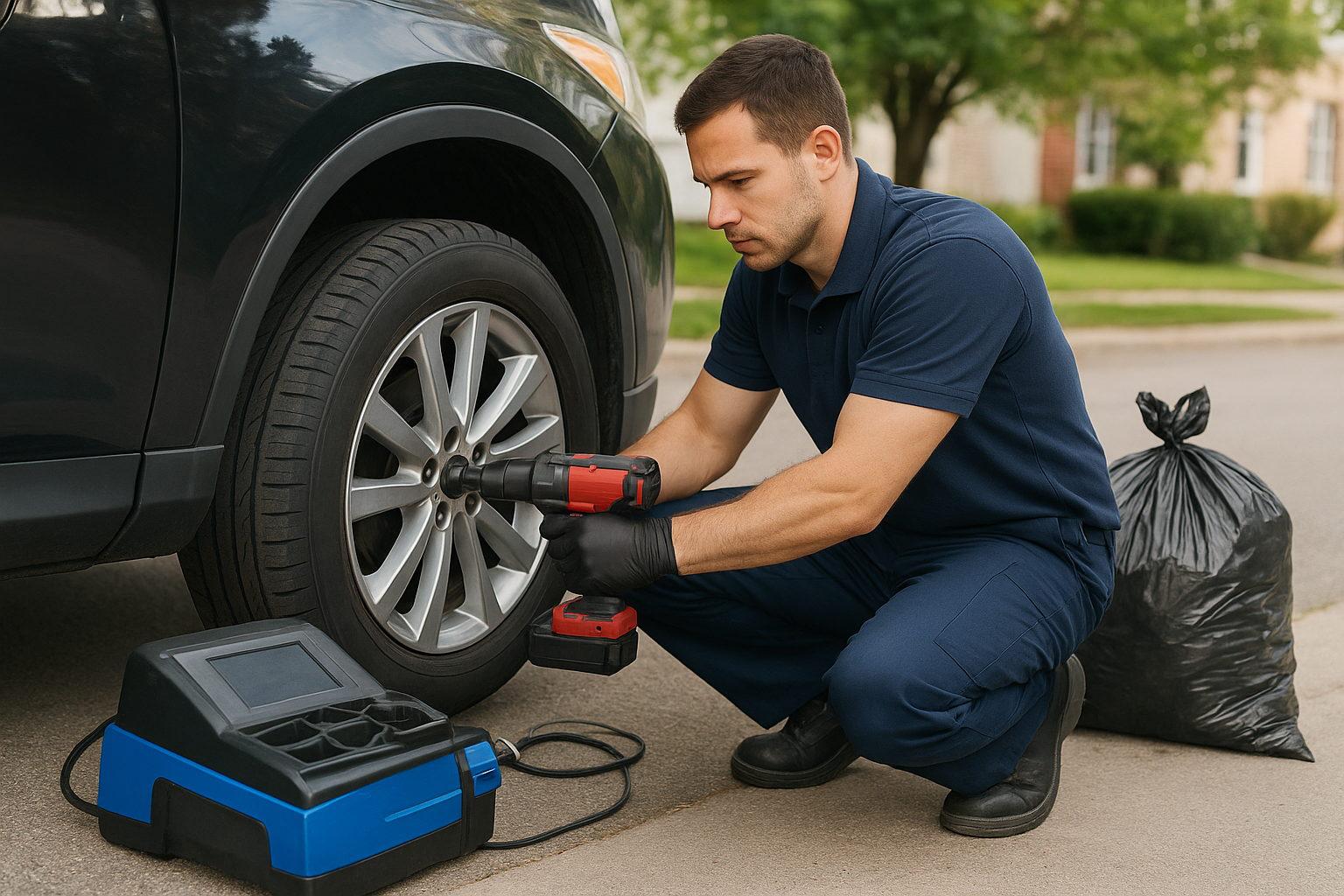
- The vehicle gets safely lifted using a jack and stands rated for the car’s weight
- The old tire is broken down and removed from the rim
- The new tire is mounted, seated, and inflated to the correct PSI
- The wheel is spin-balanced on a portable balancer to prevent steering vibration
- Lug nuts are torqued to manufacturer spec, not just hand-tightened
- The old tire is loaded up for proper disposal, since Michigan doesn’t allow tires left curbside for regular trash pickup
Most single-tire jobs wrap up in 30 to 45 minutes, and a full set usually takes under two hours depending on wheel access and weather. You get the same torque specs and balance quality as a shop visit, minus the drive and the waiting room.
What mobile tire installation costs in metro Detroit
Price is usually the first question drivers ask, and the honest answer is that it depends on what’s wrong and how many tires need replacing. A single mobile mount and balance in the Detroit area typically runs somewhere between the cost of the tire itself plus a service call fee, which covers the technician driving out to your driveway in Southfield or your job site in Taylor instead of you driving to them. Full sets cost less per tire than singles because the technician is already on-site and set up.
Breaking down the fees
Quoting an exact number over the phone without seeing the vehicle is guesswork, but the general cost structure stays consistent across most mobile providers in metro Detroit.
| Cost Factor | What It Covers | Typical Impact |
|---|---|---|
| Service call fee | Technician travel to your location | Flat fee, often waived on multi-tire jobs |
| Tire cost | The actual tire, sized to your vehicle | Varies by brand, size, and load rating |
| Mount and balance | Labor to remove old tire, mount new one, balance wheel | Per-tire charge |
| Disposal fee | Legal removal of old tires | Small flat fee per tire |
| After-hours surcharge | Late-night or emergency response | Applies outside normal daytime hours |
A full set at your curb almost always costs less per tire than a single emergency mount at 2 a.m., so timing matters as much as tire choice.
Why timing changes the price
After-hours calls cost more everywhere, mobile service included, because you’re paying for a technician to leave the shop or drive across Detroit outside a normal shift. Booking a swap for tomorrow afternoon instead of tonight at midnight can shave real money off the bill. Scheduling ahead also gives us time to confirm the exact tire size and have it loaded on the truck before we leave 6450 E Hancock St, which avoids a second trip and a second fee.
What drives the total up or down
Vehicle type plays a bigger role than most drivers expect. A sedan with standard-size tires costs less to service than a lifted pickup or a van with dual rear wheels, simply because the tires are bigger, heavier, and take longer to mount. Location inside our service area matters too, since a call to Dearborn Heights or Livonia is a shorter drive than one out toward the edges of our coverage zone, and shorter drives keep service fees lower. Getting a quote before the technician arrives is always worth the two-minute phone call, since it removes any surprise once the work is done and the invoice comes out.
Calling ahead with your tire size and location, even a rough guess, lets dispatch give you a number close to what you’ll actually pay, which beats finding out the total after the lug nuts are already torqued down.
What to expect when a technician comes to you
Watching a stranger pull up to your driveway with a tire machine in the back of a truck feels different from dropping your car off at a shop, so it helps to know what actually happens once they arrive. Skyline Towing techs show up in marked vehicles with everything needed for a curbside job, from jacks rated for your vehicle’s weight to a portable balancer that does the same work as the machines bolted to a shop floor. Nothing about the process should feel improvised or rushed, even when it’s happening in a Livonia driveway instead of a service bay.
Before the work starts
Expect a quick walkaround first. The technician checks tire pressure on the remaining tires, looks at tread wear patterns that might point to alignment issues, and confirms the lug pattern matches the tires on the truck before anything gets lifted off the ground. This two-minute check catches problems early, like a bent rim you didn’t notice or a mismatched spare, before they turn into a bigger issue mid-job.
A good mobile tech inspects the whole wheel, not just the flat one, because one bad tire is rarely the only story.
What the actual install looks like
Once the walkaround is done, the vehicle gets lifted, the old tire comes off, and the new one goes on using the same torque specs and inflation targets a shop would use. You’ll hear the impact wrench, see the tire spin on the balancer, and get a straight answer if the tech finds something extra, like a valve stem that needs replacing or a TPMS sensor that’s stopped talking to your dashboard. Nothing gets hidden in a back room here since the whole job happens a few feet from where you’re standing.
What you should have ready
A little prep on your end speeds things up and avoids a wasted trip:
- A flat, reasonably level surface for the jack, like a driveway or parking spot rather than soft grass or gravel
- Your key or fob accessible, in case the technician needs to release a parking brake or move the car slightly
- Payment method ready, whether that’s a card or cash, since most jobs get settled on the spot
- Old tire location noted, if it’s in a trunk or under a truck bed cover, so it’s easy to pull for disposal
Wrapping up the visit
Before the technician leaves, they’ll torque-check all the lug nuts a second time and confirm your tire pressure across all four wheels, not just the one that got replaced. You get a receipt on the spot, and most crews will tell you straight up if they noticed anything else worth watching, like a slow leak forming on another tire or a wheel bearing that sounded a little rough during the test roll around the block.
Mobile installation vs. a trip to the tire shop
Neither option is wrong, but they solve different problems, and knowing which one fits your situation saves you time and money. A shop visit still makes sense for certain jobs, while mobile installation wins out for the everyday flats and scheduled swaps that make up most of what Skyline Towing handles across Detroit and the surrounding suburbs.
When the shop still has the edge
Certain repairs need equipment a truck can’t carry, like alignment machines, tire rotation lifts built for multi-bay shops, or specialty balancing for high-performance wheels. If your car needs an alignment check alongside new tires, or if you’re dealing with a warranty claim that requires the original selling shop’s paperwork, driving in is still the right call. Shops also make sense when you’re comparison shopping tire brands in person and want to see the tread pattern before you commit.
When mobile installation wins
For a flat on Telegraph Road during your lunch break or a scheduled swap before a road trip, mobile service usually beats the drive every time. You skip the lobby, skip the wait behind other customers, and get the same torque specs and balance quality without rearranging your day around a shop’s hours. Scheduled swaps booked a day ahead often cost less than a same-day shop walk-in once you factor in gas, time off work, and the second trip to pick the car back up.
If your car can be driven safely and you just want the fastest path to new tires, mobile service almost always wins on convenience without losing quality.
A side-by-side look
| Factor | Mobile Installation | Tire Shop Visit |
|---|---|---|
| Location | Your driveway, job site, or curb | You drive to them |
| Wait time | Usually under an hour once tech arrives | Can involve a lobby wait, especially on weekends |
| Best for | Flats, scheduled swaps, fleet vehicles | Alignments, warranty work, in-person brand comparison |
| Equipment | Portable machine, generator if needed | Full-bay lifts and specialty tools |
| Cost factors | Service call fee plus tire and labor | Shop overhead, sometimes bundled into pricing |
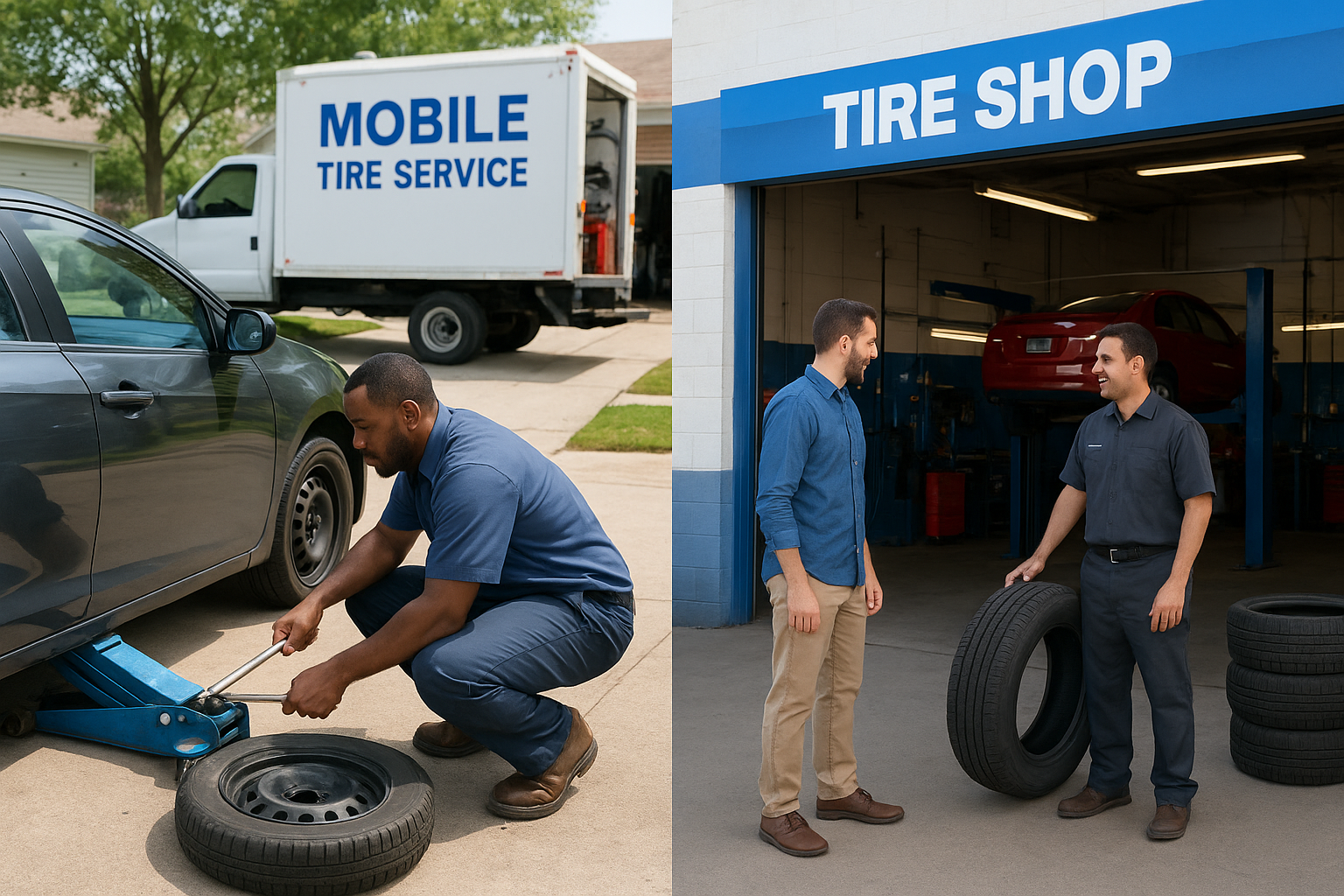
Looking at it this way, the choice usually comes down to what the vehicle actually needs rather than personal preference. A bent rim or suspicious alignment issue belongs in a shop with the right diagnostic tools. A flat tire, a scheduled seasonal swap, or a fleet vehicle that can’t sit idle belongs with a mobile crew that comes to wherever the car already is.
Common Detroit scenarios where mobile tires help
Every city has its own version of tire trouble, and Detroit’s version comes with potholes, plant shifts, and long commutes on I-96 and I-75. Real calls to Skyline Towing follow a pattern, and looking at a few common scenarios shows exactly why mobile tire installation fits how people actually live and work here.
The parking lot blowout during a shift
Someone working a twelve-hour shift at a hospital in Detroit or a plant in Dearborn can’t just leave to handle a flat tire. A sidewall blowout in the employee lot means the car sits there until the shift ends, which is a problem if that person needs to drive home at 11 p.m. Mobile tire installation solves this by handling the swap in the parking lot during a break, so the car is ready before the shift is even over.
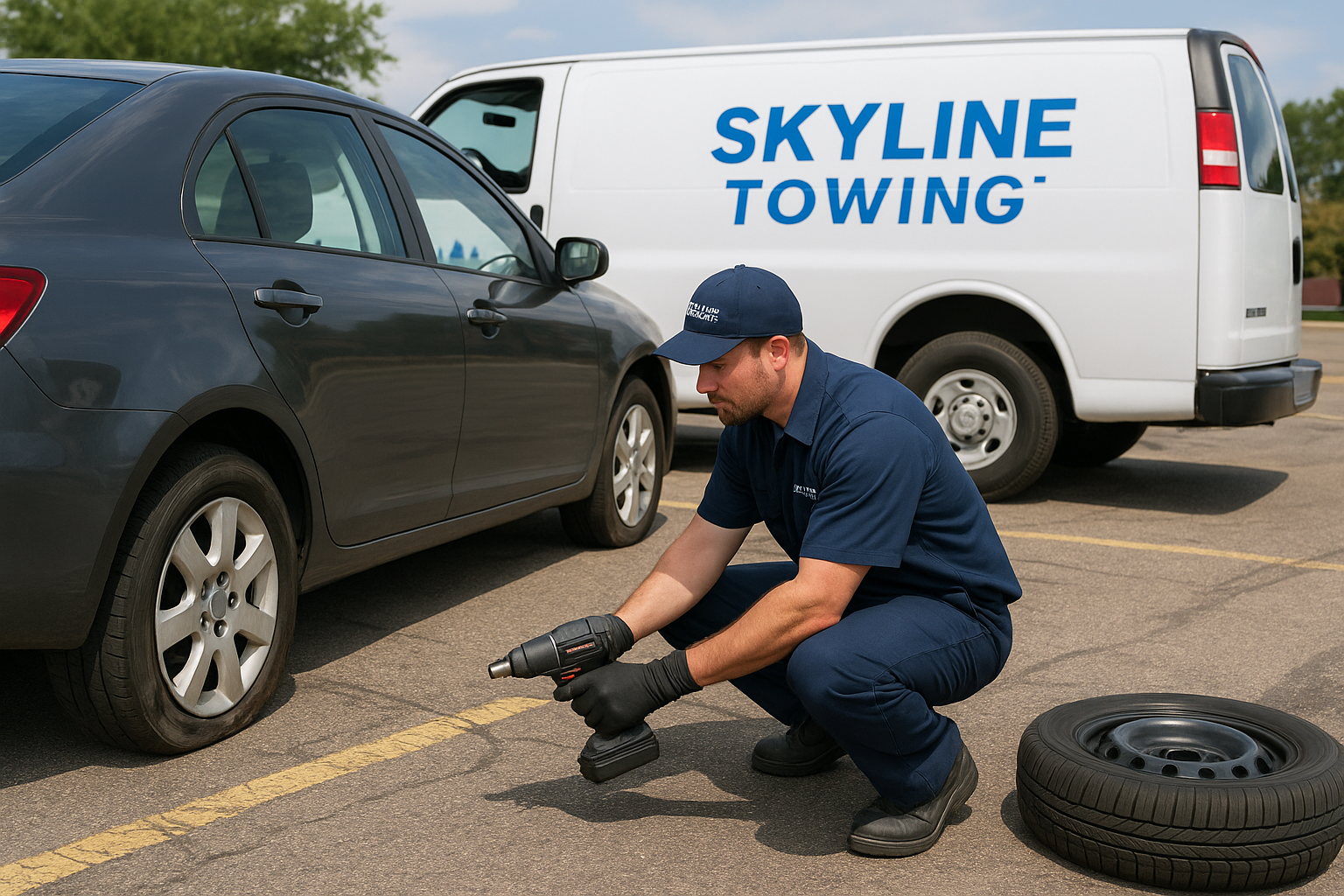
The overnight flat in a residential driveway
Waking up to a flat tire in Southfield or Dearborn Heights before an early commute is one of the most common calls we get. Nobody wants to change a tire in the dark before coffee, and most shops aren’t open at 6 a.m. anyway. A mobile technician can mount a spare or full replacement in the driveway while the driver gets ready for work inside.
A flat at 6 a.m. shouldn’t cost you your whole morning when a technician can be in your driveway before your coffee’s done.
Fleet vehicles that can’t sit idle
Delivery vans and box trucks running routes through Taylor and Livonia lose money every hour they’re parked. Fleet managers book mobile installs specifically because the alternative, driving a van to a shop and waiting, takes a vehicle out of rotation for half a day. A few common fleet scenarios include:
- A delivery van with a slow leak discovered mid-route
- A work truck due for a scheduled seasonal swap between jobs
- Multiple company vehicles needing tires the same week, staged one after another at a single lot
Apartment and condo lots without easy access
Renters in apartment complexes around Livonia or Southfield often don’t have a garage or even a reserved spot, which makes a shop trip awkward if the car isn’t drivable. Instead of arranging a tow just to get new tires mounted, a technician handles the job right in the shared lot, torques everything to spec, and leaves the car parked exactly where it needs to be for the next shift or school run.
Getting your tires handled without the wait
A flat tire doesn’t have to wreck your whole day. Mobile tire installation puts the fix wherever you already are, whether that’s a driveway in Southfield, a job site in Taylor, or a parking lot on Gratiot Ave, without the drive, the lobby, or the rearranged schedule. You’ve seen how the process works, what it costs, and where it beats a shop visit outright. For most flats and scheduled swaps around metro Detroit, calling a mobile crew is simply the faster, smarter move.
Skyline Towing runs this service out of our Detroit hub at 6450 E Hancock St, and our trucks cover Dearborn, Dearborn Heights, Southfield, Taylor, Livonia, and everywhere between. Next time a pothole on Woodward gets the better of your tire, skip the shop wait entirely. Contact Skyline Towing and get a technician headed your way today.