
Your battery dies in a Meijer parking lot on Fort Street, or your car won’t start after a shift downtown, and you realize you never signed up for AAA. If you’re searching for roadside assistance without membership in Detroit, you don’t need a monthly plan sitting in your wallet to get help tonight. You just need a company that answers the phone and shows up.
Here’s the direct answer: pay-per-use towing and roadside help is available all over metro Detroit, and it’s often faster than waiting on a club dispatcher anyway. Local companies like ours handle jump starts, lockouts, and flat tire changes on a one-time basis, with pricing based on your location and the job, not a subscription tier. You call, you get a quote, you pay when the work is done. No card number on file, no annual renewal.
In this guide, we’ll walk through exactly how non-member roadside help works in Detroit, what it typically costs for jump starts, lockouts, tire changes, and tows, and how to find a reliable operator fast when you’re stuck on I-94, in Southfield, or somewhere near our Hancock Street headquarters. By the end, you’ll know who to call and what to expect on the bill.
What to expect when you skip a membership
Going without a membership doesn’t mean you’re stuck or overpaying. It means you’re buying help one job at a time instead of prepaying for a year of roadside coverage you might use twice. Metro Detroit has enough independent tow operators and roadside companies that pay-per-use service is easy to find, whether you’re stranded on Woodward Avenue at midnight or dealing with a dead battery in a Southfield office parking garage. The main difference is how you pay, not whether you get help.
How pricing actually works
Every job gets priced based on three things: what you need, where you are, and what time it is. A jump start near our Hancock Street shop costs less than a flat tire change out past Livonia because of drive time. Most Detroit-area companies, including ours, quote a base service fee plus mileage once you’re outside the immediate service zone. Nights and holidays sometimes carry a small surcharge, same as calling a plumber after hours. Here’s a rough breakdown of what non-member pricing typically looks like across metro Detroit:

| Service | Typical Cost (No Membership) | Notes |
|---|---|---|
| Jump start | $50-$75 | Flat rate in most cases |
| Lockout | $60-$90 | Higher for newer keyless systems |
| Flat tire change | $60-$85 | Assumes you have a usable spare |
| Local tow (under 5 miles) | $75-$125 | Base fee usually covers hook-up plus a few miles |
| Winch out (ditch, snow, mud) | $100-$200+ | Depends on how stuck the vehicle is |
You’re not paying for a membership tier, you’re paying for the job in front of you, and that’s usually cheaper than people expect.
Response times without a club dispatcher
Handling calls directly, without routing through a national call center, usually means you skip a layer of hold music. When you call a local company straight up, you’re talking to someone who knows the roads, knows which truck is closest, and can give you a real arrival window instead of a vague "within two hours" promise. During a bad ice storm on I-75 or a summer overheating rush on the Lodge Freeway, response times stretch for everyone, membership or not, simply because every truck in the city is already out. That’s the reality of towing during severe weather, not something specific to going without a plan.
Payment on the spot, no surprises if you ask first
Expect to pay when the job’s done, either by card, cash, or sometimes a mobile payment app, depending on the company. The trick to avoiding surprise costs is asking for a quote before the truck rolls, not after. A reputable operator will tell you the base rate and mileage charge over the phone once you describe your location and the problem. If a company won’t give you a number until they arrive, that’s a red flag worth noting for next time. Skipping the membership just means you handle that transaction yourself instead of a club processing it behind the scenes.
Why this works fine for occasional needs
Without question, if you break down once or twice a year, paying per incident almost always costs less than a membership renewal, especially with basic plans running $60-$120 annually before you’ve used a single service. People who tow often, like fleet operators or drivers with older vehicles prone to breakdowns, might do better with a plan. But for the average Detroit driver dealing with an occasional dead battery or locked car, calling a trusted local number when you need it, and skipping the rest, makes financial sense.
Step 1. Call a local Detroit towing company directly
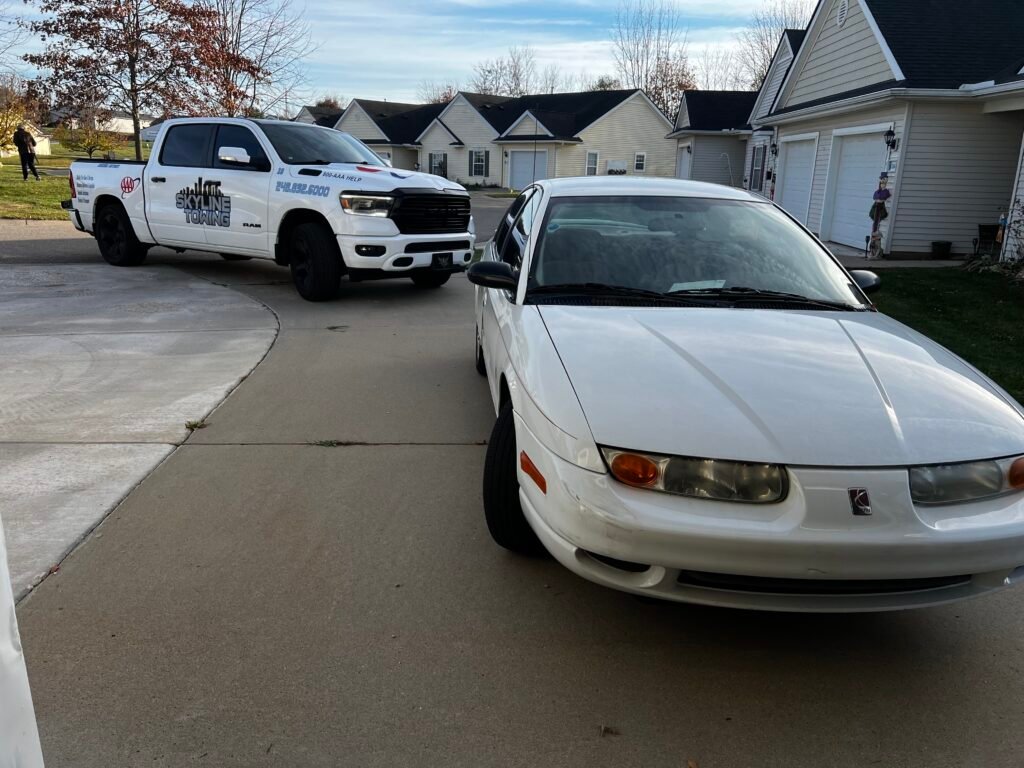
Skip the search engine rabbit hole and just call a Detroit-based towing company. Independent operators like Skyline Towing, headquartered at 6450 E Hancock St in Detroit, run dispatch out of the same city you’re stuck in, which means the person answering the phone actually knows whether you’re near the Ambassador Bridge or closer to Southfield. That local knowledge shaves real minutes off your wait, especially compared to calling a national number that has to relay your GPS pin to a third-party contractor before a truck even gets assigned.
What to have ready when you call
Before you dial, grab a few details so the dispatcher can quote you accurately and send the right truck the first time:
- Your exact location (cross streets, mile marker, or a nearby business name work better than a vague neighborhood)
- The problem (dead battery, flat tire, locked out, won’t start)
- Your vehicle’s make and model, since some jobs need specific equipment
- Whether you’re in a safe spot or need to be moved off a shoulder or lane first
Giving this upfront gets you a faster, more accurate quote instead of a guess that changes once the truck arrives.
Questions worth asking before the truck rolls
Ask for a flat quote covering the base fee and mileage before you agree to anything. A company that’s confident in its pricing will give you a number on the spot, not a shrug and a promise to "figure it out later." Also ask how far out the truck is and whether that estimate accounts for current traffic on routes like I-75 or the Lodge. Confirming payment methods matters too, since not every operator takes cards on the truck, and you don’t want to find that out after the tow is hooked up.
A straight answer on price and arrival time, given before the truck leaves the yard, tells you more about a company than any star rating online.
Local dispatch also means less runaround if something goes wrong. If the driver is delayed by an accident backup on I-94 or a sudden snow squall rolling off the river, you’re talking to the same person who sent the truck, not a call center reading from a script. That direct line is one of the underrated perks of skipping the membership model altogether: you deal with the company doing the actual work, start to finish.
Step 2. Check your auto insurance policy first
Before you dial anyone, pull up your insurance app or dig the paperwork out of the glove box. Auto insurance roadside assistance is a common add-on in Michigan, often tacked onto a policy for $5 to $15 a year, and a lot of drivers pay for it without realizing it’s sitting there unused. If you’ve got it, you may not need to pay a dime out of pocket for that jump start on Grand River Avenue or that lockout outside your apartment in Dearborn Heights.
Where to find it on your policy
Check your declarations page, the one-page summary that lists your coverages, limits, and deductibles. Look for terms like "roadside assistance," "emergency road service," or "towing and labor." If it’s not obvious, call your agent directly and ask a simple question: does my policy include roadside coverage, and what’s the per-incident limit?
- Confirm the dollar cap per service call, usually $50 to $100
- Ask how many incidents are allowed per policy year
- Find out if towing has a mileage cap
- Get the roadside assistance phone number saved in your contacts before you need it
What it typically covers versus what it skips
Coverage varies by carrier, but most Michigan policies with this rider follow a similar pattern:
| Service | Usually Covered | Common Limit |
|---|---|---|
| Jump start | Yes | Full cost under cap |
| Lockout | Yes | Full cost under cap |
| Flat tire change | Yes | Full cost under cap |
| Towing | Yes, to nearest shop | Often 5-15 miles |
| Fuel delivery | Sometimes | Fuel cost extra |
If your tow distance exceeds the mileage limit, you’ll pay the difference, so ask your dispatcher to confirm mileage before the truck leaves.
How filing a claim actually affects your rate
One worry keeps people from using this coverage: they think a roadside claim will spike their premium like an at-fault accident would. In most cases, that’s not true. Roadside assistance calls are typically tracked separately from your claims history because there’s no liability involved, just a service fee reimbursement.
A roadside assistance call is a reimbursement, not an accident, and most Michigan insurers don’t treat it like one.
Still, ask your agent directly, since practices vary by carrier. For general guidance on what Michigan law requires insurers to disclose, the Michigan Department of Insurance and Financial Services publishes consumer guides on auto policy add-ons worth a quick read.
Step 3. Use credit card or cell phone perks
Before you assume you’re paying full price, check the wallet you’re already carrying. Credit card roadside benefits are more common than most Detroit drivers realize, especially on cards that charge an annual fee. Visa Signature, World Mastercard, and several premium travel cards bundle in roadside dispatch as a perk you’re already paying for through your card fee. Cell phone plans sometimes offer the same thing, quietly, as part of a bundle you signed up for without reading the fine print.
Which cards typically include this perk
Grab your cards and check the benefits guide on the issuer’s website, or call the number on the back. Look for these terms specifically:
- "Roadside dispatch" or "roadside assistance" listed under travel and emergency benefits
- A per-incident dollar cap, often $50 to $80
- A limited number of uses per year, usually two to four
- Whether the towing distance is capped, similar to insurance riders
Some cards charge you upfront and reimburse later, while others dispatch a contracted tow company directly, similar to how an insurance rider works. Read the fine print before you call, because a card that reimburses you means fronting cash on the spot near the Southfield Freeway at 11 p.m., which isn’t ideal if you’re low on cash that night.
Carrier and phone plan perks worth checking
A few cell carriers bundle roadside help into premium plans or device protection add-ons. It’s not universal, but it’s worth five minutes to check your plan details or call support and ask directly: does my current plan include any roadside or emergency travel assistance? If it does, get the dispatch number saved in your phone now, not while you’re standing on the shoulder of I-96 in the rain.
A benefit you’re already paying for through a card fee or phone plan is worth checking before you call a company out of pocket.
When it’s still faster to call a local tow company
Here’s the catch with card and carrier perks: they usually route through a national dispatch network, which means the same call-center delay you’d get with a membership club. If you’re stuck near the Ambassador Bridge on a Friday night and time matters more than saving $70, calling a Detroit company directly still gets a truck moving faster. Use the card perk when you’ve got time to spare, and call local when you don’t.
Step 4. Ask about manufacturer or dealer coverage
Check your glovebox for the paperwork that came with your car before you assume you’re stuck paying cash. Manufacturer roadside assistance is standard on most new vehicles for a set number of years or miles, and a lot of drivers forget it exists once the excitement of the purchase wears off. If you bought your car from a Detroit-area dealer, even a used one, ask whether any of that original coverage transferred with the title.

How long factory coverage usually lasts
Coverage windows vary by brand, but most manufacturers bundle roadside help with the powertrain or basic warranty. Here’s a general sense of what’s typical, though you should always confirm with your specific dealer since terms change by model year:
| Manufacturer | Typical Roadside Coverage Window | Usually Covers |
|---|---|---|
| Ford | 5 years / 60,000 miles | Tow, jump start, lockout, flat tire |
| GM (Chevy, Buick, GMC) | 5 years / 60,000 miles | Tow, jump start, lockout, fuel delivery |
| Chrysler/Jeep/Ram | 5 years / 60,000 miles | Tow, jump start, lockout, flat tire |
| Toyota | 2 years / unlimited miles | Tow, jump start, lockout |
| Honda | 3 years / 36,000 miles | Tow, jump start, lockout |
Given Detroit’s ties to the Big Three, a huge share of drivers here already qualify for one of these programs without ever signing up for anything extra.
How to confirm your coverage before you need it
Don’t wait until you’re stranded near a Dearborn dealership to figure this out. Take care of it now:
- Pull your VIN and call the manufacturer’s customer care line, not just the dealer
- Ask for the exact start date and mileage cutoff for roadside coverage
- Save the roadside dispatch number directly in your phone under a clear label
- Ask if coverage transfers to a second owner if you bought the car used
Factory roadside coverage is often already paid for through your purchase price, you just have to know it’s there and use it.
When dealer coverage falls short
Manufacturer programs typically dispatch through a national network, similar to a credit card perk, so response times in a Detroit snowstorm can lag behind a local call. They also tend to exclude things like winch-outs from deep snow or aftermarket modifications that void certain terms. If your factory coverage window has expired, or the wait time doesn’t match your situation on I-75 during rush hour, a local Detroit tow company is still your fastest backup plan.

Staying prepared for the next Detroit breakdown
Skipping a membership doesn’t leave you stranded, it just means you handle roadside help the same way you’d handle any other one-off repair: check what you already have, then call someone reliable. Insurance riders, credit card perks, and manufacturer coverage cover more Detroit drivers than most people realize, and when none of those apply, a local pay-per-use tow company fills the gap without a contract or annual fee attached.
The real prep work happens before you’re stuck. Save a trusted local dispatch number in your phone tonight, not while you’re standing on the shoulder of I-94 in the rain. Know your policy limits, know your card benefits, and know who’s closest to your neighborhood, whether that’s Dearborn, Southfield, or right here near our Hancock Street shop.
When your car won’t start and you’d rather skip the guesswork, call Skyline Towing and get a truck moving instead of a hold-music loop.

