
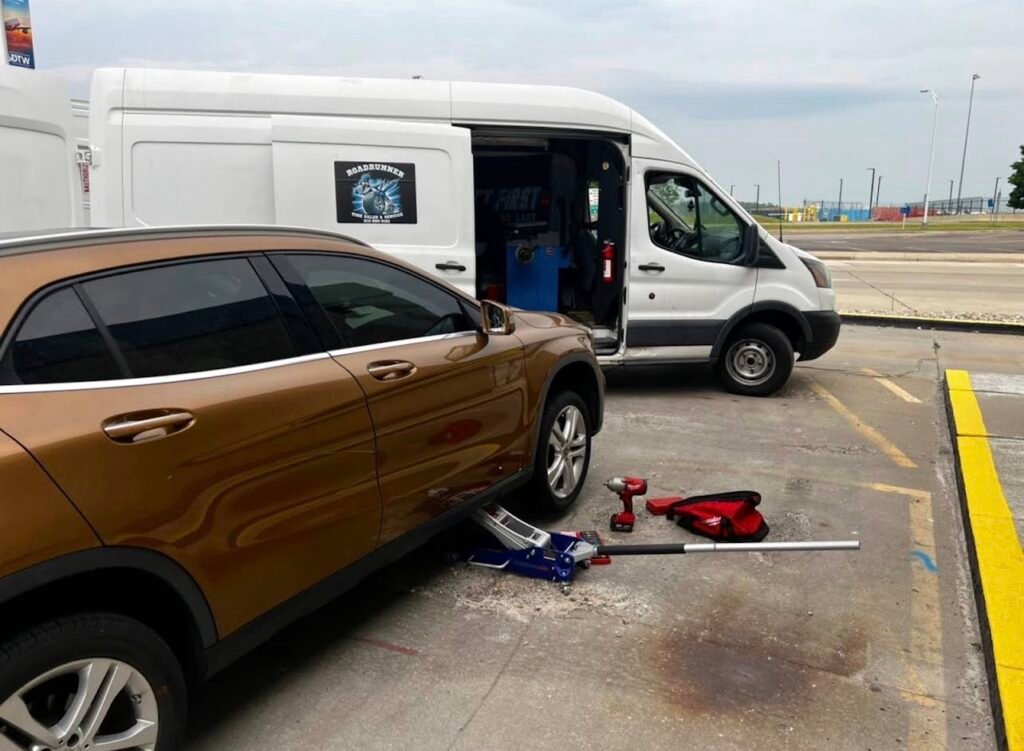
You’re driving down I-94 or cutting through Dearborn on Michigan Avenue when you hear that unmistakable thud and pull. Your tire’s done. Knowing what to do when you get a flat tire matters because your next few decisions affect your safety, especially on busy Metro Detroit roads where traffic doesn’t slow down for anyone. Pulling over wrong or skipping a step can turn a bad situation into a dangerous one.
This guide walks you through exactly what to do, from the moment you feel that flat to getting back on the road. We’ll cover safe pullover spots, how to change a tire yourself, and when it makes more sense to call for help instead of wrestling with a jack on the shoulder of the Southfield Freeway. At Skyline Towing, we handle flat tire calls across Detroit, Dearborn Heights, Livonia, Taylor, and the surrounding metro area 24 hours a day, so we’ve seen firsthand what works and what puts people at risk.
Whether you’re comfortable with a lug wrench or you’ve never popped your trunk to check for a spare, this step-by-step breakdown has you covered. Let’s start with the most important part: what to do in the first 10 seconds.
What to do first when a tire goes flat in Detroit
The first few seconds after a tire blows are the most critical. Your instinct might be to hit the brakes or jerk the wheel, but both of those reactions can make things worse, especially at highway speeds on roads like I-96 or I-75 where traffic moves fast. The goal right now is maintaining control of your car while you work toward a safe stop.
Stay calm and keep control of the vehicle
When you feel that pull or hear the flapping sound, grip the steering wheel firmly with both hands and keep the car pointed straight ahead. Let the vehicle slow down naturally by easing off the gas rather than stomping the brakes. On Metro Detroit highways, sudden hard braking on a flat can cause a spinout, which puts you and everyone around you at serious risk. Once your speed drops to around 20-25 mph, apply the brakes gently and guide the car toward the shoulder or a safer area.
Never overcorrect the steering wheel when a rear tire blows. On an SUV or truck, that move can trigger a rollover.
Know where to pull over in Metro Detroit
Detroit’s road conditions add a layer of complexity to figuring out what to do when you get a flat tire. Potholes and broken pavement on roads like Gratiot Avenue or Eight Mile Road can destroy your rim if you ride on a flat too long searching for the perfect spot. Your priority is getting out of the travel lane as quickly and safely as possible. Good targets include:
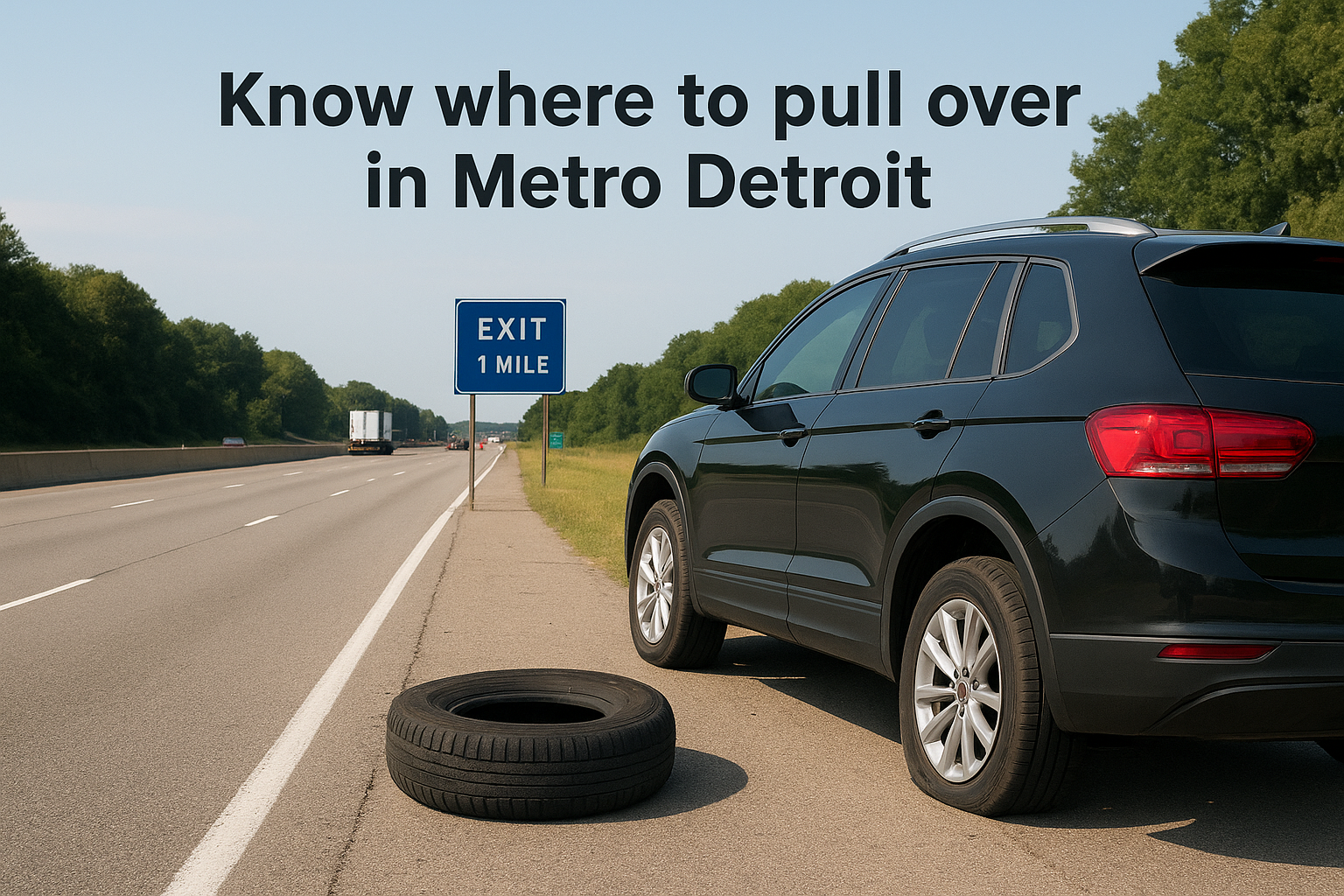
- A gas station or parking lot off the next exit or intersection
- A wide highway shoulder, well clear of the travel lane
- A side street with low traffic and good lighting
Avoid stopping on a bridge or a sharp curve where drivers behind you won’t see you until it’s too late.
Step 1. Get off the road and make the scene safe
Once you’ve slowed down and picked your spot, pull completely off the travel lane and turn on your hazard lights immediately. This is where knowing what to do when you get a flat tire goes from theory to action. Don’t rush out of the car until you’ve assessed what’s around you.
Turn on hazards and set up warning triangles
Your hazard lights are your first line of communication with other drivers, so hit that button the moment you feel the flat, not just after you’ve stopped. Once parked, set out road flares or reflective warning triangles behind your vehicle, especially if you’re on a dark stretch like the Lodge Freeway at night or pulled off near a curve on I-75.
Keep at least one reflective triangle in your trunk at all times. It takes up almost no space and can prevent a rear-end collision.
Stay away from moving traffic
Put your vehicle in park, engage the parking brake, and exit from the passenger side whenever possible to avoid stepping into traffic. Keep yourself and any passengers as far from the road as you can while you work.
If you have kids or pets in the car, get them out on the curb side and keep them close. Standing near the rear of your vehicle on a busy road like Michigan Avenue or Telegraph Road puts you at serious risk.
Step 2. Check the tire and choose your next move
With the scene secure, walk around to the flat tire and take an honest look before reaching for the jack. Understanding how bad the damage is shapes every decision you make next, and it’s a key part of knowing what to do when you get a flat tire in Metro Detroit.
Inspect the damage before touching anything
Look at the tire from a safe distance first. Sidewall blowouts are not repairable, but a nail or screw in the tread might be fixable. Check these things quickly:
- Is the sidewall torn or bulging? You need a full replacement.
- Is there a visible object in the tread? A plug may work temporarily.
- Is the rim sitting on the ground? You rode too long on the flat and the rim may be bent or cracked.
Decide: change it yourself or call for help
If the damage looks manageable and you have a good spare and a working jack, changing it yourself is a solid option on a quiet side street or parking lot.
Never attempt a tire change on a narrow highway shoulder during heavy traffic. Wait for a safer location or call for professional help.
Calling roadside assistance makes more sense when you’re on a busy stretch of I-94 at night, the rim looks bent, or you simply don’t have a usable spare in the trunk.
Step 3. Change the tire safely with a spare
With your scene secured and your decision made, it’s time to get the spare on. Knowing what to do when you get a flat tire includes doing the actual swap correctly, because a tire mounted wrong can come loose at speed and cause a serious accident.
Position the jack and loosen the lug nuts
Locate your vehicle’s jack points in your owner’s manual before placing the jack. Putting a floor jack on the wrong spot can crack the frame or cause the car to slip. Use this order to get started safely:
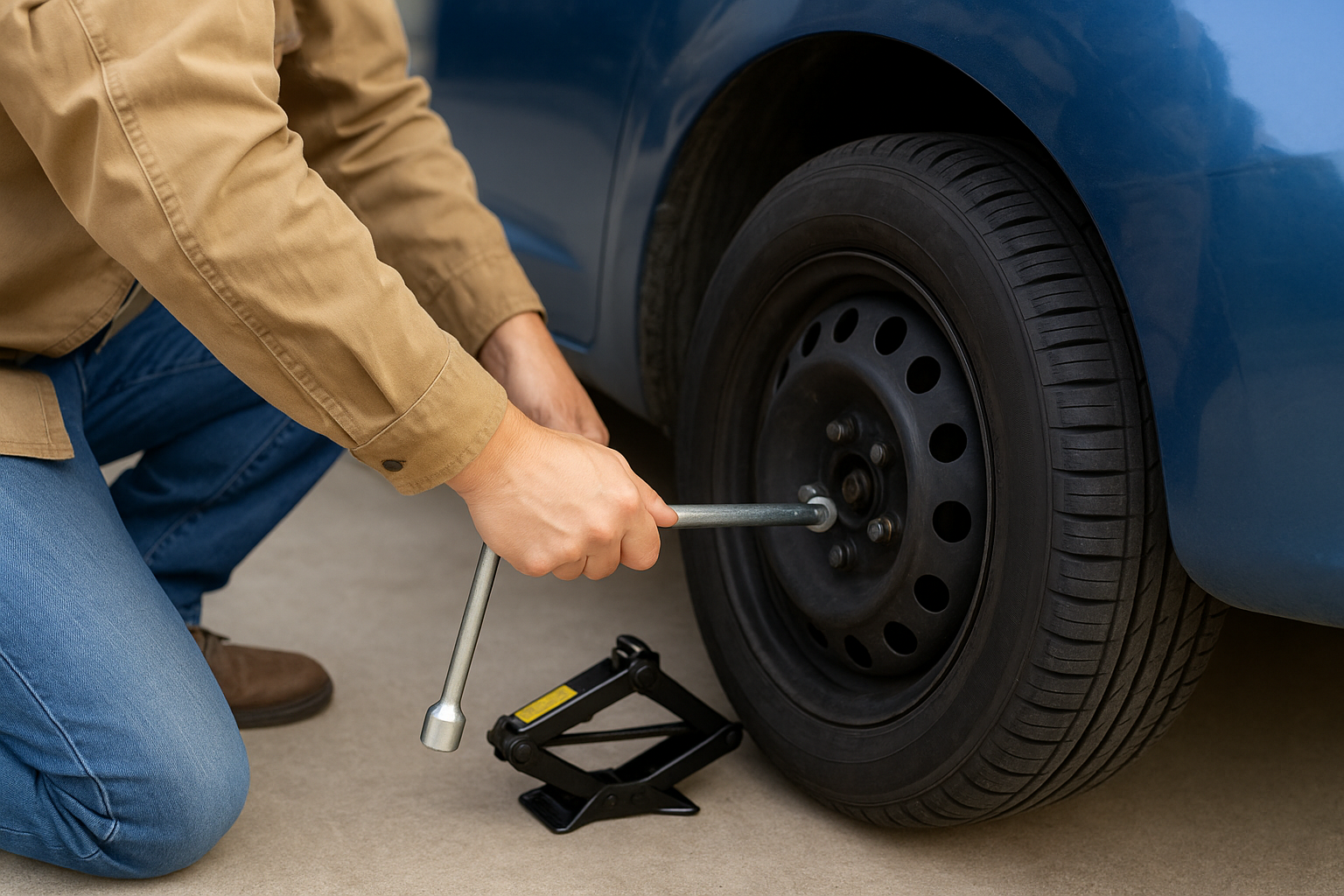
- Loosen the lug nuts slightly while the flat tire is still on the ground
- Place the jack under the correct frame contact point
- Raise the vehicle until the flat tire clears the ground by about two inches
- Remove the lug nuts fully and pull off the flat tire
Never place any part of your body under a vehicle supported only by a scissor jack.
Swap the tire and secure the spare
Mount the spare tire by lining up the lug holes and pushing it flush against the hub. Hand-tighten the lug nuts in a star pattern to seat the wheel evenly, then lower the vehicle and torque them down fully once the tire contacts the ground.
Step 4. Drive on the spare and handle repairs
Once the spare is mounted and the lug nuts are tight, you’re not finished. Most spare tires on passenger vehicles are compact "donut" spares, not full-size replacements, and they carry strict limits you need to respect before getting back onto I-94 or Telegraph Road.
Know the limits of your spare
Compact spares max out at 50 mph and roughly 50-70 miles of use. Pushing past those limits risks a second failure on the road. Check the spare’s sidewall for its specific speed and distance rating before you pull back into traffic.
| Spare type | Max speed | Max distance |
|---|---|---|
| Compact donut | 50 mph | 50-70 miles |
| Full-size spare | Normal | No restriction |
| Run-flat | ~50 mph | ~50 miles |
Get the flat repaired right away
Don’t treat the spare as a permanent fix and drive on it for days. Take your flat to a tire shop as soon as possible to find out if a plug repair will work or if you need a full replacement. Knowing what to do when you get a flat tire means following through on the repair, so you’re not caught short the next time trouble hits on Eight Mile Road or the Lodge Freeway.
Never drive a donut spare at highway speeds or go more than one day without getting the original tire inspected.
Get back on the road safely
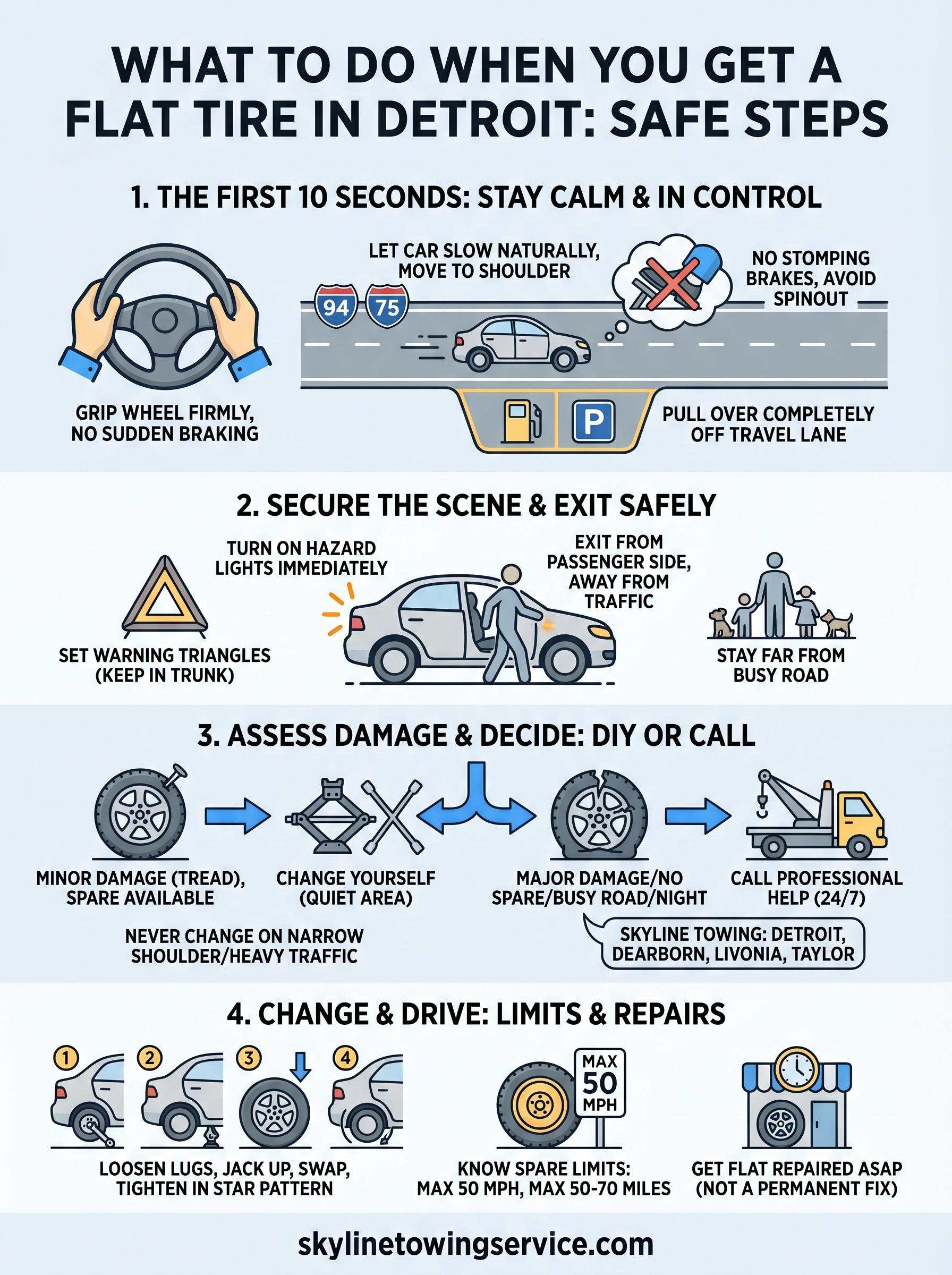
Knowing what to do when you get a flat tire before it happens puts you ahead of most drivers on Metro Detroit roads. You now have a clear sequence: control the vehicle, secure the scene, assess the damage, change the tire correctly, and follow through on repairs. Each step protects you from turning a flat into something far worse on a road like I-75 or the Lodge Freeway.
Not every situation is safe to handle alone, and that’s not a failure. Narrow shoulders, heavy traffic, bad weather, or a missing spare are all reasons to call for professional help rather than push your luck. If you’re stuck anywhere in the Detroit metro area and need fast, reliable roadside assistance, Skyline Towing is ready to help. Our team is available 24/7 across Detroit, Dearborn, Southfield, Livonia, Taylor, and the surrounding areas, so you never have to handle it alone.